Karnataka 2nd PUC Question Paper 2026 Education
Finished viewing? Save it for later —
Download Karnataka 2nd PUC Question Paper 2026 Education (PDF · 13 pages)About Karnataka 2nd PUC Question Paper 2026 Education
Karnataka 2nd PUC Question Paper 2026 Education is available here for free download. Published by Karnataka Board for Class 12, this question paper can be viewed online or downloaded as a PDF (13 pages). Candidates preparing for Class 12 can use Karnataka 2nd PUC Question Paper 2026 Education to understand the exam pattern, the type of questions asked, and the overall difficulty level.
Frequently Asked Questions
How can I download Karnataka 2nd PUC Question Paper 2026 Education?
Open this page and click the Download button to save Karnataka 2nd PUC Question Paper 2026 Education as a PDF. It is completely free on AglaSem Docs.
Is Karnataka 2nd PUC Question Paper 2026 Education free to download?
Yes. Karnataka 2nd PUC Question Paper 2026 Education can be viewed online and downloaded as a PDF free of cost on AglaSem Docs.
How many pages does Karnataka 2nd PUC Question Paper 2026 Education have?
Karnataka 2nd PUC Question Paper 2026 Education contains 13 pages, which you can read online or download together as a single PDF.
Where can I find more Class 12 study material?
You can find more Class 12 question papers, sample papers, syllabus, and answer keys on AglaSem Docs.
Karnataka 2nd PUC Question Paper 2026 Education – Text
Read the full text of this question paper below — useful to quickly search, copy and reference the content online without downloading the PDF.
📄 View text version (13 pages)
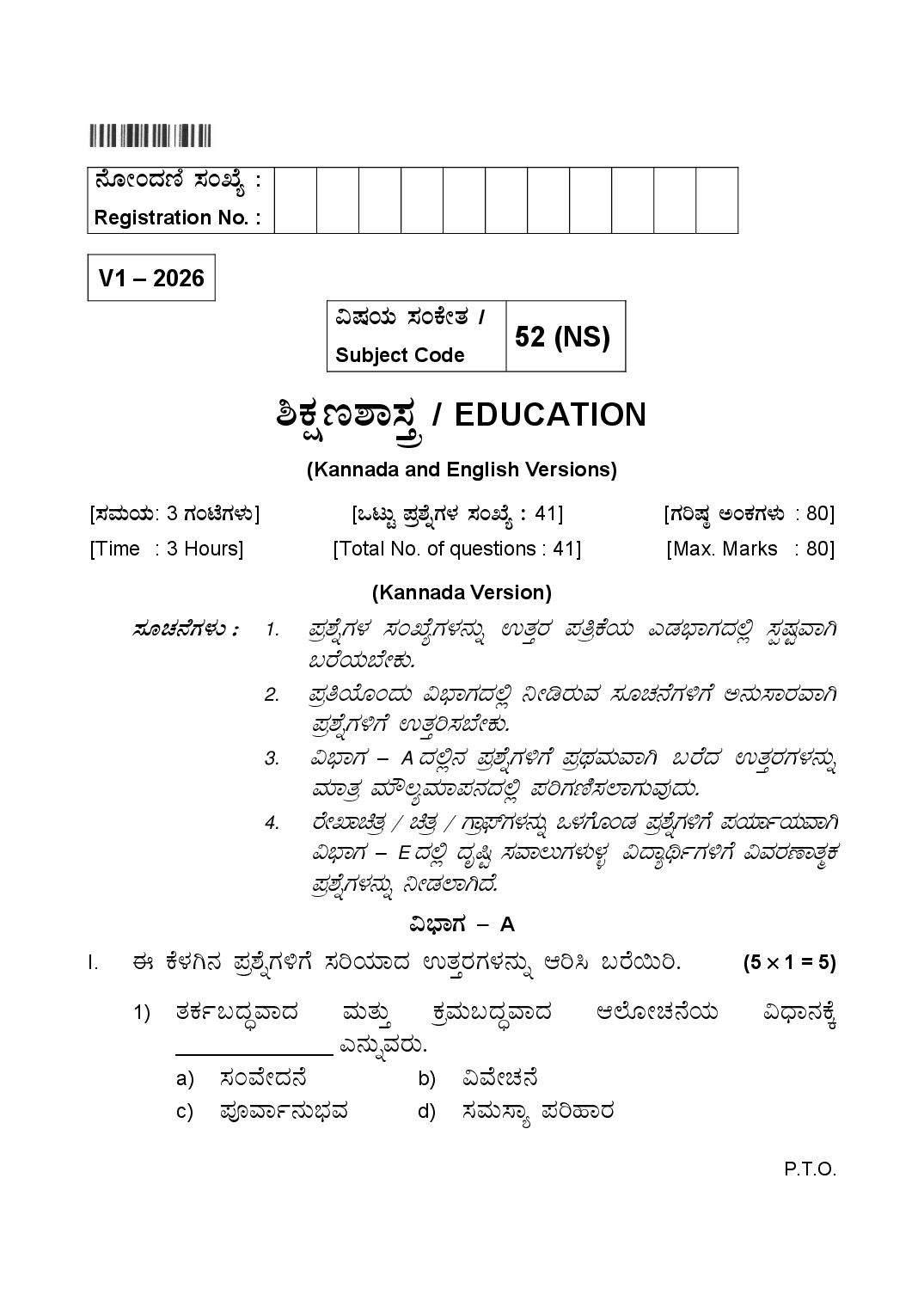
Page 1
Registration No. :
V1 – 2026
«µÀAiÀÄ ¸ÀAPÉÃvÀ /
52 (NS)
Subject Code
²PÀët±Á¸ÀÛç / EDUCATION
(Kannada and English Versions)
[¸ÀªÀÄAiÀÄ: 3 UÀAmÉUÀ¼ÀÄ] [MlÄÖ ¥Àæ±ÉßUÀ¼À ¸ÀASÉå : 41] [UÀjµÀ× CAPÀUÀ¼ÀÄ : 80]
[Time : 3 Hours] [Total No. of questions : 41] [Max. Marks : 80]
(Kannada Version)
ÓÜãaÜ®æWÜÙÜá : 1. ¥Àæ±ÉßUÀ¼À ¸ÀASÉåUÀ¼À£ÀÄß GvÀÛgÀ ¥ÀwæPÉAiÀÄ JqÀ¨sÁUÀzÀ°è ¸ÀàµÀÖªÁV
§gÉAiÀĨÉÃPÀÄ.
2. ¥ÀæwAiÉÆAzÀÄ «¨sÁUÀzÀ°è ¤ÃrgÀĪÀ ¸ÀÆZÀ£ÉUÀ½UÉ C£ÀĸÁgÀªÁV
¥Àæ±ÉßUÀ½UÉ GvÀÛj¸À¨ÉÃPÀÄ.
3. «¨sÁUÀ - A zÀ°è£À ¥Àæ±ÉßUÀ½UÉ ¥ÀæxÀªÀĪÁV §gÉzÀ GvÀÛgÀUÀ¼À£ÀÄß
ªÀiÁvÀæ ªÀiË®åªÀiÁ¥À£ÀzÀ°è ¥ÀjUÀt¸À¯ÁUÀĪÀÅzÀÄ.
4. gÉÃSÁavÀæ / avÀæ / UÁæ¥sïUÀ¼À£ÀÄß M¼ÀUÉÆAqÀ ¥Àæ±ÉßUÀ½UÉ ¥ÀAiÀiÁðAiÀĪÁV
«¨sÁUÀ - E zÀ°è zÀ馅 ¸ÀªÁ®ÄUÀ¼ÀļÀî «zÁåyðUÀ½UÉ «ªÀgu À ÁvÀäPÀ
¥Àæ±ÉßUÀ¼À£ÀÄß ¤ÃqÀ¯ÁVzÉ.
«¨sÁUÀ - A
I. F PɼÀV£À ¥Àæ±ÉßUÀ½UÉ ¸ÀjAiÀiÁzÀ GvÀÛgÀUÀ¼À£ÀÄß Dj¹ §gɬÄj. (5 × 1 = 5)
1) vÀPÀð§zÀÞªÁzÀ ªÀÄvÀÄÛ PÀæªÀħzÀÞªÁzÀ D¯ÉÆÃZÀ£ÉAiÀÄ «zsÁ£ÀPÉÌ
______________ J£ÀÄߪÀgÀÄ.
a) ¸ÀAªÉÃzÀ£É b) «ªÉÃZÀ£É
c) ¥ÀǪÁð£ÀĨsÀªÀ d) ¸ÀªÀĸÁå ¥ÀjºÁgÀ
P.T.O.
Page 2
2) M§â ªÀåQÛ, «µÀAiÀÄ CxÀªÁ ªÀ¸ÀÄÛ«£À §UÉÎ ¤¢ðµÀÖ ¨sÁªÀ£É
ºÉÆA¢gÀĪÀÅzÉà ______________.
a) ªÀÄ£ÉÆÃzsÉÆÃgÀuÉ b) ¸ÀÈd£À²Ã®vÉ
c) §Ä¢Þ±ÀQÛ d) ¸ÀªÀiÁAiÉÆÃd£É
3) ‘r¸ïPÁå®ÄÌ°AiÀiÁ’ F PÀ°PÁ z˧ð®å ¸ÀÆa¸ÀÄvÀÛzÉ.
a) NzÀĪÀ b) ¸ÁªÀiÁfPÀ P˱À®
c) §gÉAiÀÄĪÀ d) CAPÀUÀtÂvÀ
4) ¸ÀA¸ÉÜAiÀÄ ¸ÁªÀiÁ£Àå UÀÄjUÀ¼À£ÀÄß vÀ®Ä¥À®Ä J¯èÁ ¸ÀzÀ¸ÀågÀ £ÀqÀÄªÉ LPÀåvÉ
ªÀÄvÀÄÛ ¸ÀªÀÄ£ÀéAiÀÄvÉ vÀgÀĪÀ ¥ÀæQæAiÉÄ ______________.
a) AiÉÆÃd£É b) ¤AiÀÄAvÀæt
c) ¸ÀAWÀl£É d) ¹§âA¢ ªÀåªÀ¸ÉÜ
5) 10 £Éà vÀgÀUÀwAiÀÄ°è ªÁå¸ÀAUÀ ªÀiÁqÀÄwÛgÀĪÀ ®Qëöäà JA§ «zÁåyð¤
«±Àé¸ÀA¸ÉÜAiÀÄ ªÉâPÉAiÀÄ°è eÁUÀwPÀ vÁ¥ÀªÀiÁ£ÀzÀ §UÉÎ ¤gÀUÀð¼ÀªÁV
ªÀiÁvÀ£Ár J®ègÀ ªÉÄZÀÄÑUÉUÉ ¥ÁvÀæ¼ÁUÀÄvÁÛ¼É. D «zÁåyð¤ AiÀiÁªÀ
P˱À®zÀ ªÉÄÃ¯É ¥Àæ¨sÀÄvÀé ¸Á¢ü¹zÁݼÉ?
a) vÁAwæPÀ P˱À® b) £ÁAiÀÄPÀvÀé P˱À®
c) ªÀÈwÛ P˱À® d) ¸ÀAªÀºÀ£À P˱À®
Page 3
II. F PɼÀV£À ¥Àæ±ÉßUÀ½UÉ DªÀgÀtzÀ°è PÉÆnÖgÀĪÀ ¸ÀÆPÀÛ GvÀÛgÀªÀ£ÀÄß Dj¹
©lÖ ¸ÀܼÀ vÀÄA©j. (5 × 1 = 5)
[UÀÄtªÀÄlÖ, ¥ÁæPÀ®à£É, SÁ¸ÀVÃPÀgÀt, Persona, ¸ÁämïðPÁè¸ï, ¤ªÀðºÀuÉ]
6) Personality ¥ÀzÀªÀÅ ____________ JA§ ¯Áån£ï ¥ÀzÀ¢AzÀ ¤µÀàwÛ
ºÉÆA¢zÉ.
7) ¸ÁªÀðd¤PÀ ¸ÀA¸ÉÜUÀ¼À MqÉvÀ£ÀªÀ£ÀÄß SÁ¸ÀV MqÉvÀ£ÀPÉÌ ªÀUÁð¬Ä¸ÀĪÀ
PÀæªÀÄPÉÌ ____________ JAzÀÄ PÀgÉAiÀÄÄvÉÛêÉ.
8) UÁæºÀPÀgÀ §¼ÀPÉUÉ ¸ÀjºÉÆAzÀĪÀAwgÀĪÀÅzÉà ____________.
9) PÀ°PÉAiÀÄ£ÀÄß ¸ÀªÀÄÈzÀÞUÉƽ¸À®Ä §ºÀĪÀiÁzsÀåªÀÄ CAUÀUÀ½AzÀ
«£Áå¸ÀUÉƽ¹zÀ ªÀUÀðPÉÆÃuÉAiÉÄà ____________.
10) ¥ÀjÃQë¸À¨ÉÃPÁzÀ ¸ÀªÀĸÉåUÉ ___________ MAzÀÄ vÁvÁÌ°PÀ ¥ÀjºÁgÀªÁVzÉ.
III. ºÉÆA¢¹ §gɬÄj. (5 × 1 = 5)
11) A B
a) §Ä¢Þ±ÀQÛ ¥ÀjÃPëÀtUÀ¼À i) ªÀiÁZïð 8
¦vÁªÀĺÀ
b) £ÁAiÀÄPÀ UÀæAy ii) C±Á©ÝPÀ ¸ÀAªÀºÀ£À
c) CAvÀgÁ¶ÖçÃAiÀÄ ªÀÄ»¼Á ¢£À iii) D¯Éáçqï ©Ã£É
d) ¨sÁªÁ©ü£ÀAiÀÄ iv) ¨sÀÆPÀA¥ÀUÀ¼À CzsÀåAiÀÄ£À
e) ¸ÀÆ¥Àgï PÀA¥ÀÆålgï v) ¦lÄålj
vi) ZÁ¯ïìð ¨Áå¨ÉÃeï
Page 4
IV. F PɼÀV£À ¥Àæ±ÉßUÀ½UÉ ¥ÀæwAiÉÆAzÀPÀÆÌ MAzÀÄ ¥ÀzÀ CxÀªÁ ªÁPÀåzÀ°è GvÀÛj¹ :
(5 × 1 = 5)
12) ¸ÀÈd£ÁvÀäPÀ aAvÀ£ÉAiÀÄ CxÀð §gɬÄj.
13) zÀ馅 ¸ÀªÁ®Ä¼Àî ªÀÄPÀ̼ÉAzÀgÉ AiÀiÁgÀÄ?
14) ¥ÀÇtðgÀÆ¥À §gɬÄj — NCTE.
15) ±ÉÊPëÀtÂPÀ ¸ÀA±ÉÆÃzsÀ£É JAzÀgÉãÀÄ?
16) PÉÆnÖgÀĪÀ zÀvÁÛA±ÀzÀ°è §ºÀÄ®PÀªÀ£ÀÄß PÀAqÀÄ»r¬Äj.
9, 4, 5, 4, 8, 4, 4, 2, 5
«¨sÁUÀ - B
V. F PɼÀV£À AiÀiÁªÀÅzÁzÀgÀÆ ºÀvÀÄÛ ¥Àæ±ÉßUÀ½UÉ ¥ÀæwAiÉÆAzÀPÉÌ 2-3 ªÁPÀåUÀ¼À°è
GvÀÛj¹ : (10 × 2 = 20)
17) ¨sÁªÀgÀÆ¥Àt ¥ÀæQæAiÉÄAiÀÄ°è M¼ÀUÉÆArgÀĪÀ JgÀqÀÄ CA±ÀUÀ¼À£ÀÄß w½¹.
18) 10 ªÀµÀðzÀ £ÀAiÀÄ£Á¼À ªÀiÁ£À¹PÀ ªÀAiÀĸÀÄì 8 ªÀµÀðUÀ¼ÁVzÀÝ°è CªÀ¼À
§Ä¢Þ®§ÝªÀ£ÀÄß ¯ÉQ̹.
19) ¸ÀªÀÄƺÀ ªÀiÁzsÀåªÀÄPÉÌ JgÀqÀÄ GzÁºÀgÀuÉ PÉÆr.
20) ¸ÁA¥ÀæzÁ¬ÄPÀ ªÀÄvÀÄÛ ¸ÀAAiÉÆÃd£Á ²PëÀt ªÀiÁUÀðUÀ½UÉ EgÀĪÀ
JgÀqÀÄ ªÀåvÁå¸ÀUÀ¼À£ÀÄß w½¹.
21) ±ÀæªÀt ¸ÀªÁ®ÄUÀ¼ÀļÀî ªÀÄPÀ̽UÉ MzÀV¸ÀĪÀ JgÀqÀÄ ±ÉÊPëÀtÂPÀ PÀæªÀÄUÀ¼À£ÀÄß
w½¹.
Page 5
22) «±ÀéWÉÆövÀ ªÀiÁ£ÀªÀ ºÀPÀÄÌUÀ¼À°è AiÀiÁªÀÅzÁzÀgÀÆ JgÀqÀ£ÀÄß §gɬÄj.
23) ¤ªÀðºÀuÉAiÀÄ JgÀqÀÄ ¸ÁªÀiÁ£Àå P˱À®UÀ¼À£ÀÄß w½¹.
24) ¥ÀjuÁªÀÄPÁj ¸ÀAªÀºÀ£ÀzÀ JgÀqÀÄ ¨sËwPÀ CqÉvÀqÉUÀ¼À£ÀÄß ºÉ¸Àj¹.
25) °TvÀ ¸ÀAªÀºÀ£ÀzÀ JgÀqÀÄ UÀÄtUÀ¼À£ÀÄß §gɬÄj.
26) UÀtPÀAiÀÄAvÀæzÀ°è §¼À¸ÀĪÀ JgÀqÀÄ DUÀªÀÄ£ÁAUÀ ¸ÁzsÀ£ÀUÀ¼À£ÀÄß ºÉ¸Àj¹.
27) E-ªÉÄïï£À JgÀqÀÄ Ew«ÄwUÀ¼À£ÀÄß §gɬÄj.
28) ªÀÄÆ®¨sÀÆvÀ ¸ÀA±ÉÆÃzsÀ£É JAzÀgÉãÀÄ? MAzÀÄ GzÁºÀgÀuÉ PÉÆr.
29) QæAiÀiÁ ¸ÀA±ÉÆÃzsÀ£ÉAiÀÄ JgÀqÀÄ ºÀAvÀUÀ¼À£ÀÄß ºÉ¸Àj¹.
«¨sÁUÀ - C
VI. F PɼÀV£À AiÀiÁªÀÅzÁzÀgÀÆ DgÀÄ ¥Àæ±ÉßUÉ ¥ÀæwAiÉÆAzÀPÉÌ 10-12 ªÁPÀåUÀ¼À°è
GvÀÛj¹ : (6 × 5 = 30)
30) ¸ÀAªÉÃzÀ£É ªÀÄvÀÄÛ ¥ÀævÀåPÁë£ÀĨsÀªÀzÀ £ÀqÀÄªÉ EgÀĪÀ ªÀåvÁå¸ÀUÀ¼À£ÀÄß
¥ÀnÖ ªÀiÁr.
31) ªÀÄƼÉ-QÃ®Ä ¸ÀªÁ®ÄUÀ¼ÀļÀî ªÀÄPÀ̼À UÀÄt®PëÀtUÀ¼À£ÀÄß §gɬÄj.
32) ªÀÄ»¼ÉAiÀÄgÀ£ÀÄß ¸À§°ÃPÀgÀtUÉƽ¸À®Ä PÉÊUÉƼÀÀÄzÁzÀ
PÁAiÀÄðvÀAvÀæUÀ¼À£ÀÄß ¸ÀAQë¥ÀÛªÁV «ªÀj¹.
33) ²PëÀtzÀ°è eÁUÀwÃPÀgÀtzÀ ¸ÀPÁgÁvÀäPÀ ¥ÀjuÁªÀÄUÀ¼À£ÀÄß «ªÀj¹.
Page 6
34) ¤ªÀðºÀuÉAiÀÄ LzÀÄ UÀÄt®PëÀtUÀ¼À£ÀÄß «ªÀj¹.
35) qÉ«ÄäAUïgÀªÀgÀ ¸ÀA¥ÀÇtð UÀÄtªÀÄlÖ ¤ªÀðºÀuÉAiÀÄ ¥ÀæQæAiÉÄAiÀÄ£ÀÄß
avÀæ¸À»vÀ «ªÀj¹.
36) ¸ÀAªÀºÀ£À ¥ÀæQæAiÉÄAiÀÄ£ÀÄß zsÁgÁavÀæzÉÆA¢UÉ «±Éèö¹.
37) ‘DzsÀĤPÀ dUÀwÛ£À°è CAvÀeÁð® ¸ÉêÉAiÀÄÄ ºÉÃUÉ ¥ÁæªÀÄÄRåvÉAiÀÄ£ÀÄß
¥ÀqÉzÀÄPÉÆArzÉ’? «±À¢ÃPÀj¹.
38) F PɼÀV£À PÉÆõÀ×PÀzÀ°ègÀĪÀ zÀvÁÛA±ÀUÀ½UÉ PÀA§£ÀPÉëAiÀÄ£ÀÄß gÀa¹.
PÀ£ÀßqÀ ºÁUÀÆ CxÀð±Á¸ÀÛç «µÀAiÀÄUÀ¼À CAPÀUÀ½UÉ EgÀĪÀ ªÀåvÁå¸À ¯ÉQ̹.
PÀæªÀÄ ¸ÀASÉå «µÀAiÀÄUÀ¼ÀÄ ¥ÀqÉzÀ CAPÀUÀ¼ÀÄ
01 PÀ£ÀßqÀ 90
02 ¸ÀA¸ÀÌøvÀ 70
03 EwºÁ¸À 80
04 gÁdå±Á¸ÀÛç 60
05 ¸ÀªÀiÁd±Á¸ÀÛç 40
06 ²PëÀt±Á¸ÀÛç 95
«¨sÁUÀ - D
VII. F PɼÀV£À AiÀiÁªÀÅzÁzÀgÀÆ MAzÀÄ ¥Àæ±ÉßUÉ 25-30 ªÁPÀåUÀ¼À°è GvÀÛj¹.
(1 × 10 = 10)
39) ªÉÊAiÀÄQÛPÀ ©ü£ÀßvÉAiÀÄ PÉëÃvÀæUÀ¼À£ÀÄß «ªÀj¹.
40) ªÀåQÛAiÀÄ ªÀåQÛvÀéªÀ£ÀÄß ¤zsÀðj¸ÀĪÀ°è PÀÄlÄA§zÀ ªÀÄvÀÄÛ ±Á¯ÉAiÀÄ ¥ÁvÀæªÀ£ÀÄß
«ªÀj¹.
Page 7
41) F PɼÀV£À PÉÆõÀ×PÀzÀ°ègÀĪÀ zÀvÁÛA±ÀUÀ½UÉ ¸ÀgÁ¸Àj, ªÀÄzsÁåAPÀ ªÀÄvÀÄÛ
§ºÀÄ®PÀªÀ£ÀÄß ¯ÉQ̹j.
ªÀUÁðAvÀgÀUÀ¼ÀÄ DªÀÈwÛUÀ¼ÀÄ
(CI) (f)
25 – 29 2
20 – 24 3
15 – 19 6
10 – 14 5
05 – 09 4
N = 20
«¨sÁUÀ - E
(zÀ馅 «PÀ®ZÉÃvÀ£À «zÁåyðUÀ½UÉ ªÀiÁvÀæ)
35) NAAC £À PÁAiÀÄðUÀ¼À£ÀÄß §gɬÄj. (1 × 5 = 5)
36) ¸ÀAªÀºÀ£ÀzÀ ®PëÀtUÀ¼À£ÀÄß §gɬÄj. (1 × 5 = 5)
38) ¸ÀASÁå±Á¸ÀÛçzÀ ¥ÁæªÀÄÄRåvÉAiÀÄ£ÀÄß §gɬÄj. (1 × 5 = 5)
––––––––––––––
Page 8
(English Version)
Instructions : 1. Write the question number on the left side of the
Answer book.
2. Answer the question according to the instruction given
under each Part.
3. For PART – A questions, only the first written answer
will be considered for evaluation.
4. For question having diagram / figure / graph alternate
questions are given in PART – E for Visually Challenged
Students.
PART – A
I. Answer the following questions by choosing the correct answer. (5 × 1 = 5)
1) A logical and systematic way of thinking is called as___________.
a) Sensation b) Reasoning
c) Past experience d) Problem solving
2) A particular feeling about a person, idea or object is called
as___________.
a) Attitude b) Creativity
c) Intelligence d) Adjustment
3) ‘Discalculia’ shows the disability of learning in___________.
a) Reading b) Social Skill
c) Writing d) Arithmetic
Page 9
4) The process of integrating and co-ordinating the activities of members of
a group in an institution for seeking common goals.
a) Planning b) Controlling
c) Organising d) Staffing
5) Laxmi, a student studying in 10th standard, speaks fluently on global
warming at United Nation’s forum and gets appreciated by all. If so, in
which skill she has mastered?
a) Technical Skill b) Leadership Skill
c) Vocational Skill d) Communication Skill
II. Fill in the blanks by choosing suitable word given in the brackets : (5 × 1 = 5)
[Quality, Hypothesis, Privatisation, Persona, Smartclass, Management]
6) The term ‘Personality’ is derived from the Latin word ___________.
7) The transfer of ownership of public sector units to private ownership is
called as___________.
8) ___________ is fit for customers use.
9) A classroom equipped with multimedia components designed to enhance
learning is ___________.
10) A ___________ is a temporary solution for the problem under the
examination.
III. Match the following : (5 × 1 = 5)
11) A B
a) Father of Intelligence Tests i) March 8
b) Master gland ii) Non-verbal communication
c) International Women’s day iii) Alfred Binet
d) Gestures iv) Earthquake studies
e) Super Computer v) Pituitary
vi) Charles Babbage
Page 10
IV. Answer the following questions in a word or sentence each. (5 × 1 = 5)
12) Write the meaning of creative thinking.
13) Who are children with visual challenges?
14) Write the full form of NCTE.
15) What is Educational research?
16) Find the mode value in the given data.
9, 4, 5, 4, 8, 4, 4, 2, 5
PART – B
V. Answer any ten of the following questions in 2-3 sentences each :
(10 × 2 = 20)
17) Mention two elements involved in the process of concept formation.
18) If, 10 years old Nayana is having mental age of 8 years then calculate
her IQ.
19) Give two examples for mass-media.
20) State any two differences between traditional and inclusive approaches to
education.
21) Mention any two educational provisions to children with hearing
challenges.
22) Write any two human rights declared in UDHR.
23) State any two general managerial skills.
24) Name the two physical barriers to effective communication.
25) Write any two merits of written communication.
26) Name any two input devices used in computer.
27) Write two limitations of e-mail.
28) What is fundamental research? Give an example.
29) Name any two steps of action research.
Page 11
PART – C
VI. Answer any six of the following questions in 10-12 sentences each :
(6 × 5 = 30)
30) List out the differences between sensation and perception.
31) Write the characteristics of children with orthopedic challenges.
32) Briefly explain the strategies that can be undertaken to empower women.
33) Explain the positive impacts of globalization on education.
34) Explain any five characteristics of management.
35) Explain the Deming’s TQM process with diagram.
36) Analyse the process of communication with a flowchart.
37) ‘How has internet service gained importance in the modern world’?
Elucidate.
38) Draw a bargraph for the following data in the table. Find the difference
between the marks in Kannada and Economics subjects.
Sl.No. Subjects Obtained Marks
01 Kannada 90
02 Sanskrit 70
03 History 80
04 Political Science 60
05 Economics 40
06 Education 95
Page 12
PART – D
VII. Answer any one of the following questions in 25-30 sentences :
(1 × 10 = 10)
39) Explain the areas of individual differences.
40) Explain the role of family and school in determining the personality of an
individual.
41) Calculate the Mean, Median and Mode for the data given in following
table.
Class Interval Frequencies
(CI) (f)
25 – 29 2
20 – 24 3
15 – 19 6
10 – 14 5
05 – 09 4
N = 20
PART – E
(Only for Visually Challenged Students)
35) Write the functions of NAAC. (1 × 5 = 5)
36) Write the characteristics of communication. (1 × 5 = 5)
38) Write the importance of educational statistics. (1 × 5 = 5)
———————
Page 13
Subject Name : EDUCATION Subject Code : 52 (NS)
Registration No. of the candidate : ————————————
Invigilator’s Signature
Document Details
| Board / Org | Karnataka Board |
| Exam | Class 12 |
| Type | Question Paper |
| Pages | 13 |
| Language | english |
| Updated | 24 Sep 2026 |