CBSE Class 12 Sample Paper 2027 Solution (Marking Scheme) for Applied Arts
Finished viewing? Save it for later —
Download CBSE Class 12 Sample Paper 2027 Solution (Marking Scheme) for Applied Arts (PDF · 7 pages)About CBSE Class 12 Sample Paper 2027 Solution (Marking Scheme) for Applied Arts
CBSE Class 12 Sample Paper 2027 Solution (Marking Scheme) for Applied Arts is available here for free download. Published by CBSE for Class 12, this solution can be viewed online or downloaded as a PDF (7 pages). Candidates preparing for Class 12 can use CBSE Class 12 Sample Paper 2027 Solution (Marking Scheme) for Applied Arts to understand the exam pattern, the type of questions asked, and the overall difficulty level.
Frequently Asked Questions
How can I download CBSE Class 12 Sample Paper 2027 Solution (Marking Scheme) for Applied Arts?
Open this page and click the Download button to save CBSE Class 12 Sample Paper 2027 Solution (Marking Scheme) for Applied Arts as a PDF. It is completely free on AglaSem Docs.
Is CBSE Class 12 Sample Paper 2027 Solution (Marking Scheme) for Applied Arts free to download?
Yes. CBSE Class 12 Sample Paper 2027 Solution (Marking Scheme) for Applied Arts can be viewed online and downloaded as a PDF free of cost on AglaSem Docs.
How many pages does CBSE Class 12 Sample Paper 2027 Solution (Marking Scheme) for Applied Arts have?
CBSE Class 12 Sample Paper 2027 Solution (Marking Scheme) for Applied Arts contains 7 pages, which you can read online or download together as a single PDF.
Where can I find more Class 12 study material?
You can find more Class 12 question papers, sample papers, syllabus, and answer keys on AglaSem Docs.
CBSE Class 12 Sample Paper 2027 Solution (Marking Scheme) for Applied Arts – Text
Read the full text of this solution below — useful to quickly search, copy and reference the content online without downloading the PDF.
📄 View text version (8 pages)
Page 1
CBSE Class 12 Sample
Paper 2027 Solution
(Marking Scheme) for
Applied Arts
EXAM YEAR TYPE SUBJECT
CBSE Class 12 2027 Solutions Art
Notes · Sample Papers · Previous Year Papers · Mock Tests
Page 2
.co s e m
s em l a
a ag
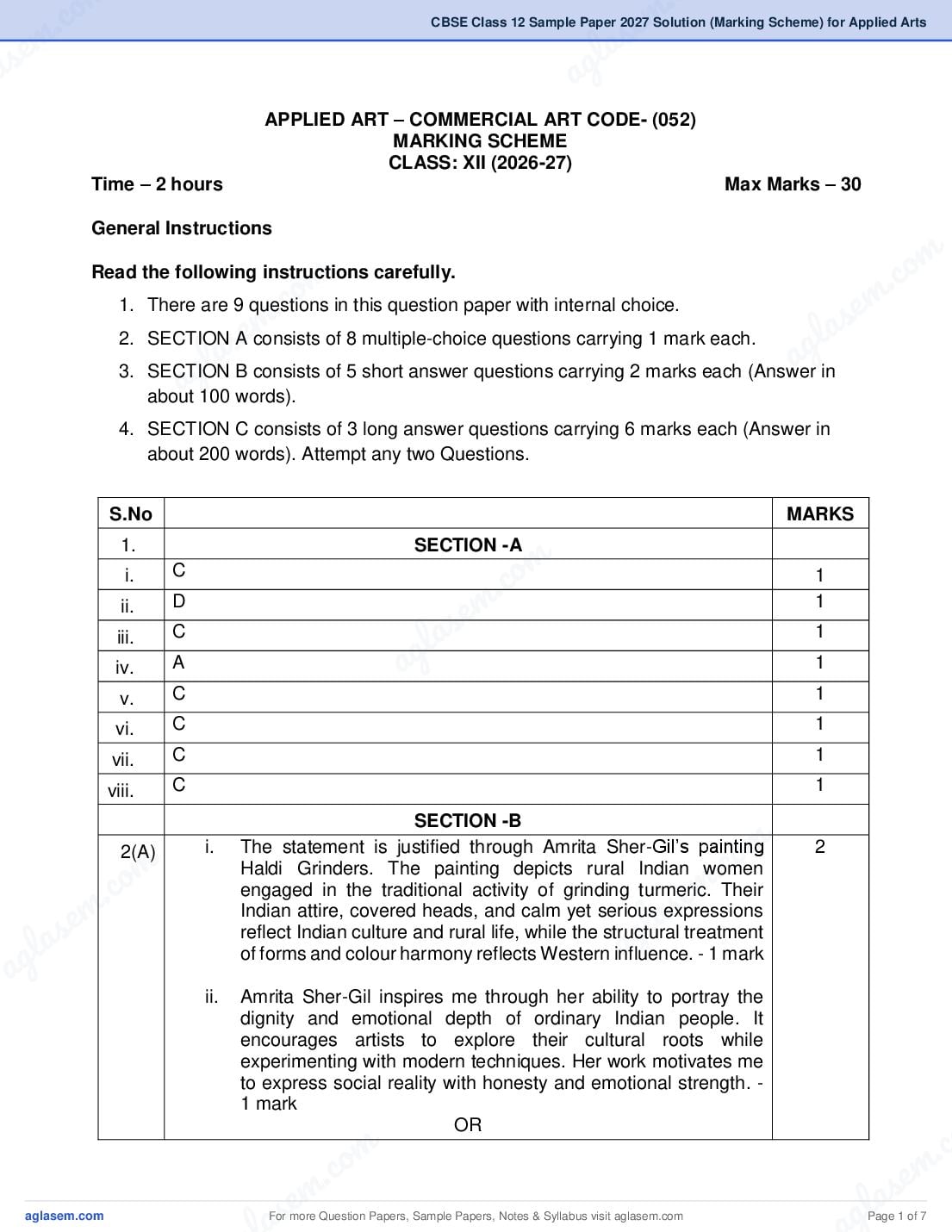
APPLIED ART – COMMERCIAL ART CODE- (052)
MARKING SCHEME
CLASS: XII (2026-27)
Time – 2 hours Max Marks – 30
General Instructions
m
om
Read the following instructions carefully.
. c e m
1. There are 9 questions in this question paper with internal choice.
m
2. SECTION sAeconsists of 8 multiple-choice questions carrying 1 mark each. l as
a g
a in
l B consists of 5 short answer questions carrying 2 marks each (Answer
g
a 100 words).
3. SECTION
about
4. SECTION C consists of 3 long answer questions carrying 6 marks each (Answer in
about 200 words). Attempt any two Questions.
S.No MARKS
1. SECTION -A
m
.co
i. C 1
ii. D
e m 1
C
l as 1
ag
iii.
iv. A 1
v. C 1
vi. C 1
vii. C 1
viii. C 1
SECTION -B
m
.co
2(A) i. The statement is justified through Amrita Sher-Gil’s painting 2
m
.co
Haldi Grinders. The painting depicts rural Indian women
e m
s
engaged in the traditional activity of grinding turmeric. Their
e m Indian attire, covered heads, and calm yet serious expressions
la
las ag
reflect Indian culture and rural life, while the structural treatment
ag of forms and colour harmony reflects Western influence. - 1 mark
ii. Amrita Sher-Gil inspires me through her ability to portray the
dignity and emotional depth of ordinary Indian people. It
encourages artists to explore their cultural roots while
experimenting with modern techniques. Her work motivates me
to express social reality with honesty and emotional strength. -
1 mark
OR
m . c
c. o s e m
s em
Page 1 of 7
Page 3
Painter: Abanindranath Tagore
Medium: Watercolour
Technique: Tempera (wash technique of the Bengal School). -
1 mark
ii. Abanindranath Tagore creates empathy through the use of
muted, earthy colour tones and a red dusk background. The soft
washes and subdued hues evoke a sense of exhaustion,
sadness, and silence, reflecting the camel’s suffering. The
sensitive texture and gentle blending of colours enhance the
emotional depth of the scene, symbolising the end of both a
physical journey and life itself. This thoughtful use of colour
leads the viewer to feel compassion and emotional connection
with the subject. .- 1 mark
3(A) i. Name of the painting: Krishna on Swing 2
School: Bikaner School (Rajasthani miniature painting)
Technique: Watercolour (tempera technique)
Collection: National Gallery of Modern Art, New Delhi. - 1 mark
ii. The painting beautifully narrates the divine love between Krishna
and Radha. The central wavy mound divides the composition into
two harmonious sections, guiding the viewer’s eye through the
scene. In the upper part, Krishna is seated on a hexagonal swing,
watched lovingly by Radha, symbolising divine romance. In the
lower section, Krishna and Radha are seated together on a red
carpet in royal Rajputana attire, accompanied by a female
attendant. The graceful figures, rhythmic lines, and balanced
composition enhance the lyrical and romantic mood of the
painting, making the narrative visually engaging and emotionally
expressive. - 1 mark
OR
3(B) i. Title of the painting: Hazrat Nizamuddin Auliya and Amir Khusro 2
Medium: Watercolour (tempera technique) - 1 mark
ii. The painting belongs to the Sufi devotional subgenre of the
Deccan School. It focuses on the spiritual bond between the Guru
(Hazrat Nizamuddin Auliya) and his disciple (Amir Khusro). The
emphasis is on devotion, reverence, and spiritual learning rather
than royal grandeur. The use of soft colours, delicate brushwork,
and symbolic elements reflects the mystical and spiritual nature
of Sufism, highlighting humility, wisdom, and the sacred teacher-
disciple relationship. - 1 mark
4(A) i. Name of the sculptor: Amarnath Sehgal 2
Medium: Bronze
Collection: National Gallery of Modern Art, New Delhi - 1 mark
For more Question Papers, Sample Papers, Notes & Syllabus visit Page 2 of 7
Page 4
.co s e m
s em l a
a ag
ii. The sculpture expresses deep anguish, helplessness, and
suffering of the common people. The elongated, stick-like figures
and raised arms symbolise desperation and silent cries for justice.
The distorted forms convey emotional pain rather than physical
realism. Through this work, the artist highlights social injustice,
exploitation, and the neglect of the poor by society. The sculpture
m
om
serves as a powerful reminder of human suffering and the urgent
. c
need for compassion and social responsibility. - 1 mark
em
e m l as
l as OR
g
a2
4(B)
g
a Medium: Bronze
i. Name of the sculpture: Triumph of Labour
Collection / Location: Marina Beach, Chennai- 1 mark
ii. The sculpture depicts four muscular labourers straining together
to move a massive rock, symbolising collective strength and unity.
The rhythmic arrangement of bodies, dynamic postures, and taut
muscles convey intense physical effort and determination. The
m
realistic modelling of human anatomy enhances the sense of
.co
movement and energy. Aesthetically, the sculpture celebrates the
m
dignity of labour and portrays the working class as heroic
e
l
and socially meaningful. - 1 markas
contributors to nation-building, making it both visually powerful
5(A) i.
ag
Name of the painting: Kabir and Raidas
Artist: Ustad Faquirullah Khan
2
Medium: Watercolour (tempera technique)
Period: Mughal period (reign of Shah Jahan) - 1 mark
ii. The painting conveys a message of spiritual unity, simplicity, and
equality. By depicting saints from different social backgrounds
engaged in humble activities, it emphasises dignity of labour and
m
the belief that devotion and spiritual wisdom are accessible to all.
.co
The realistic portrayal reinforces the idea that true spirituality lies
m
.co m
in simple living and sincere practice rather than ritual or social
m
status. - 1 mark
s e
s e g la
g la OR
a
a 5(B)
i. The artist Sahibdin has very successfully portrayed the desert
2
environment by using barren landscapes, minimal vegetation, and
warm earthy colours. The movement is suggested through the
forward motion of the camel, the flowing garments of the figures,
and the accompanying attendants and hunting dog. These
elements together create a sense of travel and journey across the
harsh desert terrain. - 1 mark
m . c
c. o s e m
s em
Page 3 of 7
Page 5
and separation associated with the musical raga. The prince and
princess riding together on a decorated camel symbolise
emotional bonding and devotion. Their calm expressions and
closeness reflect a quiet, enduring romance set against the vast
and challenging desert, enhancing the emotional depth of the
painting. - 1 mark
6(A) i. Name of the painting: Krishna Lifting Mount Govardhan 2
Artist: Miskin
Patron: Emperor Akbar
Collection: National Museum, New Delhi- 1 mark
ii. The painting belongs to the Mughal period and displays its
characteristic features such as a well-organised composition,
realistic depiction of human figures, and detailed rendering of
nature. Krishna is placed at the centre as the focal point, shown
lifting Mount Govardhan effortlessly with his little finger,
symbolising divine power. The villagers and animals are arranged
rhythmically beneath the mountain, creating unity and balance.
The use of vibrant colours, careful detailing of trees, rocks, and
expressive faces, along with decorative borders, reflects Persian
influence blended with Indian themes, a hallmark of Mughal
miniature painting. - 1 mark
OR
6(B) i. Name of the painting: Chaugan Players 2
Medium: Watercolour
Technique: Tempera technique
Sub-school: Jodhpur (Rajasthani School) - 1 mark
ii. I strongly agree with the statement. Dana effectively portrays the
royal sport of chaugan through a balanced and dynamic
composition. The horizontal format enhances the sense of
movement, while the central placement of the polo ball draws the
viewer’s attention and unifies the action. The rhythmic movement
of horses and riders, along with expressive gestures, conveys
energy and excitement. The bold and contrasting colour palette
adds visual appeal and highlights the importance of the game,
fulfilling aesthetic principles such as balance, rhythm, harmony,
and emphasis. - 1 mark
SECTION-C
Attempt any two questions from the given options
7. i. Name of the painting: Rama Vanquishing the Pride of the 6
Ocean
For more Question Papers, Sample Papers, Notes & Syllabus visit Page 4 of 7
Page 6
.co s e m
s em l a
a ag
Artist: Raja Ravi Varma- 2 marks
ii. In the middle distance, the waves reveal three human figures
emerging from the ocean. The central figure is Varuna, the sea
god, who is lifting both his hands in a gesture of surrender and
supplication. He pleads for forgiveness from Lord Rama after
m
om
realising his mistake in refusing to grant passage to Lanka. This
. c
gesture symbolises humility, repentance, and submission before
em
e m
divine power. - 2 marks
l as
iii.
l as The artist has been highly successful in using compositional
ag
ag arrangement to express contrasting emotions of anger and
forgiveness. Lord Rama is shown standing firmly on the shore in
a strong, upright posture, holding his bow, which conveys
determination and righteous anger. In contrast, Varuna is
depicted in a lower position within the turbulent ocean, with
raised hands and a submissive posture, symbolising repentance
and forgiveness. The dynamic waves, dramatic lighting, and
strong diagonals enhance the tension of anger, while the
m
.co
pleading gestures and softened expressions introduce a sense
m
of mercy and reconciliation. Through this balanced composition,
s e
Raja Ravi Varma effectively communicates the emotional climax
l a
ag
of the narrative. - 2 marks
8. i. The artists of the Bengal School played a vital role in the freedom 6
movement by rejecting Western academic realism imposed by
British rule and reviving indigenous Indian art traditions. They
drew inspiration from Indian miniature paintings, Ajanta cave
murals, and spiritual themes rooted in Indian culture. Through
their artworks, they promoted national pride, cultural identity, and
self-respect. Bengal School artists used art as a form of cultural
resistance, encouraging Indians to value their own heritage and
m
m traditions during the struggle for independence. - 2 marks
.co
m .co ii. Several Indian artists actively contributed to the freedom
s e m
s e movement through their art. Abanindranath Tagore’s famous
g la
g la painting Bharat Mata became a powerful symbol of nationalism,
a
a portraying India as a nurturing yet strong mother figure. Nandalal
Bose created simple and impactful artworks inspired by folk
traditions and worked closely with Mahatma Gandhi, designing
posters and images for nationalist movements. Gaganendranath
Tagore used satirical cartoons and caricatures to criticise British
policies and social injustices, making art a tool for political
awareness and reform. - 2 marks
m . c
c. o s e m
s em
Page 5 of 7
Page 7
A. Shiv and Sati - 1 mark
Artist: Nandalal Bose
Nandalal Bose’s Shiv and Sati reflects the spiritual and symbolic
approach of the Bengal School of Art. The painting depicts Lord
Shiva and Goddess Sati in a calm and harmonious composition,
emphasising devotion, purity, and divine unity. Bose uses simple
forms, flowing lines, and soft, earthy colours to convey serenity
and spiritual depth. The restrained expression and minimal
background focus the viewer’s attention on the emotional bond
between the divine couple. The work reflects Indian philosophical
ideals and reinforces cultural pride, aligning with the nationalist
spirit of the freedom movement.
B. Radhika -1 mark
Artist: M. A. R. Chughtai
Radhika by M. A. R. Chughtai is a lyrical and romantic painting
inspired by Indian mythology and poetry. The artist employs
graceful, elongated figures, delicate lines, and a refined colour
palette influenced by Mughal and Persian art traditions. Radhika
is portrayed as an embodiment of beauty, devotion, and spiritual
love. The ornamental detailing and expressive posture evoke a
sense of grace and emotional sensitivity. Through this work,
Chughtai celebrates Indian cultural aesthetics and contributes to
the revival of indigenous art forms during the freedom movement.
9. i. Name of the painting: Krishna with Kinsmen Going to Vrindavan 6
Painter: Nainsukh
Medium & Technique – Temper on paper, fine brush work,
dedicate linear drawing, soft colour washes.
Style / School: Kangra School of Pahari miniature painting-2
marks
ii. The painter has been highly successful in depicting the subject
matter. Nainsukh clearly conveys the idea of migration and
protection by showing Nanda, Yashoda, baby Krishna, and their
relatives moving together in an organised procession. The use of
rhythmic lines, balanced composition, and realistic details makes
the narrative easy to understand and visually engaging. The calm
yet purposeful movement of the bullock cart and figures
effectively communicates the reason for the journey. -2 marks
For more Question Papers, Sample Papers, Notes & Syllabus visit Page 6 of 7
Page 8
.co s e m
s em l a
a ag
iii. The beauty of the painting lies in its delicate lines, soft colours,
and natural expressions. The figures display gentle emotions
such as care, devotion, and concern for baby Krishna. Yashoda’s
affectionate expression reflects maternal love, while Nanda
appears responsible and protective. The peaceful faces of the
accompanying villagers, along with the serene landscape, create
m
om
a harmonious and emotionally touching scene. The overall mood
. c
is calm, devotional, and humane, making the painting
em
em
aesthetically pleasing and emotionally rich.- 2 marks
l as
l as ag
ag
m
m .co
s e
l a
ag
m
m .co
m .co s e m
s e g la
g la a
a
m . c
c. o s e m
s em
Page 7 of 7
Document Details
| Board / Org | CBSE |
| Exam | Class 12 |
| Type | Solution |
| Pages | 7 |
| Updated | 29 Oct 2026 |