CG Board 12th Sample Paper Accountancy
Finished viewing? Save it for later —
Download CG Board 12th Sample Paper Accountancy (PDF · 23 pages)About CG Board 12th Sample Paper Accountancy
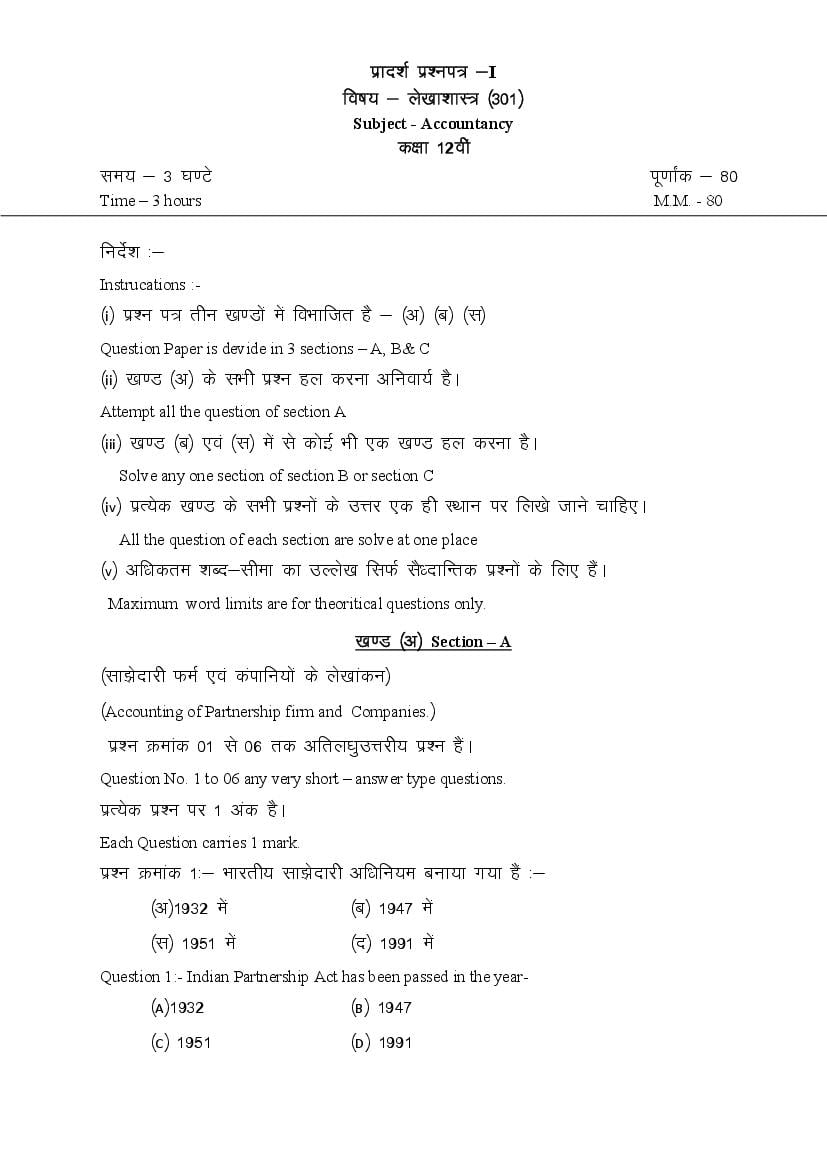
CG Board 12th Sample Paper Accountancy is available here for free download. Published by Chhattisgarh Board for Class 12, this sample paper can be viewed online or downloaded as a PDF (23 pages). Candidates preparing for Class 12 can use CG Board 12th Sample Paper Accountancy to understand the exam pattern, the type of questions asked, and the overall difficulty level.
Frequently Asked Questions
How can I download CG Board 12th Sample Paper Accountancy?
Open this page and click the Download button to save CG Board 12th Sample Paper Accountancy as a PDF. It is completely free on AglaSem Docs.
Is CG Board 12th Sample Paper Accountancy free to download?
Yes. CG Board 12th Sample Paper Accountancy can be viewed online and downloaded as a PDF free of cost on AglaSem Docs.
How many pages does CG Board 12th Sample Paper Accountancy have?
CG Board 12th Sample Paper Accountancy contains 23 pages, which you can read online or download together as a single PDF.
Where can I find more Class 12 study material?
You can find more Class 12 question papers, sample papers, syllabus, and answer keys on AglaSem Docs.
CG Board 12th Sample Paper Accountancy – Text
Read the full text of this sample paper below — useful to quickly search, copy and reference the content online without downloading the PDF.
📄 View text version (19 pages)
Page 1
शिक्षा मण्डल
Model Paper
CGBSE Sample Paper
(Practice Paper)
Page 2
-- AGLASEM --
d{kk & 12oha
Class 12
fo’k; & ys[kk'kkL= ¼301½
Subject:- Accountancy (301)
iw.kkZad & 80 le; & 3%00 ?kaVs
M.M 80 Time:- 3 hours
&&&&&&&&&&&&&&&&&&&&&&&&&&&&&&&&&&&&&&&&&&&&&&&&&&&&&&&&&&&&&&
1- iz”u i= nks [k.Mksa esa foHkkftr gS & [k.M ¼v½ ,oa [k.M ¼c½
Question paper is divided into two sections- Section (A) and Section (B).
2- [k.M ¼v½ ds lHkh iz”u vfuok;Z gSA
All questions are compulsory in Section (A)
3- [k.M ¼c½ esa foRrh; fooj.kksa dk fo'ys"k.k vFkok dEI;wVjhd`r ys[kkadu esa ls fdlh ,d
dks gy djsAa
Solve any one from Section (B) from Analysis of financial statement or Computerised
Accounting.
4- iz”u dzekad 1 oLrqfu"B iz”u gSA [k.M ¼v½ eas iz'u 1 (I) esa 04 cgqfodYih; iz”u ,o
[k.M ¼c½ esa 1 cgqfodYih; iz'u gksxk vkSj [k.M ¼v½ esa iz'u 1 (II) esa 4
vfry?kqmRrjh; iz'u ,oa 1 vfry?kqmRrjh; iz'u [k.M ¼c½ esa gksxkA
Question number 1 is objective question. Q.1(I) will consist of 4 multiple choice question in
Section(A)and 1 multiple question in Section (B) and Q.1(II) will consist of 4 Very short
answer type question in Section (A) and 1 Very short answer type question in Section (B).
Each question carries 1 mark.
5- izR;sd [k.M ds lHkh iz”uksa ds mRrj ,d gh LFkku ij fy[ks tkus pkfg,A
Answers of all questions in each part should be written at one place.
6- vf/kdre 'kCn lhek dk mYys[k flQZ lS)kfUrd iz”uksa ds fy, gSA
Maximum word limit is mentioned only for theory questions.
Page 3
Section - (A)
¼lk>snkjh QeksZ rFkk daifu;ks ds fy, ys[kkadu½
(Accounting for partnership firm's and companies)
funsZ”k % [k.M ¼v½ ds lHkh iz”u vfuok;Z gSA iz'u 1 oLrqfu"B iz'u gS] ftlesa ¼I½ lgh fodYi
pqfu, vkSj ¼II½ ,d 'kCn@,d okD; esa mRrj nhft, gSA izR;sd iz'u ij 1 vad fu/kkZfjr gSA
Instructions: All questions of Section(A) is compulsory. Question number 1 is objective question in
which (I) Multiple choice question and (II) Answer in one word/sentence. Each question carries 1
mark.
iz'u 1 ¼I½ lgh fodYi pqfu, % ¼ 1x4=4½
Q.1 (I) Choose the correct option:
¼i½ lk>snkj dk QeZ ds lkFk laca/k gksrk gS &
¼v½ ,tsaV ¼c½ lsod
¼l½ izc/a kd ¼n½ ,dkf/kdkjoknh
(i) A relation of partner with the firm is -
(a) Agent (b) Servant
(c) Manager (d) Monopolist
¼ii½ lk>snkjh dk R;kx vuqikr dqy ykHk&izkfIr vuqikr ls ------- gksrk gSA
¼v½ vf/kd ¼c½ cjkcj
¼l½ de ¼n½ R;kx vuqikr ls de o izkfIr vuqikr ls vf/kd
(ii) The sacrificing ratio of the partner’s is _______ than the total gaining ratio.
(a) More (b) Equal
(c) Less (d) Sacrificing ratio is less and gaining ratio is more
¼iii½ ,d daiuh us izfr :- 100 okys _.ki=] ftudk dqy vafdr ewY; :- 1]00]000 gS vkSj
:- 90 izfr _.ki= ds ewY; ij tkjh fd,A crkb, daiuh dks dqy fdruh jkf'k izkIr gksxhA
¼v½ :- 90]000 ¼c½ :- 1]00]000
¼l½ :- 80]000 ¼n½ :- 95]000
(iii) A company issued debentures of ₹ 100 each having a total face value of ₹ 1,00,000, at ₹
90 per debenture. Explain how much total amount the company will receive.
(a) ₹ 90,000 (b) ₹ 1,00,000
(c) ₹ 80,000 (d) ₹ 95,000
Page 4
vkSj mls ykHk esa 1@4 fgLLkk feyrk gSA mijksDr tkudkjh ds vkk/kkj ij crkb, u;s
lk>snkj ds fgLls dh [;kfr fdruh gksxh\
¼v½ :- 20]000 ¼c½ :- 25]000
¼l½ :- 30]000 ¼n½ :- 35]000
(iv) The Goodwill of a firm is valued at ₹ 1,00,000. A new partner is admitted into the firm and
is entitled to 1/4th share in the profits. Based on the above information, calculate the new
partner's share of goodwill.
(a) 20,000 (b) 25,000
(c) 30,000 (d) 35,000
iz'u 1 ¼II½ ,d 'kCn@,d okD; esa mRrj nhft,% ¼ 1x4= 4½
¼i½ A vkSj B lk>snkj gS] ftudk ykHk&gkfu ckWVa us dk vuqikr 3%2 gSA o"kZ ds var esa QeZ dks
:- 10]000 dk ykHk gqvkA fo'ys"k.k dhft, fd ‘A’ dk ykHkka'k fdruk gksxk\
¼ii½ ykHk izkfIr vuqikr dk lw= crkb,A
¼iii½ eku yhft, ,d QeZ dk fo?kVu gks jgk gS vkSj ,d lk>snkj us QeZ dh ,d e'khu dks
O;fDrxr mi;ksx ds fy, ys fy;kA crkb,&bl fLFkfr esa ys[kkdj dks D;k izfo"Vh djuh
pkfg,\
¼iv½ ,sls dkSu ls va'k gksrs gS] ftu ij ykHkka”k dh nj r; ugha gksrh\
Q.1 (II) Answer in one word/one sentence:
(i) A and B are partners sharing profit and loss in the ratio of 3:2. At the end of the year the
firm earned a profit of ₹ 10,000. Analyse what will be A's share of profit?
(ii) Give the formula of profitability ratio.
(iii) Suppose a firm is being dissolved and a partner takes one of the firm's machine for his
personal use. What entry should the accountant make in this situation?
(iv) On which shares, the dividend rate is not fixed?
funsZ”k % iz'u dz-02 ls iz'u dz- 05 rd y?kqmRrjh; iz'u -I gksx
a ]sa ftlesa izR;sd esa 03 vad
fu/kkZfjr gSA 'kCn lhek 50 'kCn gSA
Instructions: Question number 2 to 5 will be Short-answer-I questions, each carrying 3 marks.
The word limit is 50 words.
iz'u 2- QeZ esa lk>snkj gksus ds fy, D;k ;ksX;rk gksuh pkfg, \ ¼dksbZ 3½ ¼ 1+1+1= 3½
Q.2 What qualifications are required to become a partner in a firm? (Any3)
Page 5
20%% izhfe;e ij fuxZfer fd;s x;sA daiuh dh iqLrdksa esa iat
a h izfof"V;kW dhft,A
¼1+1+1= 3½
Q.3 Ajay limited purchased a machine for ₹ 72,000. Payment was made by issuing ₹ 100 debentures
at a premium of 20%. Pass journal entries in the books of the company.
iz'u 4- daiuh }kjk va'kksa ds leewY; ij fuxZeu dks mnkgj.k lfgr le>kb;sA ¼ 3½
Q.4 Explain the issue of shares at par by a company with an example.
iz'u 5- foosd daiuh dk ,d va'k/kkjh gS] ftUgksua s :- 10 okys 50 va'k fy, gSA mlus vkosnu
jkf”k :- 2 fn;k] ijarq vkcaVu dh jkf'k :- 3 vkSj izFke ;kpuk jkf'k :- 2 ugha fn;kA
daiuh ds lapkydksa us izFke ;kpuk dh ckn foosd ds v'kks dk gj.k djus dk fu.kZ;
fy;kA v'kksa ds gj.k ls lacaf/kr izfof"V;kWa dhft,A ¼ 3½
Q.5 Vivek is a shareholder of a company. He was allotted 50 shares of ₹ 10 each. He paid ₹ 2per
share on application, but failed to pay ₹ 3 on allotment and ₹ 2 on the first call. The directors
decided to forfeit his shares after the first call. Pass the journal entries related to the forfeiture of
shares in the companies book.
funsZ”k % iz”u dz- 06 ls iz”u dz- 08 rd y?kq mRrjh;& II iz'u gSAa ftlesa izR;sd esa 04 vad
fu/kkZfjr gSA izR;sd iz”u ij vkrafjd fodYi gSA
Instructions: Question number 6 to 8 will be Short answer – II questions. Each question
carrying 4 marks. Each question has an internal choice.
iz'u 6- jatuk vkSj euh’k lk>snkj gSa vkSj os 3%2 ds vuqikr esa ykHk&gkfu dk foHkktu djrs
gSAa mudh iwWath dze'k% A 60,000 vkSj B 40,000 gSA QeZ ds lekiu ij] ifjlaifR;ksa dh
fcdzh ls :- 80]000 olwyh gqbZA QeZ ds ysunkj :- 20]000 vkSj fo|Vu O;; :- 2]000
dk Hkqxrku fd;k x;kA olwyh [kkrk cukb,A ¼ 4½
Q.6 Ranjana and Manish are partners sharing profits and losses in the ratio of 3:2. Their capitals are
₹ 60,000 and ₹ 40,000 respectively. On dissolution of the firm, the assets were sold for ₹
80,000. The firm had creditors of ₹ 20,000 and realisation expenses of ₹ 2,000 which were paid.
Prepare the Realisation Account.
vFkok@ Or
fjrq vkSj Lokfr lk>snkj gS vkSj os 3%2 ds vuqikr esa ykHk&gkfu dk foHkktu djrs gSAa
mudh iwt
a h dze”k% : 75]000 vkSj 50]000 gSA QeZ dk fo?kVu gks x;kA fo?kVu ds le;
fuEu tkudkjh miyC/k gS&ifjlaifr;ksa dh fcdzh ls :- 1]10]000 izkIr gq,A ysunkjksa dks
:- 25]000 pqdk;s x,A fo?kVu O;; :- 5]000 gqvkA QeZ ds ikl izkjafHkd uxn 'ks’k :-
5]000 FkkA olwyh [kkrk cukb,A
Page 6
75,000 and ₹ 50,000 respectively. The firm is dissolved. The following information is
available at the time of dissolution: Assets were sold for ₹ 1,10,000; Creditors were paid ₹
25,000; Realisation expenses were ₹ 5,000; Firm had opening Cash ₹ 5000. Prepare the
Realisation Account.
iz'u 7- X, Y vkSj Z lk>snkj gSa tks ykHk dks 5%3%2 ds vuqikr esa ckWVa rs gSA QeZ dh iqLrdksa
esa [;kfr :- 40]000 fn[kkbZ xbZ gSA Z lsokfuo`Rr gks tkrk gS vkSj lsokfuo`fRr dh
frfFk ij [;kfr dk ewY; :- 70]000 vkWd
a k x;kA X vkSj Y us u;k ykHk foHkktu
vuqikr 3%2 esa r; fd;k gSA
1- ykHk izkfIr vuqikr Kkr djsaA
2- [;kfr ds lek;kstu ds fy, tuZy izfof"V;kWa djsAa ¼ 4½
Q.7 X, Y and Z are partners sharing profits in the ratio of 5:3:2. Goodwill of the firm shows
₹ 40,000. Z retires and on the date of his retirement, the value of goodwill is ₹ 70,000. X
and Y decide to share future profits in the new ratio of 3:2.You are required to:
1. Calculate the gaining ratio.
2. Pass the necessary journal entry for the adjustment of goodwill.
vFkok@ Or
P, Q vkSj R 1/2 :1/3:1/6 ds vuqikr esa ykHk ckWV
a rs gq, lk>snkj gSA QeZ dh iqLrdksa
esa [;kfr :- 36]000 dh izkjafHkd jkf'k gSA B lsokfuo`Rr gks tkrk gS vkSj B dh
lsokfuo`fRr frfFk ij [;kfr dk ewY; :- 60]000 gSA A vkSj C us QeZ ds va'k ykHk dk
fu/kkZj.k 3%2 ds vuqikr esa fd;kA
1- ykHk izkfIr vuqikr Kkr djsaA
2- [;kfr ds lek;kstu ds fy, tuZy izfo"V;kWa djsAa
P, Q and R are partners sharing profits in the ratio of ½:⅓:⅙. The goodwill of the firm
appears in the books at ₹ 36,000. B retires and on the date of his retirement the value of
goodwill is ₹ 60,000.A and C decide to share future profits in the ratio of 3:2.You are
required to
1. Calculate the gaining ratio.
2. Pass the necessary journal entries for the adjustment of goodwill.
iz'u 8- daiuh dk vkSlr ykHk :- 14]000 gS vkSj iwath :- 1]50]000 gSA bl izdkj ds O;olk;
ij lkekU; ykHk dh nj 8% ekuh tkrh gSA vf/kykHk ds iwWt
a hd`r ewY; ds vk/kkj ij
[;kfr dk ewY; Kkr dhft,A ¼4½
Q.8 The average profit of the company is ₹ 14,000 and the capital employed is ₹ 1,50,000. The
normal rate of return for such type of business is considered to be 8%. Calculate the value of
goodwill on the basis of average profit method.
Page 7
A, B vkSj C ,d QeZ esa lk>snkj gS vkSj mudk ykHk&gkfu vuqikr 3%2%1 gSA os D dks
10% ykHk esa fgLlsnkjh ds lkFk “kkfey djrs gSA u;k ykHk gkfu vuqikr Kkr
dhft,A
A, B and C are partners in a firm sharing profits in the ratio of 3:2:1. They admit as a new
partner giving him 10% share in the profit. Calculate the new profit sharing ratio.
funsZ”k % iz'u dzekad 09 ,oa iz'u dzekad 10 nh?kZ mRrjh; &1 iz'u gS] ftlesa izR;sd esa 06
vad fu/kkZfjr gSA izR;sd iz'u ij vkarfjd fodYi gSA
Instructions: Question No. 9 and Question No. 10 are Long answer-I questions, each carrying
6 marks. Each question has an internal choice.
iz'u 9- X, Y vkSj Z ,d QeZ esa cjkcj ds lk>snkj gSA 31 fnlacj 2020 dks C dh e`R;q gks
xbZA bl fnu mldh ns; jkf'k : 40]000 FkhA ;g r; gqvk fd os bl jkf”k dk
Hkqxrku okf"kZd vk/kkj ij :- 8]000 djsaxAs bldk igyk Hkqxrku 1 tuojh 2021 dks
fd;k x;k vkSj ;g Hkqxrku gj lky 1 tuojh dks fd;k tkrk FkkA ;g jkf”k izkIr
djus okyh dkuwuh mRrjkf/kdkjh dh e`R;q 2 tuojh 2024 dks gks xbZ vkSj izR;sd o"kZ
ns; jkf”k ij 10% C;kt dh x.kuk dh tkrh gSA okf"kZdh mapr [kkrk rS;kj djsaA ¼6½
Q.9 X, Y and Z are equal partners in a firm. On 31st December 2020, partner ‘C’ died. His dues on
this date were ₹ 40,000. It was decided that this amount would be paid in annual instalment
of ₹ 8,000.The first payment was made on 1st January 2021 and subsequent payment was
made on 1st January every year. The legal heir who was receiving this amount died on 2nd
January 2024. Interest @ 10% p.a. is to be calculated on the outstanding balance each year.
Prepare Annuity Suspense Account.
vFkok@ Or
A, B vkSj C ,d O;olk; esa Lkk>snkj gS vkSj ykHk&gkfu dks 3%2%1 ds vuqikr esa
foHkktu djrs gSA 30 twu 2025 dks fpV~Bk bl izdkj Fkh %&
nkf;Ro jkf'k ¼:-½ lEifRr jkf'k ¼:-½
ysunkj 1]600 jksdM+ 600
lekU; lap; 6]000 cSad 1]000
iwWt
a h nsunkj 9]000
A 10,000 Lda/k 7]000
B 10,000 l;a= 6]000
C 10,000 30]000 Hkou 14]000
37]600 37]600
ftl fnu C O;olk; ls lsokfuo`Rr gksrk gS] ifjlaifRr;ksa ds ewY;ksa dks fuEukuqlkj
lek;kstu djus ij lgefr gksrh gSA
Page 8
¼ii½ LVkWd dk 5% vkSj la;a= dk 10% ewY;gzkl djukA
¼iii½ Hkou dk ,d Lora= ewY;kadudrkZ }kjk :- 15]100 ij iqueZY;kadu fd;k tkrk
gSA
iqueZYw ;kadu [kkrk vkSj lk>snkjksa ds iWwth [kkrs rS;kj djsAa
A , B and C are partners in a business and share profit and losses in the ratio of 3:2:1. The
balance sheet on 30th June 2025 was as follows:-
Liabilities Amount (₹) Assets Amount(₹)
Creditors 1,600 Cash 600
Reserve fund 6,000 Bank 1,000
Capital Debtors 9,000
A 10,000 Stock 7,000
B 10,000 Machinery 6,000
C 10,000 30,000 Building 14,000
---------------
37,600 37,600
On the day C retires from business. It is agreed to adjust the values of the assets as follows:
(i) To provide a reserve of 5% on sundry debtors for doubtful debts.
(ii) To depreciate stock by 5% and plant by 10%.
(iii) Building is revalued by an independent valuer at ₹ 15,100.
Prepare Revaluation Account and Partner’s Capital Account.
iz”u 10- lquhy fyfeVsM esa : 100 izfr va'k ds 200 va'k tCr dj fy,] ftu ij :- 70 rd
dh ekax dh xbZ Fkh vkSj va'k/kkjd dks vkosnu vkSj vkoaVu jkf”k :- 50 izfr va'k dk
Hkqxrku fd;k x;k FkkA bu tCr va'kksa esa ls 150 va'k ujs”k dks :- 80 izfr va'k dh
nj ls tkjh fd, x,A tuZy izfofV;kWa dhft,A ¼2+2+2=6½
Q.10 Sunil limited forfeited 200 shares of ₹ 100 each on which calls were made up to ₹ 70 and
shareholder had paid application and allotment amount ₹ 50 per share. Of these forfeited
shares 150 shares were issued to Naresh at ₹ 80 per share. Pass the necessary journal entries.
vFkok@ Or
;ksxs”k fyfeVsM us :- 10 izfr va'k ds 10]000 va'k : 2 izfr va'k ds izhfe;e ij tkjh
fd,A ns; jkf”k fuEukuqlkj gS %&
Page 9
va'kksa dk vfHknku gqvk vkSj ns; jkf”k izkIr gqbZA ;ksxs”k fyfeVsM dh iqLrd esa tuZy
izfof"V;kW dhft,A
Yogesh limited issued 10,000 shares of ₹ 10 each at a premium of ₹ 2 per share. Amount
payable as under-On application ₹ 3; On allotment ₹ 5 (including premium); On first call ₹ 4.
All shares were subscribed and all money called duly received. Give the journal entries in the
books of Yogesh limited.
funsZ”k % iz'u dzekad 11 ,oa 12 la[;kRed iz”u gSA izR;sd iz”u ij 8 vad fu/kkZfjr gSA
izR;sd iz”u ij vkarfjd fodYi gSA
Instructions: Questions 11 and 12 are Numerical questions. Each question carries 8 marks.
Each question has an internal choice.
iz”u 11- A, B vkSj C ,d QeZ esa lk>snkj gS vkSj ykHk&gkfu dks 2%2%1 ds vuqikr esa ckWVa rs gSA
31 fnlEcj 2024 dks mudk fpV~Bk bl izdkj FkkA ¼3+3+2=8½
fpVBk
¼31-12-2024 rd½
nkf;Ro jkf'k ¼:½ laifRr jkf'k ¼:½
ysunkj 24]000 jksdM+ 12]000
lkekU; lap; 10]000 nsunkj 16]000 15]500
izko/kku 500
iawth
A 30,000 LVkWd 15]000
B 24,000 QuhZpj 19]000
C 12,000 66]000 Hkou 38]500
;ksx 1]00]000 ;ksx 1]00]000
ml fnu mUgksaus lk>snkjh dks lekiu djus dk fu.kZ; fy;kA nsunkjksa ls :- 14]700
LVkWd ls :- 14]000 QuhZpj ls :- 18]000 Hkou ls :- 41]500 dh laifr izkIr gqbZ] vkSj
ysunkjksa dks iw.kZ Hkqxrku esa :- 23]000 pqdk, x,A fo?kVu O;; :- 1]000 FkkA
1- olwyh [kkrs ls ykHk&gkfu Kkr dhft,A
2- ;fn ;g ykHk&gkfu 2%2%1 ds LFkku ij 3%2%1 vuqikr esa ckWVa k tk,] rks lk>snkjksa ds
iwWath [kkrksa ij D;k izHkko iMsxk\
3- dkSu&lk vuqikr U;k;laxr gS& dkj.k lfgr ewY;kafdu dhft,A
Q.11 A, B, and C are partners in a firm and sharing profits and losses in the ratio 2:2:1. Their
balance sheets on December 31, 2024, were as follows: (3+3+2=8)
Page 10
(As at 31.12.2024)
Liabilities Amount(₹) Assets Amount(₹)
Creditors 24,000 Cash 12,000
General reserve 10,000 Debtors 16,000
Capital Less:Reserve 500 15,500
A 30,000 Stock 15,000
B 24,000 Furniture 19,000
C 12,000 66,000 Building 38,500
1,00,000 1,00,000
On that date they decided to dissolve the partnership. The assets were realized as debtors ₹ 14,700;
stock ₹ 14,000; furniture ₹ 18,000; Building ₹ 41,500. Creditors were paid ₹ 23,000 in full
settlement. Dissolution expenses amounted to rupees 1,000.
1. Find out profit and loss from the realisation account.
2. If this profit and loss is shared in the ratio of 3:2:1 instead of 2:2:1, what will be the effect on the
capital accounts of partners?
3. Which ratio is fair – Evaluate with reasons.
vFkok@ Or
fdlh QeZ ds fo?kVu ij fuEufyf[kr lwpuk ls tuZy izfof’V;kWa djsAa ¼1+1+1+1+1+1+1+1=8½
¼i½ ,d vfyf[kr laifRr ls :- 1]500 dh olwyh gqbZA
¼ii½ Hkqxrku fd, x, olwyh O;; ds :- 1]000 pqdk,A
¼iii½ nsunkjkas dks owlyh [kkrs esa LFkkukarkfjr fd;k x;k] ftuls :- 48]000 dh olwyh gqbAZ
¼iv½ fofu;ksxks ls :- 10]000 olwy gq,A
¼v½ cSd
a _.k dk Hkqxrku fd;k :- 12]000 A
¼vi½ igys ls gh olwyh [kkrs esa LFkkukarfjr LVkWd :- 7]100 ,d lk>snkj B }kjk :- 5]000
esa fy;k x;kA
¼vii½ owlyh [kkrs esa LFkkukarfjr ysunkjksa dks :- 30]000 dk Hkqxrku fd;k x;kA
¼viii½olwyh ij ykHk :- 12]000 dks B vkSj D ds chp 7%5 ds vuqikr esa forfjr fd;k x;kA
Pass journal entries from the following information on dissolution of a firm.
(i) An unrecorded assets realised ₹ 1,500.
(ii) Paid realisation expenses ₹ 1,000.
(iii) Debtors transferred to realisation account realise ₹ 48,000.
(iv) Amount realised from investment ₹10,000.
(v) Bank loan paid ₹ 12,000.
Page 11
₹ 5,000.
(vii) Creditors transferred to realisation account were paid ₹ 30,000.
(viii) Profit on realisation ₹ 12,000 was distributed between B and D in the ratio of 7:5.
iz”u 12- lerk fyfeVsM us :- 100 ewY; ds 10]000] 8% _.ki= :- 110 izfr _.ki=
¼:-10 izhfe;e lfgr½ ij tkjh fd,A izfr _.ki= vkosnu ij 10 :i;s] vkcaVu ij
30 :i;s ¼: 10 izhfe;e lkfgr½] izFke ;kpuk ij 40 :i;s vkSj f}rh; ;kpuk ij 30
:i;s izfr _.ki= ns; gSA lHkh /kujkf”k ;Fkkle; izkIr gks xbZA
mi;qDr tuZy izfof"V;kWa fyf[k, vkSj ;g Hkh le>kb, fd izR;sd izfof"V dk mn~'s ;
D;k gSA ¼1+1+1+1+1+1+1+1=8½
Q.12 Samta limited issued 10,000, 8% debentures of ₹ 100 each at ₹ 110 per debenture (including a
premium of ₹ 10). The amount payable per debenture ₹ 10 on application, ₹ 30 on allotment
(including ₹ 10 premium), ₹ 40 on first call and ₹ 30 on second call. All amounts were duly
received. Pass the necessary journal entries and explain the purpose of each entry.
vFkok@ Or
vpZuk fyfeVsM us :- 100 izfr _.ki= ds 2000] 12% _.ki= tkjh fd,A Hkqxrku
vkosnu i= :- 20 vkcaVu ij :- 25] izFke ;kpuk ij :- 30 vkSj 'ks"k f}rh; ;kpuk
ij ns; FkkA Jh eksgu] ftuds ikl 300 _.ki= gS] us f}rh; ;kpuk dk Hkqxrku ugha
fd;kA daiuh dh iqLrkdsa esa tuZy izfofV;kWa fyf[k, vkSj izR;sd izfof"V ds lkFk ;g Hkh
Li"V dhft, fd mldk mns'; D;k gSA
Archana limited issued 2000, 12% debentures of ₹ 100 each payable ₹ 20 on application, ₹ 25
on allotment, ₹ 30 on first call and balance on second call. Mr. Mohan who holds 300
debentures did not pay final call. Pass the necessary journal entry and explain the purpose of
each entry.
Page 12
[k.M & ¼c½
Section(B)
¼foRrh; fooj.kksa dk fo”ys’k.k½
( Analysis of financial statements)
funsZ”k % iz”u dzekad 1 ¼ I½ cgqfodfYi; iz”u gS ,oa iz'u dzekad 1¼ II½ vfr y?kq mRrjh; iz'u
gSA izR;sd iz”u ij 1 vad fu/kkZfjr gSA
Instructions: Question No. 1(I) is multiple choice question and Q.1(II) is a very short answer
type question. Each question carries 1 mark.
iz”u 1-¼I½ lgh fodYi pqfu, % ¼1½
¼i½ jksdM+ izokg fooj.k vk/kkfjr gS &
¼v½ jksdM+ vk/kkfjr ys[kkadu ¼c½ ys[kkadu dk miktZu vk/kkj
¼l½ ys[kkadu lehdj.k ¼n½ bdgjk ys[kk iz.kkyhA
Q.1(I) Choose the right option:-
(i) Cash flow statement is based on-
(a) Cash based accounting (b) Accrual basis of accounting
(c) Accounting equation (d) Single entry system
iz'u 1¼II½ vfr y?kqmRrjh; iz'u %& ¼1½
Q.1(II) Very short answer type question :-
¼i½ jksdM+ izokg fooj.k fdl ys[kkadu izek.k ds varxZr cuk;k tkrk gS\
(i) Cash flow statement is prepared under which accounting standard?
funsZ”k % iz”u dzekad 13 ls 15 rd y?kq mRrjh; iz”u gSA izR;sd iz”u ij 4 vad fu/kkZfjr gSA
izR;sd iz”u ij vkarfjd fodYi gSA
Instructions: Question number 13 to 15 are short answer questions. Each question carries 4
marks. Each question has an internal choice.
iz”u 13- fdlh QeZ dh fuEufyf[kr tkudkjh nh xbZ & ¼2+2=4½
pkyw ifjlaifRr;kW :- 2]40]000
pkyw nsunkfj;kW :- 1]20]000
Rofjr ifjlaifRr;kWa :- 90]000
“kq) fcdzh :- 6]00]000
csph xbZ oLrqvksa dh ykxr :- 4]50]000
iwWath :- 3]00]000
“kq) ykHk :- 60]000
Page 13
2- nksuksa vuqikrksa ds vk/kkj ij QeZ dh vYidkfyd rjyrk fLFkfr dk vFkZ le>kb,A
Q.13. The following information about a firm is given - (2+2=4)
₹
Current assets 2,40,000
Current liabilities 1,20,000
Quick assets. 90,000
Net sales. 6,00,000
Cost of goods sold. 4,50,000
Capital 3,00,000
Net profit 60,000
1. Calculate the current ratio and Quick ratio.
2. Explain the meaning of the short term liquidity position of the firm on the basis of both the ratios.
vFkok@ Or
fdlh QeZ dh fuEufyf[kr tkudkjh nh xbZ &
pkyw nsunkfj;kW :- 1]20]000
Rofjr ifjlaifR;kWa :- 90]000
“kq) fcdzh :- 6]00]000
csph xbZ oLrqvksa dh ykxr :- 4]50]000
iwWath :- 3]00]000
“kq) ykHk :- 60]000
1- ldy ykHk vuqikr vkSj “kq) ykHk vuqikr dh x.kuk dhft,A
2- ;g daiuh dh fdl fLFkfr dks n”kkZrh gSA
The following information about a firm is given-
₹
Current liabilities 1,20,000
Quick Assets 90,000
Net sales 6,00,000
Cost of goods sold 4,50,000
Capital 3,00,000
Net profit. 60,000
1. Calculate Gross profit ratio and Net profit ratio.
2. What position of the company does it reflect?
Page 14
Q.14 Briefly describe the objectives of the cash flow statement. (Any 4)
vFkok@ Or
jksdM+ izokg fooj.k ds egRo dk la{ksi esa o.kZu dhft,A ¼dksbZ 4½
Briefly describe the importance of cash flow statement. (Any 4)
iz”u 15- vki “ABC Ltd.” ds ys[kkdkj gSA uhps nh xbZ tkudkjh ds vk/kkj ij jksdM+ izokg
fooj.k rS;kj dhft,A ¼4½
fooj.k 2024 ¼:-½ 2025 ¼:-½
LFkk;h ifjlaifRr;kWa 5]00]000 6]00]000
lap;h ewY;kál 1]00]000 1]50]000
pkyw ifjlaifRr;kW 2]00]000 2]50]000
pkyw nsunkfj;kWa 80]000 70]000
fuos”k 50]000 30]000
va”k iwWt
a h 4]00]000 5]00]000
lafpr ykHk 70]000 1]00]000
vfrfjDr tkudkjh %
1- :- 1]00]000 dh LFkk;h ifjlaifRr :- 80]000 esa csph xbZA
2- daiuh us :- 1]00]000 ds u, va'k tkjh fd,A
3- :- 20]000 dk ykHkka”k udn esa fn;k x;kA
Q.15 You are an accountant for “ABC Ltd.” Prepare a cash flow statement based on the
information given below:-
Particulars 2024(₹) 2025(₹)
Fixed Assets 5,00,000 6,00,000
Accumulated depreciation 1,00,000 1,50,000
Current assets 2,00,000 2,50,000
Current liabilities 80,000 70,000
Investment 50,000 30,000
Share capital 4,00,000 5,00,000
Retained earning 70,000 1,00,000
Additional information:-
1. A fixed asset costing ₹1,00,000 was sold for ₹ 80,000.
2. The company issued new shares worth ₹ 1,00,000.
3. A dividend of ₹ 20,000 was paid in cash.
vFkok@ Or
Page 15
fooj.k rS;kj dhft,A
fooj.k 2024 ¼:-½ 2025 ¼:-½
LFkk;h ifjlaifRr;kWa 3]00]000 3]50]000
pkyw ifjlaifRr;kWa 1]20]000 1]60]000
pkyw nsunkfj;kWa 60]000 50]000
va”k iwWt
a h 2]00]000 2]50]000
lafpr ykHk 40]000 60]000
vfrfjDr tkudkjh %
1- :- 50]000 ds u, va'k tkjh fd, x,A
2- :- 20]000 dk ykHkka”k udn esa fn;k x;kA
3- :- 30]000 dh e”khu csph xbZ] ftl ij :- 5]000 dk YkkHk gqvkA
Åij nh xbZ tkudkjh ds vk/kkj ij jksdM+ izokg fooj.k rS;kj djs] rFkk o’kZ ds var esa
udn izokg es ga qbZ o`f) ;k deh Kkr djsAa
You are an accountant of “XYZ limited” based on the information given below prepare cash flow
statement:-
Particulars 2024(₹) 2025(₹)
Fixed Assets 3,00,000 3,50,000
Current Assets 1,20,000 1,60,000
Current liabilities 60,000 50,000
Share capital 2,00,000 2,50,000
Retained earning 40,000 60,000
Additional information:-
1. New shares worth ₹ 50,000 were issued.
2. A dividend of ₹ 20,000 was paid in cash.
3. A machine costing ₹ 30,000 was sold at a profit of ₹ 5,000.
Based on the above information, Prepare a cash flow statement and determine the increase or
decrease in cash balance at the end of the year.
funsZ”k % iz”u dzekad 16 nh?kZ mRrjh; iz”u gSA bl iz”u ij 6 vad fu/kkZfjr gS ,oa vkarfjd
fodYi fn;k x;k gSA
Instructions: Question number 16 is a long answer question. This question carries 6 marks and
has an internal choice.
Page 16
Q.16 Describe the limitations of financial statements. (Any 6)
vFkok@ Or
vPNs foRrh; fooj.k ds rRoksa dk o.kZu dhft,A ¼dksbZ 6½
Describe the elements of good financial statements. (Any 6)
vFkok@OR
[k.M & ¼c½ & daI;qVjhd`r ys[kkadu
Section – (B) Computerized Accounting
funsZ”k % iz”u dzekad 1¼I½ ,oa iz'u dzekad 1¼II½ vfr y?kq mRrjh; iz'u gSA izR;sd iz”u ij
1 vad fu/kkZfjr gSA
Instructions: Question No. 1(I) and Q.1(II) is a very Short answer type question. Each question
carries 1 mark.
iz”u 1 ¼I½ lgh fodYi pqfu, % ¼1½
¼i ½ dEI;wjhd`r ys[kk iz.kkyh esa **lkW¶Vos;j** dk dk;Z gksrk gS &
¼v½ gkMZos;j dks pykuk ¼c½ mi;ksxdrkZ ds vkns”kksa dks lalkf/kr djuk
¼l½ fctyh dh vkiwfrZ djuk ¼n½ MsVk dks u’V djukA
Q.1 (I) Choose the correct option:
(i) The function of “software” in a computerised accounting system is –
(a) Operating the hardware. (b) Processing user orders
(c) Supply of electricity. (d) Destruction of data
iz'u 1¼II½ vfr y?kqmRrjh; iz'u % ¼1½
¼i½ ;fn vkidks vius fo|ky; ds ys[kk dk;ksZa dks dEI;wjhd`r djuk gS] rks vki dkSu ls
nks ,fIyds”ku lkW¶Vos;j pqux
as s vkSj D;ksa \
Q.1(II) Very short answer type question :(1)
(i) If you have to computerise the accounting functions of your school, which two application
software would you choose and why?
funsZ”k % iz”u dzekad 13 ls 15 rd y?kq mRrjh; iz”u gSA izR;sd iz”u ij 4 vad fu/kkZfjr
gSA izR;sd iz”u ij vkarfjd fodYi gSA
Instructions: Questions 13 to 15 are Short-answer questions. Each question carries 4 marks.
Each question has an internal choice.
iz”u 13- dEI;wVjhd`r ys[kk iz.kkyh ds ize[q k pkj ?kVdksa dk laf{kIr o.kZu dhft,A ¼1+1+1+1=4½
Q.13 Describe briefly the four main components of a computerised accounting system.
vFkok@Or
Page 17
Describe briefly any four objectives of computerised accounting system.
iz”u 14- dEI;wVjhd`r ys[kk iz.kkyh ds gkMZo;
s j vkSj lkW¶Vos;j ?kVdksa esa varj Li’V
dhft,A ¼dksbZ 4½ ¼1+1+1+1=4½
Q.14 Differentiate between hardware and software components of a computerised accounting
system. (Any 4)
vFkok@Or
dEI;wVj ,oa dsYdqyVs j esa varj Li’V dhft,A ¼dksbZ 4½
Differentiate between computer and calculator. (Any 4)
iz”u 15- ;fn vkidks viuh d{kk ds fo|kfFkZ;ksa dh ijh{kk vadks dk fo”ys’k.k djuk gks] rks
vki bls bysDVªkfud LiszM”khV dh lgk;rk ls dSls djsaxs \ la{ksi esa pkj pj.k
fyf[k,A ¼1+1+1+1=4½
Q.15 If you have to analyse the exam marks of the students of your class, then how would you
do this using an electronic spreadsheet (such as MS Excel)? Write four steps in brief.
vFkok@Or
;fn vkidks vius fo|ky; dk okf’kZd [kpZ ctV rS;kj djuk gks] rks vki bls
bysDVªkfud LiszM”khV dh lgk;rk ls dSls cuk,ax\s la{ksi esa pkj pj.k fyf[k,A
If you need to prepare your school's annual expenditure budget, then how would you create it
using an electronic spreadsheet? Briefly describe the four steps.
funsZ”k % iz”u dzekad 16 nh?kZ mRrjh; iz”u gSA bl iz”u ij 6 vad fu/kkZfjr gS ,oa vkarfjd
fodYi fn;k x;k gSA
Instructions: Question number 16 is a long answer question. This question carries 6 marks and
has an internal choice.
iz”u 16- MsVkcsl izca/ku iz.kkyh ds fdUgha N% ?kVdksa dk fooj.k lfgr o.kZu dhft,A
¼1+1+1+1+1+1=6½
Describe in detail any six components of a database management system (DBMS).
vFkok@Or
ys[kkadu esa MsVkcsl izca/ku iz.kkyh dk mi;ksx djus ls D;k ykHk gksrs gS \ fdlh Hkh
N% ykHkksa dk fooj.k lfgr o.kZu dhft,A
What are the advantages of using a database management system (DBMS) in accounting?
Describe any six advantages in detail.
&00&
Page 18
Share your recent question papers with us and get paid!
अपने हाल के न प हम भेज और कमाएँ!
To participate, email us with the following details:
भाग लेने के लए हम न न ववरण के साथ ईमेल कर:
- Your Name
- Your Class
- Your Board
- Details of the Question Papers you have
आपके पास उपल ध न प का ववरण
Our team will reach out to you with the next steps.
हमार ट म आगे क या के लए आपसे संपक करे गी।
Email: support@
Page 19
Notes
Model Papers Class 6 Notes
Sample Papers Class 7 Notes
Half Yearly Sample Papers Class 8 Notes
Class 9 Notes
Important Resources
Class 10 Notes
Periodic Table
Class 11 Notes
Writing Skills / Formats
Maps of India / World Class 12 Notes
Books and Solutions
NCERT Books
NCERT Book Solutions
HC Verma Chapter Wise Solutions
RD Sharma Solutions
CGBSE Solutions
Document Details
| Board / Org | Chhattisgarh Board |
| Exam | Class 12 |
| Type | Sample Paper |
| Pages | 23 |
| Updated | 29 Aug 2026 |