CG Board 12th Sample Paper Economics
Finished viewing? Save it for later —
Download CG Board 12th Sample Paper Economics (PDF · 7 pages)About CG Board 12th Sample Paper Economics
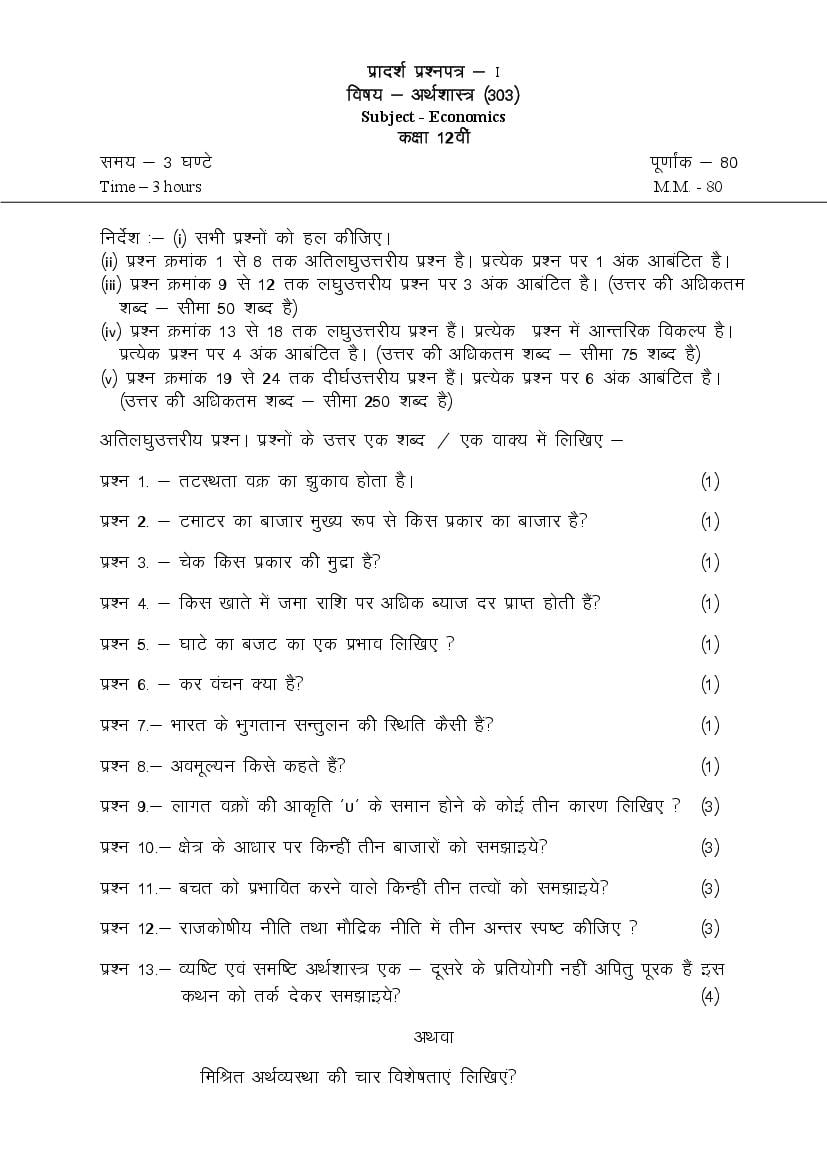
CG Board 12th Sample Paper Economics is available here for free download. Published by Chhattisgarh Board for Class 12, this sample paper can be viewed online or downloaded as a PDF (7 pages). Candidates preparing for Class 12 can use CG Board 12th Sample Paper Economics to understand the exam pattern, the type of questions asked, and the overall difficulty level.
Frequently Asked Questions
How can I download CG Board 12th Sample Paper Economics?
Open this page and click the Download button to save CG Board 12th Sample Paper Economics as a PDF. It is completely free on AglaSem Docs.
Is CG Board 12th Sample Paper Economics free to download?
Yes. CG Board 12th Sample Paper Economics can be viewed online and downloaded as a PDF free of cost on AglaSem Docs.
How many pages does CG Board 12th Sample Paper Economics have?
CG Board 12th Sample Paper Economics contains 7 pages, which you can read online or download together as a single PDF.
Where can I find more Class 12 study material?
You can find more Class 12 question papers, sample papers, syllabus, and answer keys on AglaSem Docs.
CG Board 12th Sample Paper Economics – Text
Read the full text of this sample paper below — useful to quickly search, copy and reference the content online without downloading the PDF.
📄 View text version (10 pages)
Page 1
शिक्षा मण्डल
Model Paper
CGBSE Sample Paper
(Practice Paper)
Page 2
-- AGLASEM --
d{kk & 12oha
Class – 12th
fo’k; & vFkZ“kkL= ¼303½
Subject – Economics (303)
iw.kkZd
a & 80 le; % 03 ?k.Vs
funsZ”k % Instructions:
(i) lHkh iz”u gy djuk vfuok;Z gSA
All Questions are compulsory.
(ii) iz”u Øekad 1 oLrqfu’B iz”u gSA [k.M ^^v** 05 iz”u cgqfodYih; rFkk [k.M ^^c* 05
iz”u vfry?kqmÙkjh; gSA izR;sd iz”u ij 01 vad vkcafVr gSA
Question number 1 is an objective question. Part A has five multiple choice questions and
Part B has five very short answer type questions. One mark is allotted to each questions.
(iii) iz”u Øekad 2 ls 6 rd y?kqmÙkjh; iz”u gSaA izR;sd iz”u ij 02 vad vkcafVr gSA
¼mÙkj dh vf/kdre “kCn&lhek 30 “kCn gSA½
The questions from no 02 to 06 are short answer questions, each worth 2 marks with a
maximum word limit of 30 words per answer.
(iv) iz”u Øekad 7 ls 10 rd y?kqmÙkjh; iz”u gSA izR;sd iz”u ij 03 vad vkcafVr gSA
¼mÙkj dh vf/kdre “kCn&lhek 50 “kCn gSA½
The questions from 07 to 10 are short answer questions each worth 3 marks with a
maximum word limit 50 words per answer.
(v) iz”u Øekad 11 ls 16 rd nh?kZ&mÙkjh; iz”u gSA izR;sd iz”u esa vkarfjd fodYi gSA
izR;sd iz”u ij 04 vad vkc
vkcafa Vr gSA ¼mÙkj dh vf/kdre “kCn lhek 100 “kCn gSA
The questions from 11 to 16 are long answer questions each worth 4 marks with a maximum
word limit of 100 words.
(vi) iz”u Øekad 17 ls 20 rd nh?kZ&mÙkjh; iz”u gSA
a izR;sd iz”u ij 06 vad vkcafVr
gSA ¼mÙkj dh vf/kdre “kCn&lhek 200 “kCn gSA½
The questions from 17 to 20 are long answer questions each worth 6 marks with a maximum
word limit of 200 words.
(vii) iz”u Øekad 11 ls 20 rd ds iz”uksa esa vkarfjd fodYi fn;k x;k gSA
Questions 11 to 20 also have an internal choice.
Page 3
iz”u 01 % lgh fodYi pqudj fyf[k, %& (1+1+1+1+1=5)
Choose the correct option -
(i) tc fdlh oLrq ds miHkksx esa ,d bdkbZ dh o`f) gksus ij dqy mi;ksfxrk 150 ls c<+dj
180 gks tkrh gS] rc lhekar mi;ksfxrk gksxh &
(a) 50 (b) 1.2 (c) 30 (d) 0.8333
If the total utility increases from 150 to 180 with an increase in consumption by one unit tham
the marginal Utility is –
(a) 50 (b) 1.2 (c) 30 (d) 0.8333
(ii) os ykxrsa tks vYidky es ifjofrZr ugha gksrh &
(a) ifjorZu”khy ykxrsa (b) fLFkj ykxrsa
(c) mRiknu ykxrsa (d) vkarfjd ykxrsa
Those whose cost do not change in the short term -
(a) Variable cost (b) Fixed cost
(b) (c) Production cost (d) Internal cost
(iii) cktkj larqyu og fLFkfr gS tc &
(a) ek¡x > iwfrZ (b) ek¡x < iwfrZ
(c) ek¡x = iwfrZ (d) ek¡x vkSj iwfrZ cjkcj ugha gksrs
Market equilibrium is the state when –
(a) Demand > Supply (b) Demand < Supply
(c) Demand = Supply (d) Whe Demand and Supply are not equal
(iv) uksV tkjh djus dk ,dkf/kdkj gS &
(a) dsUæh; cSd
a (b) O;kikfjd cSd
a
(c) ljdkj (d) ljdkjh cSd
a
Monopoly of issuing notes -
(a) Reserve bank (b) Commercial bank
(c) Government (d) Government bank
(v) ljdkjh ctV dk eq[; mÌs”; gksrk gS &
(a) vkfFkZd fodkl (b) dsoy vkS|ksfxd fodkl
(c) dsoy d`f’k fodkl (d) dsoy lsok {ks= dk fodkl
The main objective of government budget is -
(a) Economic development (b) Only Industrial development
(c) Only Agricultural development (d) Only service sector
Page 4
iz”u 01 % vfry?kqmÙkjh; iz”u %& (1+1+1+1+1=5)
Very short Answer type Questions -
(i) vf/kekax dc gksrh gSA
Whom does excess demand accur?
(ii) izkFkfed {ks= dk mnkgj.k fyf[k,A
Write two examples of primary sector.
(iii) lhekar cpr izo`fÙk D;k n”kkZrh gS\
What does marginal propensity to save show?
(iv) uxn dks’kkuqikr D;k gS\
What is cash reserve Ratio (C.C.R.)?
(v) lEifr dj o migkj dj dks dkxth dj D;ksa dgk tkrk gS\
Why are wealth tax and gift tax called paper tax?
iz”u 2 % tc fdlh oLrq dh dher esa o`f) ds lkFk&lkFk mldh iwfrZ esa Hkh o`f) gksrh gS rc
iwfrZ dh yksp dSlh gksrh gS\ (2)
When the supply of a commodity increases along with the increase in its price than what is the
elasticity of supply.
iz”u 3 % ,d iw.kZ izfrLi/khZ cktkj dh nks fo”ks’krk,¡ fyf[k,A (1+1=2)
Write two characteristics of a perfectly competitive market.
iz”u 4 % ge dc dgrs gSa fd cktkj esa fdlh oLrq ds fy, vf/kiwfrZ gS\ (2)
When do we say that there is excess supply of a commodity in the market?
iz”u 5 % lexz ek¡x dk vFkZ fyf[k,A (2)
Write the meaning of aggregate demand.
iz”u 6 % O;kikj “ks’k :0 10]000@& djksM+ dk vkf/kD; izdV djrk gS vkSj rS;kj oLrqvksa dk
vk;kr rS;kj oLrqvksa ds fu;kZr dk vk/kk gSA fu;kZrksa dk ewY; Kkr dhft,A (2)
The balance of trade shows a surplus of Rs. 10,000/- crore and the import of finished goods is half,
the export of finished goods find the value of export.
iz”u 7 % ek¡x dks izHkkfor djus okys dksbZ rhu dkjd fyf[k,A (1+1+1=3)
Write any three factors affecting demand.
iz”u 8 % fuEu rkfydk dks iw.kZ dhft, tcfd oLrq dh izfr bdkbZ cktkj dher 10 :0 gSA
csph xbZ ek=k dqy laizkfIr lhekar laizkfIr vkSlr laizkfIr
0
1
2
3
4
5
6
Page 5
csph xbZ ek=k Revenue total Marginal total Average total
0
1
2
3
4
5
6
iz”u 9 % lu~ 1929 dh egkeanh dk o.kZu dhft,A
Shortly describe the Great Depression 1929.
iz”u 10 % izHkkoh ek¡x D;k gS\ tc vafre oLrqvksa dh dher vkSj C;kt dh nj nh gqbZ gks] rc
vki Lok;Ùk O;; xq.kd dSls izkIr djsaxs\ (1+2=3)
How do you find the autonomous multiple when the final price of goods interest and given.
iz”u 11 % vFkZO;oLFkk dh dsUæh; leL;kvksa dh foospuk dhft,A
Discuses the central problems of economy.
vFkok@Or (1+1+1+1=4)
O;f’V ,oa lef’V vFkZ”kkL= dh ikjLifjd fuHkZjrk dks Li’V dhft,A
Explain the inter dependence of micro and macro economisc.
iz”u 12 % ,d miHkksDrk nks oLrqvksa dk miHkksx djus ds fy, bPNqd gSA nksuksa oLrqvksa dh
dher Øe”k% :0 4 rFkk :0 5 gSA miHkksDrk dh vk; :0 20 gS %
(i) ctV js[kk ds lehdj.k dk fyf[k,A
(ii) miHkksDrk ;fn viuh lai.w kZ vk; oLrq 1 ij O;; dj ns] rks og mldh fdruh ek=k dk
miHkksx dj ldrk gS\
(iii) miHkksDrk ;fn viuh laiw.kZ vk; oLrq 2 ij O;; dj ns] rks og mldh fdruh ek=k dk
miHkksx dj ldrk gS\
(iv) ctV js[kk dh izo.krk D;k gS\
A consumer is willing to consumer two goods the pricess of the two goods are Rs. 4 and Rs. 5
pespectivly the income of the consumer is Rs. 20:
(i) Write the equation of budget line.
(ii) It a consumer spends all their income on goods 1 what quantity it can they consumer?
(iii) If a consumer spends all their income on goods 2 what quantity in can consume.
(iv) What is the slope of budget line?
vFkok@Or (1+1+1+1=4)
ek¡x oØ lapyu rFkk ek¡x oØ esa LFkkukarj.k ¼f[kldko½ dks js[kkfp= }kjk le>kb;sA
Movement along the demand curve and shift in the demand curve explain with the diagram.
Page 6
fdl izdkj gksrk gSA O;k[;k dhft,A (2+2=4)
------------------------------------------------------------------------------------------------------------------------
vFkok@Or
larqyu dher rFkk ek=k fdl izdkj izHkkfor gksrh gS] tc miHkksDrk dh vk; esa &
(a) o`f) gksrh gS] (b) deh gksrh gSA
How are equilibrium price and quantity affected when income of the consumers –
(a) Increase (b) Decrease
iz”u 14 % oLrq fofue; iz.kkyh dh dfBukbZ;ksa dk eqæk us dSls lek/kku fd;k gS\(1+1+1+1=4)
How did money solve the problems of the borter system?
vFkok@Or
lk[k fu;a=.k dk dk;Z dsUæh; cSd
a }kjk dSls lEiUu fd;k tkrk gS\
How is the work of credit control accomplished by the central Bank?
iz”u 15 % jkT; ljdkj ds dj lzkrs ksa dks fyf[k,A (1+1+1+1=4)
Write the tax sources of the state government.
vFkok@Or
ljdkj dks ctV dh vko”;drk fdu dkj.kksa ls gksrh gS\
Why does the government need a budge?
iz”u 16 % fofu;e nj dks fu/kkZfjr djus okys eq[; dkjdksa dk o.kZu dhft, ¼dksbZ&4½
(1+1+1+1=4)
Describe the main factors that determine the exchange rate.
vFkok@Or
fVIi.kh fyf[k,
(i) O;kikj larqyu (ii) Hkqxrku larqyu (2+2=4)
Write a comments –
(i) Trade balance (ii) Balance of Payments
iz”u 17 % lhekar mi;ksfxrk ,oa dqy mi;ksfxrk ls D;k vk”k; gS\ bu nksuksa ds e/; lac/a k
dks js[kkfp= ds ek/;e ls Li’V dhft,A (3+3=6)
What is meant by marginal utility and total utility? Explain them both through a diagram.
vFkok@Or
iw.kZ csykspnkj ekax ,oa iw.kZr;k ykspnkj ekax dks fp= cukdj le>kb,A (3+3=6)
Explain perfectly inelastic demand and perfectly elastic demand with the help of diagrams.
Page 7
w h nsrh gSA rn~uq:i Je dk vkSlr
mRikn rFkk lhekar mRikn vuqlwph fudkfy,A (3+3=6)
L dqy mRikn
0 0
1 15
2 35
3 50
4 40
5 48
The following table gives the total product schedule of labor. Calculate the corresponding average.
Product and marginal product schedules of labor.
L Total Product
0 0
1 15
2 35
3 50
4 40
5 48
vFkok@Or
nh?kZ dkyhu lhekar ykxr rFkk vkSlr ykxr oØ dSls fn[krs gS\ js[kkfp= }kjk le>kb;sA
What do the long- run marginal cost and average cost curves look like? Explain the diagram.
iz”u 19 % fuEufyf[kr lwpukvksa ds vk/kkj ij ldy ?kjsyw mRikn (GDP) ,oa ldy jk’Vªh;
mRikn (GNP) dh x.kuk dhft,A (3+3=6)
ensa :0 djksM+ esa
(i) miHkksDrk oLrqvksa ,oa lsokvksa dk mRiknu 9300
(ii) iwathxr oLrqvksa ,oa lsokvksa dk mRiknu 6100
(iii) vk;kr 1800
(iv) fu;kZr 2000
Calculate gross Domestic product (GDP) and gross National product (GNP) based on the following
information.
Items in Rs. Crore
(i) Production of consumer goods and services 9300
(ii) Production of capital goods and services 6100
(iii) Imports 1800
(iv) Export 2000
vFkok@Or
Page 8
(3+3=6)
ensa :0 djksM+ esa
(i) ?kjsyw miHkksx 60]000
(ii) ewY;ãl 800
(iii) ykHk 18]000
(iv) “kq) fons”kh fuos”k 4]000
(v) etnwjh 45]000
(vi) ldy ?kjsyw fuos”k 16]800
(iii) C;kt 9]000
(iv) yxku 8]000
From the following data, find out the gross National product by income method and expenditure
method.
Items In Rs. Crore
(i) Domestic consumption 60,000
(ii) Depreciation 800
(iii) Profit 18,000
(iv) Net foreign investment 4000
(v) Wages 45,000
(vi) Gross Domestic investment 16,800
(vii) Interest 9,000
(viii) Rent 8,000
iz”u 20 % vHkkoh ek¡x dks Bhd djus ds mik; fyf[k,A ¼dksbZ N%½ (1+1+1+1+1+1=6)
Write the measures to correct deficient demand. (any six)
vFkok
izks0 dhUl dk jkstxkj fl)kar] jkstxkj ds ijaijkoknh fl)kar ls fdl izdkj fHkUu gS\ ¼dksbZ N%½
How does professor keynes’s theory of employment differ from the traditional theory of employment?
(any six)
&&&&&00&&&&&
Page 9
Share your recent question papers with us and get paid!
अपने हाल के न प हम भेज और कमाएँ!
To participate, email us with the following details:
भाग लेने के लए हम न न ववरण के साथ ईमेल कर:
- Your Name
- Your Class
- Your Board
- Details of the Question Papers you have
आपके पास उपल ध न प का ववरण
Our team will reach out to you with the next steps.
हमार ट म आगे क या के लए आपसे संपक करे गी।
Email: support@
Page 10
Notes
Model Papers Class 6 Notes
Sample Papers Class 7 Notes
Half Yearly Sample Papers Class 8 Notes
Class 9 Notes
Important Resources
Class 10 Notes
Periodic Table
Class 11 Notes
Writing Skills / Formats
Maps of India / World Class 12 Notes
Books and Solutions
NCERT Books
NCERT Book Solutions
HC Verma Chapter Wise Solutions
RD Sharma Solutions
CGBSE Solutions
Document Details
| Board / Org | Chhattisgarh Board |
| Exam | Class 12 |
| Type | Sample Paper |
| Pages | 7 |
| Updated | 29 Aug 2026 |