CBSE Class 12 Sculpture Question Paper 2020
Finished viewing? Save it for later —
Download CBSE Class 12 Sculpture Question Paper 2020 (PDF · 7 pages)About CBSE Class 12 Sculpture Question Paper 2020
CBSE Class 12 Sculpture Question Paper 2020 is available here for free download. Published by CBSE for Class 12, this question paper can be viewed online or downloaded as a PDF (7 pages). Candidates preparing for Class 12 can use CBSE Class 12 Sculpture Question Paper 2020 to understand the exam pattern, the type of questions asked, and the overall difficulty level.
Frequently Asked Questions
How can I download CBSE Class 12 Sculpture Question Paper 2020?
Open this page and click the Download button to save CBSE Class 12 Sculpture Question Paper 2020 as a PDF. It is completely free on AglaSem Docs.
Is CBSE Class 12 Sculpture Question Paper 2020 free to download?
Yes. CBSE Class 12 Sculpture Question Paper 2020 can be viewed online and downloaded as a PDF free of cost on AglaSem Docs.
How many pages does CBSE Class 12 Sculpture Question Paper 2020 have?
CBSE Class 12 Sculpture Question Paper 2020 contains 7 pages, which you can read online or download together as a single PDF.
Where can I find more Class 12 study material?
You can find more Class 12 question papers, sample papers, syllabus, and answer keys on AglaSem Docs.
CBSE Class 12 Sculpture Question Paper 2020 – Text
Read the full text of this question paper below — useful to quickly search, copy and reference the content online without downloading the PDF.
📄 View text version (7 pages)
Page 1
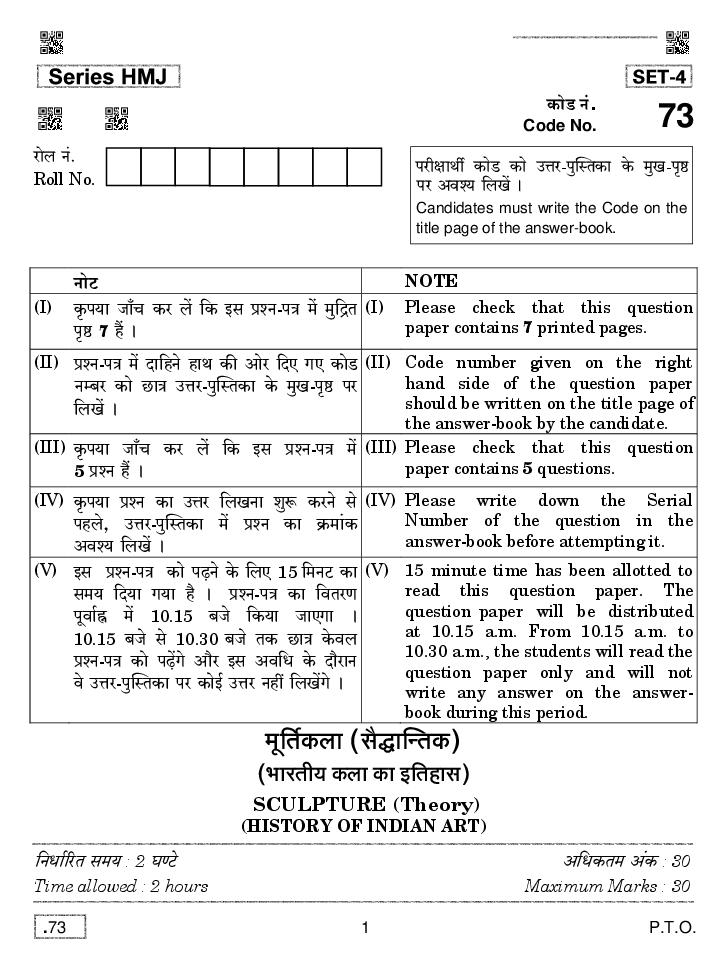
Code No. 73
amob Z§. narjmWu H$moS >H$mo CÎma-nwpñVH$m Ho$ _wI-n¥ð
Roll No. >na Adí` {bIo§ &
Candidates must write the Code on the
title page of the answer-book.
ZmoQ> NOTE
(I) H¥$n`m Om±M H$a b| {H$ Bg àíZ-nÌ _o§ _w{ÐV (I) Please check that this question
n¥ð> 7 h¢ & paper contains 7 printed pages.
(II) àíZ-nÌ _| Xm{hZo hmW H$s Amoa {XE JE H$moS (II) Code number given on the right
>Zå~a H$mo N>mÌ CÎma-nwpñVH$m Ho$ _wI-n¥ð> na hand side of the question paper
{bI| & should be written on the title page of
the answer-book by the candidate.
(III) H¥$n`m Om±M H$a b| {H$ Bg àíZ-nÌ _| (III) Please check that this question
>5 àíZ h¢ & paper contains 5 questions.
(IV) H¥$n`m àíZ H$m CÎma {bIZm ewê$ H$aZo go (IV) Please write down the Serial
nhbo, CÎma-nwpñVH$m _| àíZ H$m H«$_m§H$ Number of the question in the
Adí` {bI| & answer-book before attempting it.
(V) Bg àíZ-nÌ H$mo n‹T>Zo Ho$ {bE 15 {_ZQ >H$m (V) 15 minute time has been allotted to
g_` {X`m J`m h¡ & àíZ-nÌ H$m {dVaU read this question paper. The
nydm©• _| 10.15 ~Oo {H$`m OmEJm & question paper will be distributed
10.15 ~Oo go 10.30 ~Oo VH$ N>mÌ Ho$db at 10.15 a.m. From 10.15 a.m. to
10.30 a.m., the students will read the
àíZ-nÌ H$mo n‹T>|Jo Am¡a Bg Ad{Y Ho$ Xm¡amZ question paper only and will not
do CÎma-nwpñVH$m na H$moB© CÎma Zht {bI|Jo & write any answer on the answer-
book during this period.
_y{V©H$bm (g¡ÕmpÝVH$)
(^maVr` H$bm H$m B{Vhmg)
SCULPTURE (Theory)
(HISTORY OF INDIAN ART)
{ZYm©[aV g_` : 2 KÊQ>o A{YH$V_ A§H$ : 30
Time allowed : 2 hours Maximum Marks : 30
.73 1 P.T.O.
Page 2
IÊS> H$ 16=6
{ZX}e : àíZ Ho$ g^r N>… ^mJm| Ho$ CÎma {b{IE &
1. àíZ Ho$ ZrMo {XE JE {dH$ënm| go [aº$ ñWmZm| H$s ny{V© H$s{OE &
(i) g_H$mbrZ (AmYw{ZH$) ^maVr` _y{V©H$ma am_qH$H$a d¡O Ûmam {Z{_©V _y{V© -{eën
‘g§Wmb n[adma’ __________ _mÜ`_/gm_J«r _|/go ~Zm`m J`m h¡ &
(A) nrVb
(B) gr_|Q> Am¡a H§$H$arQ>
(C) H$m±ñ`
(D) H$mîR>
(ii) à{gÕ g_H$mbrZ (AmYw{ZH$) ^maVr` _y{V©H$ma A_aZmW ghJb Ûmam ~ZmE JE
_y{V©-{eën H$m erf©H$ ___________ h¡ &
(A) AZgwZr MrI|
(B) MVw_w©Ir
(C) JUoe
(D) g§Wmb n[adma
(iii) {ZåZ{b{IV _| go __________ g_H$mbrZ (AmYw{ZH$) ^maVr` N>mnm-{MÌH$ma Zht
h¡ &
(A) AZwn_ gyX
(B) gmo_ZmW hmoa
(C) Xodr àgmX am`Mm¡Yar
(D) H¥$îUm aoS²>S>r
(iv) ^maVr` amîQ´>r` ÜdO _| MH«$ H$m a§J __________ h¡ &
(A) à{e`Z Zrbm
(B) bmOdXu Zrbm
(C) H$mbm
(D) g_wÐr Zrbm
.73 2
Page 3
indicated against each Section.
SECTION A 16=6
Instruction : Write answers for all six parts of the question by selecting the correct
one from the given options.
1. Fill in the blanks out of the options given below the question.
(i) The sculpture ‘Santhal Family’ made by the Contemporary
(modern) Indian sculptor Ramkinkar Vaij has been made in
____________ medium/material.
(A) Bronze
(B) Cement and Concrete
(C) Copper
(D) Wood
(ii) The title of the sculpture made by the famous Contemporary
(modern) Indian sculptor Amar Nath Sehgal is _____________ .
(A) Cries Un-heard
(B) Chatturmukhi
(C) Ganesha
(D) Santhal Family
(iii) Among the following, ____________ is not a Contemporary
(modern) Indian graphic-artist/print maker.
(A) Anupam Sud
(B) Somnath Hore
(C) Debi Prasad Roychowdhury
(D) Krishna Reddy
(iv) The colour of the Chakra in the Indian National Flag is _________ .
(A) Prussian Blue
(B) Ultramarine Blue
(C) Black
(D) Navy Blue
.73 3 P.T.O.
Page 4
h¡ &
(A) H$~ra Am¡a a¡Xmg
(B) Xmam ewH$moh H$s ~mamV
(C) JmodY©ZYmar H¥$îU
(D) gbr_ H$m OÝ_
(vi) à{gÕ XpŠIZr bKw-{MÌ ‘hµOaV {ZµOm_wÔrZ Am¡{b`m Am¡a A_ra Iwgamo’ _| {MÌH$ma
Zo ___________ g§~§Y H$m {MÌU {H$`m h¡ &
(A) {nVm – nwÌ
(B) ^mB© – ^mB©
(C) Jwé – {eî`
(D) XmoñV – XmoñV
IÊS> I$ 23=6
{ZX}e : àíZ Ho$ {H$Ýht VrZ ^mJm| _| go àË`oH$ H$m CÎma bJ^J 30 eãXm| _| {b{IE &
2. (a) AnZo nmR>çH«$_ _| gpå_{bV {ZåZ{b{IV bKw-{MÌm| _| go {H$gr EH$ H$m
gm¢X`©-{ddoMZ `Wm{d{Y gm¢X`© _mnXÊS>m| Ho$ AmYma na g§jon _| H$s{OE :
(i) gbr_ H$m OÝ_
AWdm
(ii) am{JZr nQ>-h§{gH$m
(b) amOñWmZr e¡br Ho$ {ZåZ{b{IV {MÌH$mam| _| go {H$gr EH$ H$s gamhZm Amn Š`m|
H$aVo h¢ ? AnZo nmR>çH«$_ _| gpå_{bV CgHo$ {MÌ-{deof Ho$ g§X^© _| CgH$s
H$m`©-e¡br, _mÜ`_ VWm {df`-dñVw Ho$ g§`moOZ na EH$ g§{jßV {Q>ßnUr {b{IE :
(i) gm{h~XrZ
AWdm
(ii) Jw_mZ
(c) nhm‹S>r e¡br Ho$ {MÌH$ma _mZHy$ Ûmam a{MV à{gÕ bKw-{MÌ ‘H¥$îU Jmo{n`m| Ho$ g§J’
AmnH$s am` _| Š`m| gamhZr` H$bmH¥${V h¡ ? AnZo CÎma H$s nw{îQ> g§jon _| H$s{OE &
.73 4
Page 5
Hindu Gods-Goddesses have also been depicted/painted.
(A) Kabir and Raidas
(B) Marriage Procession of Dara Shukoh
(C) Krishna Lifting Mount Govardhana
(D) Birth of Salim
(vi) __________ relationships have been shown by the painter in the
famous Deccan miniature painting ‘Hazrat Nizamuddin Auliya
and Amir Khusro’.
(A) Father – Son
(B) Brother – Brother
(C) Teacher – Pupil
(D) Friend – Friend
SECTION B 23=6
Instruction : Write answers for each of the three parts of the question in about
30 words.
2. (a) Appreciate any of the following miniature paintings included in
your course of study duly based on the aesthetic-parameters in
short :
(i) Birth of Salim
OR
(ii) Ragini Pat-hamsika
(b) Why do you appreciate any of the following painters of the
Rajasthani School ? Write a short note of his technique, medium
and compositional-arrangement of the subject-matter with
reference to his particular painting included in your course of
study :
(i) Sahibdin
OR
(ii) Guman
(c) Why in your opinion is the miniature-painting ‘Krishna with Gopis’
done by Manaku of Pahari School appreciable ? Substantiate your
answer in short.
.73 5 P.T.O.
Page 6
{ZX}e : àíZ Ho$ XmoZm| ^mJm| _| go àË`oH$ H$m CÎma bJ^J 100 eãXm| _| {b{IE &
3. (a) OmoYnwa Cne¡br Ho$ à{gÕ bKw-{MÌ ‘Mm¡JmZ Ho$ {Ibm‹S>r’ H$s {df`-dñVw Ho$ {ZénU
_| {MÌH$ma XmZm {H$g àH$ma g\$b hþE h¢ ? Cn`wº$ CXmhaUm| g{hV gm¢X`© _mnXÊS>m|
Ho$ AmYma na AnZo CÎma H$s nw{îQ> H$s{OE &
(b) AnZo nmR>çH«$_ _| gpå_{bV nhm‹S>r bKw-{MÌm| _| go {H$gr EH$ Ho$ gm¢X`©-d¡^d H$m
_yë`m§H$Z Cn`wº$ CXmhaUm| g{hV `Wm{d{Y gm¢X`©-_mnXÊS>m| Ho$ AmYma na> H$s{OE &
IÊS> K$ 61=6
{ZX}e : {XE JE àíZ H$m CÎma bJ^J 200 eãXm| _| {b{IE &
4. AnZo nmR>çH«$‘ ‘| gpå‘{bV g‘H$mbrZ (AmYw{ZH$) ^maVr¶ ‘y{V©-{eënm| ‘| go {H$gr EH$
H$mo Amn Š`m| gdm©{YH$ ngÝX AWdm ZmngÝX H$aVo h¢ ? BgHo$ _y{V©H$ma Ûmam _mÜ`_ Ed§
VH$ZrH$ H$m g§MmbZ H$aZo, {df`-dñVw H$m {MÌU H$aZo VWm CgHo$ g§`moOZ H$aZo Ho$ T>§J H$s
j_Vm Ho$ AmbmoH$ _| AnZo g_w{MV H$maU {dñV¥V ê$n _| Xr{OE &
AWdm
AnZo nmR>çH«$‘ ‘| gpå‘{bV ~§Jmb e¡br Ho$ {ZåZ{b{IV {MÌm| _| go {H$gr EH$ H$mo Amn
Š`m| ngÝX AWdm ZmngÝX H$aVo h¢ ? gm¢X`©-_mnXÊS>m| Ho$ AmYma na AnZo g_w{MV H$maU
{dñV¥V ê$n _| Xr{OE :
(a) amgbrbm
AWdm
(b) _oKXÿV
IÊS> L>$ 61=6
{ZX}e : {XE JE àíZ H$m CÎma bJ^J 200 eãXm| _| {b{IE &
5. AnZo nmR>çH«$‘ ‘| gpå‘{bV ‘wµJb AWdm Xp³IZr bKw-{MÌe¡br Ho$ {H$gr EH$ gå~Õ
{MÌ H$s nhMmZ H$s{OE, {Og_| {ZåZ{b{IV {deofVmE± g_m{dîQ> hm| Am¡a CÝh| Cg {MÌ _|
VXZwgma g_PmBE :
(a) ‘wµJb bKw-{MÌm| _| new-n{j`m| H$m gOrd {MÌU &
AWdm
(b) XpŠIZr bKw-{MÌm| _| Ñí`mË_H$ n¥îR>^y{_ H$m {d{eîQ>> XpŠIZr nhm{‹S>`m| Ho$ gmW
àñVwVrH$aU &
.73 6
Page 7
Instruction : Write the answer for each of the two parts of the question
in about 100 words.
3. (a) How has the painter Dana been successful in depicting the
subject-matter of the famous miniature-painting ‘Chaugan Players’
of the Jodhpur sub-school ? Substantiate your answers with
suitable examples based on the aesthetic-parameters.
(b) Evaluate the aesthetic grandeur of any Pahari miniature-painting
included in your course of study duly based on the
aesthetic-parameters with suitable examples.
SECTION D 61=6
Instruction : Write answer for the given question in about 200 words.
4. Which one do you like or dislike most among all the Contemporary
(modern) Indian sculptures included in your course of study ? Give your
appropriate reasons in detail in the light of the capability of its sculptor
in handling the medium & technique, depiction of the subject-matter and
his way of composition.
OR
Which one do you like or dislike among the following paintings of the
Bengal School included in your course of study ? Give your appropriate
reasons in detail, based on the aesthetic-parameters.
(a) Rasa-Lila.
OR
(b) Meghdoot
SECTION E 61=6
Instruction : Write the answer for the given question in about 200 words.
5. Identify any relevant painting of the Mughal or Deccan School of
Miniature-Painting included in your course of study comprising of the
following features and explain them in that painting accordingly :
(a) Live depiction of animals and birds in the Mughal miniature-
paintings.
OR
(b) The representation of the landscapic background with typical
Deccani hills in the Deccan Miniature-Paintings.
.73 7 P.T.O.
Document Details
| Board / Org | CBSE |
| Exam | Class 12 |
| Type | Question Paper |
| Pages | 7 |
| Updated | 22 Jul 2026 |