Karnataka 2nd PUC Question Paper 2025 Economics
Finished viewing? Save it for later —
Download Karnataka 2nd PUC Question Paper 2025 Economics (PDF · 7 pages)About Karnataka 2nd PUC Question Paper 2025 Economics
Karnataka 2nd PUC Question Paper 2025 Economics is available here for free download. Published by Karnataka Board for Class 12, this question paper can be viewed online or downloaded as a PDF (7 pages). Candidates preparing for Class 12 can use Karnataka 2nd PUC Question Paper 2025 Economics to understand the exam pattern, the type of questions asked, and the overall difficulty level.
Frequently Asked Questions
How can I download Karnataka 2nd PUC Question Paper 2025 Economics?
Open this page and click the Download button to save Karnataka 2nd PUC Question Paper 2025 Economics as a PDF. It is completely free on AglaSem Docs.
Is Karnataka 2nd PUC Question Paper 2025 Economics free to download?
Yes. Karnataka 2nd PUC Question Paper 2025 Economics can be viewed online and downloaded as a PDF free of cost on AglaSem Docs.
How many pages does Karnataka 2nd PUC Question Paper 2025 Economics have?
Karnataka 2nd PUC Question Paper 2025 Economics contains 7 pages, which you can read online or download together as a single PDF.
Where can I find more Class 12 study material?
You can find more Class 12 question papers, sample papers, syllabus, and answer keys on AglaSem Docs.
Karnataka 2nd PUC Question Paper 2025 Economics – Text
Read the full text of this question paper below — useful to quickly search, copy and reference the content online without downloading the PDF.
📄 View text version (18 pages)
Page 1
Karnataka Secondary Education Examination Board
Question Papers
Page 2
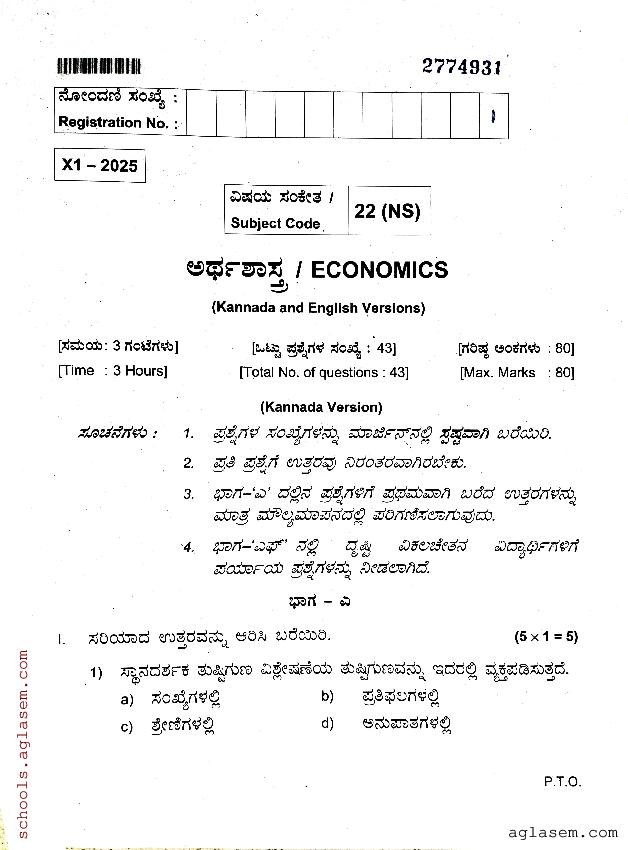
Registration No. :
X1 – 2025
«µÀAiÀÄ ¸ÀAPÉÃvÀ /
22 (NS)
Subject Code
CxÀð±Á¸ÀÛç / ECONOMICS
(Kannada and English Versions)
[¸ÀªÀÄAiÀÄ: 3 UÀAmÉUÀ¼ÀÄ] [MlÄÖ ¥Àæ±ÉßUÀ¼À ¸ÀASÉå : 43] [UÀjµÀ× CAPÀUÀ¼ÀÄ : 80]
[Time : 3 Hours] [Total No. of questions : 43] [Max. Marks : 80]
(Kannada Version)
ÓÜãaÜ®æWÜÙÜá : 1. ¥Àæ±ÉßUÀ¼À ¸ÀASÉåUÀ¼À£ÀÄß ªÀiÁfð£ï£À°è ¸ÀàµÀÖªÁV §gɬÄj.
2. ¥Àæw ¥Àæ±ÉßUÉ GvÀÛgÀªÀÅ ¤gÀAvÀgÀªÁVgÀ¨ÉÃPÀÄ.
3. ¨sÁUÀ-‘J’ zÀ°è£À ¥Àæ±ÉßUÀ½UÉ ¥Àæxª
À ÄÀ ªÁV §gÉzÀ GvÀÛgU
À ¼
À £
À ÄÀ ß
ªÀiÁvÀæ ªÀiË®åªÀiÁ¥À£ÀzÀ°è ¥ÀjUÀt¸À¯ÁUÀĪÀÅzÀÄ.
4. ¨sÁUÀ-‘J¥sï ’ £À°è zÀ馅 «PÀ®ZÉÃvÀ£À «zÁåyðUÀ½UÉ
¥ÀAiÀiÁðAiÀÄ ¥Àæ±ÉßUÀ¼À£ÀÄß ¤ÃqÀ¯ÁVzÉ.
¨sÁUÀ - J
I. ¸ÀjAiÀiÁzÀ GvÀÛgÀªÀ£ÀÄß Dj¹ §gɬÄj. (5 × 1 = 5)
1) ¸ÁÜ£z
À ±
À ð
À PÀ vÀĶÖUÀÄt «±ÉèõÀuA
É iÀÄ vÀĶÖUÀÄtªÀ£ÀÄß EzÀg°
À è ªÀåPÛÀ¥Àr¸ÀÄvÀÛzÉ.
a) ¸ÀASÉåUÀ¼À°è b) ¥Àæw¥sÀ®UÀ¼À°è
c) ±ÉæÃtÂUÀ¼À°è d) C£ÀÄ¥ÁvÀUÀ¼À°è
P.T.O.
Page 3
2) TFC AiÀÄÄ 100 gÀÆ.UÀ¼ÀÄ ªÀÄvÀÄÛ TVC AiÀÄÄ 125 gÀÆ.UÀ½zÁÝUÀ,
MlÄÖ ªÉZÀѪÀ£ÀÄß PÀAqÀÄ»r¬Äj.
a) 25 b) 125
c) 175 d) 225
3) ªÀĺÁ DyðPÀ PÀĹvÀzÀ ªÀµÀð
a) 1929 b) 1889
c) 1920 d) 2018
4) ¸Á®zÀ ¸ÀÄ®¨sÀ ®¨sÀåvÉAiÀÄÄ EzÀ£ÀÄß GvÉÛÃf¸ÀÄvÀÛzÉ.
a) G½vÁAiÀÄ b) ºÀÆrPÉ
c) §rØ zÀgÀ d) ºÀÆrPÉ »AvÉUÉvÀ
5) C£ÀĨsÉÆÃVUÀ¼ÀÄ ªÀÄvÀÄÛ GvÁàzÀPÀgÀÄ zÉòÃAiÀÄ ªÀÄvÀÄÛ «zÉò ¸ÀgÀPÀÄUÀ¼À
£ÀqÀÄªÉ DAiÉÄÌ ªÀiÁrPÉƼÀÀÄzÀÄ, F ªÀiÁgÀÄPÀmÉÖ PÉÆArAiÀÄ£ÀÄß
»ÃUÉ£ÀÄßvÉÛêÉ.
a) ºÀtPÁ¸ÀÄ ªÀiÁgÀÄPÀmÉÖ PÉÆAr
b) GvÀà£Àß ªÀiÁgÀÄPÀmÉÖ PÉÆAr
c) ±ÀæªÀÄzÀ ªÀiÁgÀÄPÀmÉÖ PÉÆAr
d) «¤ªÀÄAiÀÄ ªÀiÁgÀÄPÀmÉÖ PÉÆAr
II. DªÀgÀtzÀ°ègÀĪÀ ¸ÀjAiÀiÁzÀ GvÀÛgÀªÀ£ÀÄß Dj¹, SÁ° ©lÖ ¸ÀܼÀUÀ¼À£ÀÄß
¨sÀwð ªÀiÁr. (5 × 1 = 5)
(ºÀtPÁ¹£À, ¸ÀPÁðgÀ, RBI, ¥Àj¥ÀÆtð ¥ÉÊ¥ÉÆÃn, GvÀà£Àß, SÁ¸ÀV)
6) PÉÃA¢æÃAiÀÄ AiÉÆÃfvÀ DyðPÀvÉAiÀÄ°è J¯Áè ¥ÀæªÀÄÄR ¤zsÁðgÀUÀ¼À£ÀÄß
____________ vÉUÉzÀÄPÉƼÀÄîvÀÛzÉ.
7) ¨É¯É ¥ÀqÉAiÀÄĪÀ ªÀvÀð£ÉAiÀÄÄ ____________ ªÀiÁgÀÄPÀmÉÖAiÀÄ «©ü£Àß
UÀÄt®PÀëtªÁVzÉ.
Page 4
8) ªÀiË®åªÀ¢üðvÀ «zsÁ£ÀªÀÅ ____________ «zsÁ£ÀzÀ ¥ÀAiÀiÁðAiÀÄ
ºÉ¸ÀgÁVzÉ.
9) ¨sÁgÀvÀzÀ°è PÀgɤìAiÀÄ£ÀÄß (£ÉÆÃlÄUÀ¼À£ÀÄß) ZÀ¯ÁªÀuÉUÉ vÀgÀĪÀ KPÀªÀiÁvÀæ
¸ÀA¸ÉÜ ____________.
10) ¨sÁgÀvÀzÀ°è ____________ ªÀµÀðªÀÅ K¦æ¯ï 1 jAzÀ ªÀiÁZïð 31 gÀ
ªÀgÉVgÀÄvÀÛzÉ.
III. ºÉÆA¢¹ §gɬÄj. (5 × 1 = 5)
A B
11) a) ªÀiÁzÀj CxÀð±Á¸ÀÛç i) VMPL
b) PÀÆ° zÀgÀ ii) «±Á® ºÀt
c) UÀȺÀPÀÈvÀå iii) ªÀÄzsÀåªÀwð ¸ÀgÀPÀÄ
d) M3 ªÀÄvÀÄÛ M4 iv) PÁAiÀÄðvÀAvÀæUÀ¼À PÁAiÀÄð¤ªÀðºÀuÉ
e) PÀZÁÑ ¸ÀgÀPÀÄ v) ºÀtgÀ»vÀ «¤ªÀÄAiÀÄ
vi) PÁAiÀÄðvÀAvÀæUÀ¼À ªÀiË®åªÀiÁ¥À£À
IV. F PɼÀV£À ¥Àæ±ÉßUÀ½UÉ MAzÀÄ ªÁPÀå CxÀªÁ ¥ÀzÀzÀ°è GvÀÛj¹j. (5 × 1 = 5)
12) ªÀiÁgÀÄPÀmÉÖ DyðPÀvÉUÉ MAzÀÄ GzÁºÀgÀuÉAiÀÄ£ÀÄß PÉÆr.
13) E§âgÀ C£ÀĨsÉÆÃVUÀ¼À ¨ÉÃrPÉ gÉÃSÉUÀ¼ÀÄ PÀæªÀĪÁV d1 (P) = 20 – P ªÀÄvÀÄÛ
d2 (P) = 15 – P DzÁUÀ, ªÀiÁgÀÄPÀmÉÖ ¨ÉÃrPÉ gÉÃSÉAiÀÄ£ÀÄß PÀAqÀÄ»r¬Äj.
14) CPI – «¸ÀÛj¹.
15) ¥ÁæxÀ«ÄPÀ PÉÆgÀvÉ JAzÀgÉãÀÄ?
16) ªÀÄÄPÀÛ DyðPÀvÉ JAzÀgÉ K£ÉAzÀÄ CxÉÊð¸ÀÄ«j?
Page 5
¨sÁUÀ - ©
V. F PɼÀV£À AiÀiÁªÀÅzÁzÀgÀÆ DgÀÄ ¥Àæ±ÉßUÀ½UÉ ¥ÀæwAiÉÆAzÀPÀÆÌ 4 ªÁPÀåUÀ¼À°è
GvÀÛj¹j. (6 × 2 = 12)
17) C£ÀĨsÉÆÃVAiÀÄ DzÀ±Àð DAiÉÄÌAiÀÄ£ÀÄß ¤zsÀðj¸ÀĪÀ CA±ÀUÀ¼À£ÀÄß ¥ÀnÖ ªÀiÁr.
18) ¨ÉÃrPÉ ¤AiÀĪÀĪÀ£ÀÄß w½¹.
19) ¥Àæw¥sÀ®UÀ¼À ¥ÀæªÀiÁtzÀ «zsÀUÀ¼À£ÀÄß w½¹.
20) ¢ÃWÁðªÀ¢ü ªÉZÀÑUÀ¼À£ÀÄß ºÉ¸Àj¹.
21) £Á®ÄÌ GvÁàzÀ£ÁAUÀUÀ¼ÁªÀŪÀÅ? CªÀÅUÀ¼À ¥Àæw¥sÀ®UÀ¼À£ÀÄß ºÉ¸Àj¹.
22) £ÁªÀĪÀiÁvÀæ ªÀÄvÀÄÛ £ÉÊd GDP UÀ¼À £ÀqÀÄ«£À ªÀåvÁå¸ÀªÀ£ÀÄß §gɬÄj.
23) £ÀUÀzÀÄ «ÄøÀ®Ä C£ÀÄ¥ÁvÀ ªÀÄvÀÄÛ ±Á¸À£À§zÀÞ zÀæªÀåvÉAiÀÄ C£ÀÄ¥ÁvÀUÀ¼À
CxÀðªÀ£ÀÄß ¤Ãr.
24) ºÀtzÀ ¨ÉÃrPÉAiÀÄ JgÀqÀÄ GzÉÝñÀUÀ¼À£ÀÄß w½¹.
25) C = 150 + 0.5Y , ¤ÃrgÀĪÀ C£ÀĨsÉÆÃUÀ ©A§PÀªÁVzÀÄÝ, ¸ÁéAiÀÄvÀÛ
C£ÀĨsÉÆÃUÀ ªÀÄvÀÄÛ MPC AiÀÄ ªÀiË®åUÀ¼À£ÀÄß UÀÄgÀÄw¹.
26) ¥ÀÄPÀÌmÉÖ ¸ÀªÁgÀgÉAzÀgÉ AiÀiÁgÀÄ? CªÀgÀ£ÀÄß KPÉ ºÁUÉ PÀgÉAiÀÄÄvÁÛgÉ?
¨sÁUÀ - ¹
VI. F PɼÀV£À AiÀiÁªÀÅzÁzÀgÀÆ LzÀÄ ¥Àæ±ÉßUÀ½UÉ ¥ÀæwAiÉÆAzÀPÀÆÌ 12 ªÁPÀåUÀ¼À°è
GvÀÛj¹. (5 × 4 = 20)
27) MAzÀÄ ¸ÀgÀ¼À DyðPÀvÉAiÀÄ°è PÀȶ PÀÄlÄA§, £ÉÃPÁgÀ ªÀÄvÀÄÛ ²PÀëPÀgÀÄ
¸ÀA¥À£ÀÆä®UÀ¼À£ÀÄß §¼À¹ ºÉÃUÉ vÀªÀÄä CUÀvÀåUÀ¼À£ÀÄß ¥ÀÆgÉʹPÉƼÀÄîvÁÛgÉ
JA§ÄzÀ£ÀÄß ¸ÀAQë¥ÀÛªÁV «ªÀj¹.
Page 6
28) §eÉmï UÀtªÀ£ÀÄß gÉÃSÁavÀæzÀ ¸ÀºÁAiÀÄ¢AzÀ ¸ÀAQë¥ÀÛªÁV «ªÀj¹.
29) ¸ÁªÀiÁ£Àå ¸ÀgÀPÀÄ ªÀÄvÀÄÛ PɼÀzÀeÉðAiÀÄ ¸ÀgÀPÀÄUÀ¼À £ÀqÀÄ«£À ªÀåvÁå¸ÀUÀ¼À£ÀÄß
GzÁºÀgÀuÉUÀ¼ÉÆA¢UÉ ¥ÀnÖ ªÀiÁr.
30) F PɼÀV£À PÉÆõÀÖPÀªÀÅ MAzÀÄ ¥Àj¥ÀÆtð ¥ÉÊ¥ÉÆÃn GzÀåªÀÄzÀ
MlÄÖ DzÁAiÀÄ (TR) ªÀÄvÀÄÛ MlÄÖ ªÉZÀÑzÀ (TC) ¥ÀnÖAiÀÄ£ÀÄß vÉÆÃj¸ÀÄvÀÛzÉ.
¥Àæw GvÀà£Àß ºÀAvÀzÀ ¯Á¨sÀªÀ£ÀÄß ¯ÉPÀÌ ªÀiÁr.
ªÀiÁgÁlzÀ ¥ÀæªÀiÁt TR TC
¯Á¨sÀ
(Q) (gÀÆ.UÀ¼À°è) (gÀÆ.UÀ¼À°è)
0 0 5
1 10 7
2 20 10
3 30 12
4 40 25
5 50 40
6 60 60
7 70 75
31) ¨ÉÃrPÉ ªÀÄvÀÄÛ ¥ÀÆgÉÊPÉAiÀÄ KPÀPÁ°PÀ ¥À®èlUÀ½AzÀ ¸ÀªÀÄvÉÆî£ÀzÀ ªÉÄð£À
¥ÀjuÁªÀĪÀ£ÀÄß vÉÆÃj¸ÀĪÀ PÉÆõÀÖPÀªÀ£ÀÄß §gɬÄj.
32) C©üªÀÈ¢Þ ºÉÆA¢zÀ ªÀÄvÀÄÛ C©üªÀȢ޲î zÉñÀUÀ¼ÉgÀqÀgÀ°è ¸ÀPÁðgÀzÀ
(gÁdå) ªÀÄvÀÄÛ PÀÄlÄA§ ªÀ®AiÀÄUÀ¼À ¥ÁvÀæªÀ£ÀÄß ZÀað¹.
33) ¨ÁºÀåvÉUÀ¼À£ÀÄß PÀÄjvÀÄ §gɬÄj.
34) ºÀÆrPÉ ©A§PÀªÀ£ÀÄß gÉÃSÁavÀæzÉÆA¢UÉ «ªÀj¹.
35) ¸ÀAzÁAiÀÄ ¨ÁQAiÀÄ §AqÀªÁ¼À SÁvÉAiÀÄ ¨sÁUÀUÀ¼À ¥ÀlªÀ£ÀÄß §gɬÄj.
Page 7
¨sÁUÀ - r
VII. F PɼÀV£À AiÀiÁªÀÅzÁzÀgÀÆ ªÀÄÆgÀÄ ¥Àæ±ÉßUÀ½UÉ ¥ÀæwAiÉÆAzÀPÀÆÌ 20 ªÁPÀåUÀ¼À°è
GvÀÛj¹. (3 × 6 = 18)
36) OzÁ¹Ã£Àå ªÀPÀægÉÃSÉAiÀÄ ®PÀëtUÀ¼À£ÀÄß gÉÃSÁavÀæUÀ¼ÉÆA¢UÉ ¸ÀàµÀÖ¥Àr¹.
37) ªÀiÁgÀÄPÀmÉÖ ¥ÀÆgÉÊPÉ gÉÃSÉAiÀÄ£ÀÄß gÉÃSÁavÀæzÉÆA¢UÉ «ªÀj¹.
38) ¤¢ðµÀÖ ªÀµÀðzÀ°è ªÀiÁgÀÄPÀmÉÖ ¨É¯ÉUÀ¼À°è MAzÀÄ zÉñÀzÀ GDP AiÀÄÄ
gÀÆ. 4,000 PÉÆÃn EzÉ JAzÀÄPÉƼÉÆîÃt. «zÉñÀUÀ½AzÀ ¤ªÀé¼À
GvÁàzÀ£ÁAUÀ DzÁAiÀÄ [NFIA] gÀÆ. 500 PÉÆÃn EzÉ. ¸ÀªÀPÀ½
ªÉZÀÑ gÀÆ. 450 PÉÆÃn ªÀÄvÀÄÛ ¤ªÀé¼À ¥ÀgÉÆÃPÀë vÉjUÉUÀ¼À ªÀiË®å [NIT]
gÀÆ. 300 PÉÆÃn EzÉ. F PɼÀV£À PÉÆõÀÖPÀªÀ£ÀÄß ¥ÀÆtðUÉƽ¹.
ªÀiË®åUÀ¼ÀÄ
C£À£ÀåvÉUÀ¼ÀÄ
(PÉÆÃn gÀÆ.UÀ¼À°è)
GDPMP 4,000
GDPFC
NDPMP
NDPFC
GNPMP
GNPFC
NNPMP
39) ºÀtzÀ PÁAiÀÄðUÀ¼À£ÀÄß «ªÀj¹. EzÀÄ ºÉÃUÉ ¸Án «¤ªÀÄAiÀÄ ¥ÀzÀÞwAiÀÄ
zÉÆõÀUÀ¼À£ÀÄß ¤ªÁj¹vÀÄ?
40) ¹ÜgÀ «¤ªÀÄAiÀÄ zÀgÀ ªÀÄvÀÄÛ §zÀ¯ÁUÀĪÀ «¤ªÀÄAiÀÄ zÀgÀUÀ¼À UÀÄt ªÀÄvÀÄÛ
zÉÆõÀUÀ¼À£ÀÄß ¥ÀnÖ ªÀiÁr.
Page 8
¨sÁUÀ - E
VIII. F PɼÀV£À AiÀiÁªÀÅzÁzÀgÀÆ JgÀqÀÄ PÁAiÀÄð¨sÁgÀ ªÀÄvÀÄÛ ¤AiÉÆÃd£É DzsÁjvÀ
¥Àæ±ÉßUÀ½UÉ GvÀÛj¹. (2 × 5 = 10)
41) F PɼÀV£À PÉÆõÀÖPÀzÀ°è PÁuÉAiÀiÁzÀ GvÀà£ÀßUÀ¼À£ÀÄß PÀAqÀÄ»r¬Äj.
GvÁàzÀ£ÁAUÀ (L) TPL MPL APL
0 0 0 0
1 15 15
2 25
3 25 16.66
4 10 15
5 68 8 13.60
42) F PɼÀV£À PÉÆõÀÖPÀPÉÌ MAzÀÄ gÉÃSÁavÀæªÀ£ÀÄß gÀa¹ ªÀÄvÀÄÛ gÉÃSÁavÀæzÀ°è
¸ÀªÀÄvÉÆî£À ©AzÀÄ, ¸ÀªÀÄvÉÆî£À ¨É¯É, ¸ÀªÀÄvÉÆî£À ¥ÀæªÀiÁt,
C¢üPÀ ¨ÉÃrPÉ ºÁUÀÆ C¢üPÀ ¥ÀÆgÉÊPÉUÀ¼À£ÀÄß UÀÄgÀÄw¹.
P QD QS
1 25 5
2 20 10
3 15 15
4 10 20
5 5 25
43) ¤ªÀÄä PÀÄlÄA§zÀ ªÀiÁ¹PÀ DzÁAiÀÄ ªÀÄvÀÄÛ ªÉZÀÑUÀ¼À£ÉÆß¼ÀUÉÆAqÀ
MAzÀÄ G½vÁAiÀÄ ªÀÄÄAUÀqÀ¥ÀvÀæªÀ£ÀÄß vÀAiÀiÁj¹.
Page 9
¨sÁUÀ - J¥sï
[zÀ馅 «PÀ®ZÉÃvÀ£À «zÁåyðUÀ½UÉ ªÀiÁvÀæ]
41) TPL, MPL ªÀÄvÀÄÛ APL UÀ¼À CxÀðªÀ£ÀÄß ¤Ãr.
42) ªÀiÁgÀÄPÀmÉÖ ¸ÀªÀÄvÉÆî£À, ¸ÀªÀÄvÉÆî£À ¨É¯É, ¸ÀªÀÄvÉÆî£À ¥ÀæªÀiÁt,
C¢üPÀ ¨ÉÃrPÉ ºÁUÀÆ C¢üPÀ ¥ÀÆgÉÊPÉUÀ¼À CxÀðªÀ£ÀÄß ¤Ãr.
—————————
Page 10
(English Version)
Instructions : 1. Write the question numbers legibly in the margin.
2. Answer for the questions should be continuous.
3. For PART – ‘A’ questions, only the first written answers
will be considered for evaluation.
4. In PART – ‘F’, alternative questions are given for visually
challenged students.
PART – A
I. Choose the correct answer. (5 × 1 = 5)
1) Ordinal utility analysis expresses utility in
a) Numbers b) Returns
c) Ranks d) Ratios
2) Find Total Cost, when TFC is 100 and TVC is 125.
a) 25 b) 125
c) 175 d) 225
3) The year of Great Depression
a) 1929 b) 1889
c) 1920 d) 2018
4) Easy availability of credit encourages,
a) Savings b) Investment
c) Rate of interest d) Disinvestment
5) The consumers and producers can choose between domestic and foreign
goods, this market linkage is called,
a) Financial market linkage
b) Output market linkage
c) Labour market linkage
d) Exchange market linkage
Page 11
II. Fill in the blanks by choosing correct answers from the bracket. (5 × 1 = 5)
(Financial, Government, RBI, Perfect competition, Product, Private)
6) In a centrally planned economy, all important decisions are
taken by _________.
7) Price taking behaviour is the distinguishing characteristic of _________
market.
8) Value added method is the alternative name of _________ method.
9) _________ is the only institution which can issue currency in India.
10) _________ year runs from 1st April to 31st March in India.
III. Match the following. (5 × 1 = 5)
A B
11) a) Normative Economics i) VMPL
b) Wage Rate ii) Broad Money
c) Domestic Service iii) Intermediate goods
d) M3 and M4 iv) Functioning of Mechanism
e) Raw material v) Non-Monetary Exchange
vi) Evaluation of Mechanism
Page 12
IV. Answer the following questions in a sentence or word. (5 × 1 = 5)
12) Give an example for market economy.
13) If the demand curves of two consumers are d1 (P ) = 20 − P and
d 2 (P ) =15 − P respectively, find out the market demand curve.
14) CPI – Expand.
15) What is primary deficit?
16) What do you mean by open economy?
PART – B
V. Answer any six of the following questions in 4 sentences each. (6 × 2 = 12)
17) List out the factors that determine the optimal choice of a consumer.
18) State the Law of Demand.
19) Mention the types of Returns to scale.
20) Name the longrun costs.
21) What are the four factors of production? Mention their rewards.
22) Write the differences between Nominal and Real GDP.
23) Give the meaning of Cash Reserve Ratio and Statutory Liquidity Ratio.
24) State the two motives of Demand for Money.
25) Given the consumption function, C = 150 + 0.5Y, identify Autonomous
consumption and MPC values.
26) Who are free riders? Why are they called so?
Page 13
PART – C
VI. Answer any five of the following questions in 12 sentences each. (5 × 4 = 20)
27) Discuss how the Family Farm, Weaver and Teacher can use their
resources to fulfill their needs in a simple economy.
28) Briefly explain the Budget set with the help of a diagram.
29) List out the differences between Normal goods and Inferior goods with
examples.
30) The following table shows the Total Revenue (TR) and Total Cost (TC)
schedules of a perfectly competitive firm. Calculate the profit at each
output level.
Quantity sold TR TC Profit
(Q) (In Rs.) (In Rs.)
0 0 5
1 10 7
2 20 10
3 30 12
4 40 25
5 50 40
6 60 60
7 70 75
31) Write a table to show the impact of simultaneous shifts in demand and
supply on equilibrium.
32) Discuss the role of the Government (State) and Household sectors in
both developed and developing countries.
33) Write about Externalities.
Page 14
34) Explain the Investment function with diagram.
35) Present the capital account components chart of Balance of Payments.
PART – D
VII. Answer any three of the following questions in 20 sentences each. (3 × 6 = 18)
36) Illustrate the features of Indifference Curve with diagrams.
37) Explain the market supply curve with help of a diagram.
38) Suppose the GDP at market prices of a country in a particular year is
Rs. 4,000 crores. Net Factor Income from Abroad [NFIA] is
Rs. 500 crores. The depreciation is Rs. 450 crores and the value of
Net Indirect Taxes [NIT] is Rs. 300 crores. Complete the following table.
Identities Values
(Rs. in crores)
GDPMP 4,000
GDPFC
NDPMP
NDPFC
GNPMP
GNPFC
NNPMP
39) Elucidate the functions of money. How does money overcome the
shortcomings of Barter system?
40) List out the merits and demerits of Fixed and Flexible Exchange Rates.
Page 15
PART – E
VIII. Answer any two of the following projects and assignment oriented questions.
(2 × 5 = 10)
41) Find the missing products in the following table :
Factor (L) TPL MPL APL
0 0 0 0
1 15 15
2 25
3 25 16.66
4 10 15
5 68 8 13.60
42) Draw a diagram for the following table and identify the equilibrium point,
equilibrium price, equilibrium quantity, excess demand and excess supply
in diagram :
P QD QS
1 25 5
2 20 10
3 15 15
4 10 20
5 5 25
43) Prepare a surplus budget on monthly income and expenditure of your
family.
PART – F
[For Visually Challenged Students only]
41) Give the meaning of TPL, MPL and APL.
42) Give the meaning of Market Equilibrium, Equilibrium Price, Equilibrium
quantity, Excess demand and Excess supply.
—————————
Page 16
Page 17
Page 18
Share your recent question papers with us and get paid!
अपने हाल के न प हम भेज और कमाएँ!
To participate, email us with the following details:
भाग लेने के लए हम न न ववरण के साथ ईमेल कर:
- Your Name
- Your Class
- Your Board
- Details of the Question Papers you have
आपके पास उपल ध न प का ववरण
Our team will reach out to you with the next steps.
हमार ट म आगे क या के लए आपसे संपक करे गी।
Email: support@
Document Details
| Board / Org | Karnataka Board |
| Exam | Class 12 |
| Type | Question Paper |
| Pages | 7 |
| Updated | 29 Aug 2026 |