Karnataka 2nd PUC Question Paper 2026 Business Studies
Finished viewing? Save it for later —
Download Karnataka 2nd PUC Question Paper 2026 Business Studies (PDF · 12 pages)About Karnataka 2nd PUC Question Paper 2026 Business Studies
Karnataka 2nd PUC Question Paper 2026 Business Studies is available here for free download. Published by Karnataka Board for Class 12, this question paper can be viewed online or downloaded as a PDF (12 pages). Candidates preparing for Class 12 can use Karnataka 2nd PUC Question Paper 2026 Business Studies to understand the exam pattern, the type of questions asked, and the overall difficulty level.
Frequently Asked Questions
How can I download Karnataka 2nd PUC Question Paper 2026 Business Studies?
Open this page and click the Download button to save Karnataka 2nd PUC Question Paper 2026 Business Studies as a PDF. It is completely free on AglaSem Docs.
Is Karnataka 2nd PUC Question Paper 2026 Business Studies free to download?
Yes. Karnataka 2nd PUC Question Paper 2026 Business Studies can be viewed online and downloaded as a PDF free of cost on AglaSem Docs.
How many pages does Karnataka 2nd PUC Question Paper 2026 Business Studies have?
Karnataka 2nd PUC Question Paper 2026 Business Studies contains 12 pages, which you can read online or download together as a single PDF.
Where can I find more Class 12 study material?
You can find more Class 12 question papers, sample papers, syllabus, and answer keys on AglaSem Docs.
Karnataka 2nd PUC Question Paper 2026 Business Studies – Text
Read the full text of this question paper below — useful to quickly search, copy and reference the content online without downloading the PDF.
📄 View text version (12 pages)
Page 1
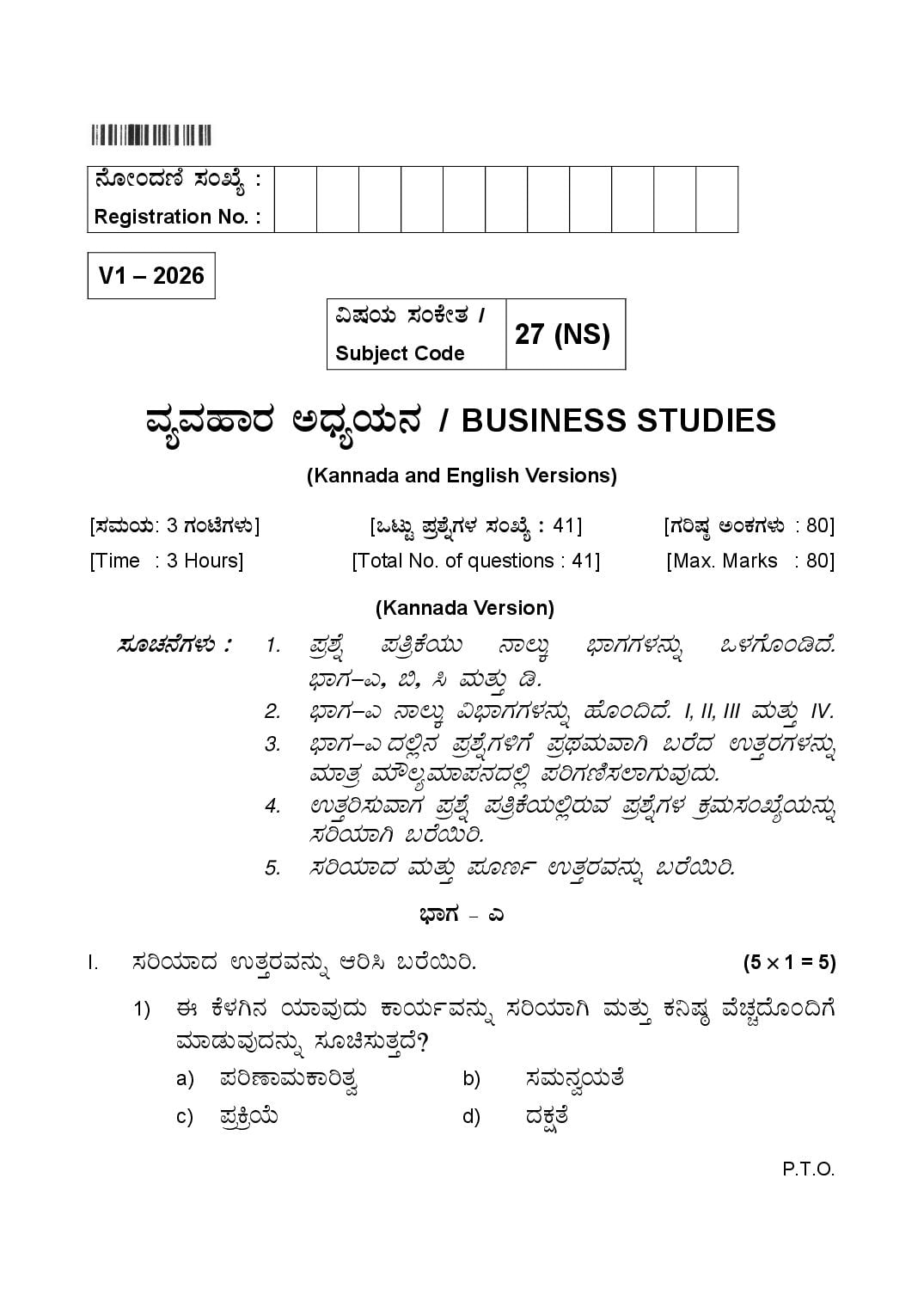
Registration No. :
V1 – 2026
«µÀAiÀÄ ¸ÀAPÉÃvÀ /
27 (NS)
Subject Code
ªÀåªÀºÁgÀ CzsÀåAiÀÄ£À / BUSINESS STUDIES
(Kannada and English Versions)
[¸ÀªÀÄAiÀÄ: 3 UÀAmÉUÀ¼ÀÄ] [MlÄÖ ¥Àæ±ÉßUÀ¼À ¸ÀASÉå : 41] [UÀjµÀ× CAPÀUÀ¼ÀÄ : 80]
[Time : 3 Hours] [Total No. of questions : 41] [Max. Marks : 80]
(Kannada Version)
¸ÀÆZÀ£ÉUÀ¼ÀÄ : 1. ¥Àæ±Éß ¥ÀwæPÉAiÀÄÄ £Á®ÄÌ ¨sÁUÀUÀ¼À£ÀÄß M¼ÀUÉÆArzÉ.
¨sÁUÀ-J, ©, ¹ ªÀÄvÀÄÛ r.
2. ¨sÁUÀ-J £Á®ÄÌ «¨sÁUÀUÀ¼À£ÀÄß ºÉÆA¢zÉ. I, II, III ªÀÄvÀÄÛ IV.
3. ¨sÁUÀ-J zÀ°è£À ¥Àæ±ÉßUÀ½UÉ ¥ÀæxÀªÀĪÁV §gÉzÀ GvÀÛgÀUÀ¼À£ÀÄß
ªÀiÁvÀæ ªÀiË®åªÀiÁ¥À£ÀzÀ°è ¥ÀjUÀt¸À¯ÁUÀĪÀÅzÀÄ.
4. GvÀÛj¸ÀĪÁUÀ ¥Àæ±Éß ¥ÀwæPÉAiÀÄ°ègÀĪÀ ¥Àæ±ÉßUÀ¼À PÀæªÀĸÀASÉåAiÀÄ£ÀÄß
¸ÀjAiÀiÁV §gɬÄj.
5. ¸ÀjAiÀiÁzÀ ªÀÄvÀÄÛ ¥ÀÆtð GvÀÛgÀªÀ£ÀÄß §gɬÄj.
¨sÁUÀ – J
I. ¸ÀjAiÀiÁzÀ GvÀÛgÀªÀ£ÀÄß Dj¹ §gɬÄj. (5 × 1 = 5)
1) F PɼÀV£À AiÀiÁªÀÅzÀÄ PÁAiÀÄðªÀ£ÀÄß ¸ÀjAiÀiÁV ªÀÄvÀÄÛ PÀ¤µÀ× ªÉZÀÑzÉÆA¢UÉ
ªÀiÁqÀĪÀÅzÀ£ÀÄß ¸ÀÆa¸ÀÄvÀÛzÉ?
a) ¥ÀjuÁªÀÄPÁjvÀé b) ¸ÀªÀÄ£ÀéAiÀÄvÉ
c) ¥ÀæQæAiÉÄ d) zÀPëÀvÉ
P.T.O.
Page 2
2) ¤ªÀðºÀuÉAiÀÄ vÀvÀéUÀ¼ÀÄ _______________ DVgÀĪÀÅ¢®è.
a) ¸ÀA¥ÀÇtð b) ¸ÀªÀĤÃAiÀÄ
c) ¸ÁªÀðwæPÀ d) ªÀvÀð£Á²Ã®
3) _______________ K£ÀÄ ªÀiÁqÀ¨ÉÃPÀÄ ªÀÄvÀÄÛ ºÉÃUÉ ªÀiÁqÀ¨ÉÃPÉAzÀÄ
¥ÀǪÀð¨sÁ«AiÀiÁV ¤zsÀðj¸ÀĪÀÅzÁVzÉ.
a) ¸ÀAWÀn¸ÀÄ«PÉAiÀÄÄ b) ¤zÉÃð²¸ÀÄ«PÉAiÀÄÄ
c) AiÉÆÃf¸ÀÄ«PÉAiÀÄÄ d) ¤AiÀÄAwæ¸ÀÄ«PÉAiÀÄÄ
4) ¸ÀAWÀn¸ÀÄ«PÉ ¥ÀæQæAiÉÄAiÀÄ ªÉÆzÀ® ºÀAvÀ _______________.
a) «¨sÁVÃPÀgÀt
b) PÀvÀðªÀåUÀ¼À ¤AiÉÆÃd£É
c) PÉ®¸ÀzÀ UÀÄgÀÄw¸ÀÄ«PÉ ªÀÄvÀÄÛ «¨sÀf¸ÀÄ«PÉ
d) ªÀgÀ¢ ªÀiÁqÀĪÀ ¸ÀA§AzsÀUÀ¼À£ÀÄß ¸Áܦ¸ÀĪÀÅzÀÄ
5) F PɼÀV£ÀªÀÅUÀ¼À°è AiÀiÁªÀÅzÀÄ ¢ÃWÀð¨Á½PÉAiÀÄ GvÀà£ÀߪÁVzÉ?
a) zÀÆgÀzÀ±Àð£À b) ZÁPÀ¯ÉÃmï
c) lÆvï¥ÉøïÖ d) ¯ÉÃR£À ¸ÁªÀÄVæ
Page 3
II. F PɼÀV£À ©lÖ ¸ÀܼÀUÀ½UÉ DªÀgÀtzÀ°è PÉÆnÖgÀĪÀ ¸ÀjAiÀiÁzÀ GvÀÛgÀªÀ£ÀÄß
DAiÉÄÌ ªÀiÁr §gɬÄj. (5 × 1 = 5)
[¥ÀæZÁgÀ, ºÀtPÁ¹£À ¸ÁªÀÄxÀåð, vÀÄvÀÄð, ¤AiÀĪÀÄUÀ¼ÀÄ, ¨ÉÆãÀ¸ï, ¤ÃwUÀ¼ÀÄ]
6) UÁåAUï ¥ÁèAPï£ÀÄß _______________ ¸ÀAzÀ¨sÀðzÀ°è §¼À¸À¯ÁUÀÄvÀÛzÉ.
7) _______________ ¤¢ðµÀÖ ºÉýPÉUÀ¼ÁVzÀÄÝ, K£À£ÀÄß ªÀiÁqÀ¨ÉÃPÉAzÀÄ
w½¸ÀÄvÀÛzÉ.
8) _______________ £ËPÀgÀjUÉ ªÉÃvÀ£À/¸ÀA§¼ÀQÌAvÀ ºÉZÀÄѪÀjAiÀiÁV ¤ÃqÀĪÀ
GvÉÛÃdPÀªÁVzÉ.
9) MmÁÖgÉ §AqÀªÁ¼ÀzÀ°è ¸Á®zÀ ¥ÀæªÀiÁtªÀ£ÀÄß _______________ JAzÀÄ
PÀgÉAiÀÄÄvÁÛgÉ.
10) _______________ ªÀÅ ¥ÁªÀw¸À®àqÀzÀ gÀÆ¥ÀzÀ ¸ÀAªÀºÀ£ÀªÁVzÉ.
III. ºÉÆA¢¹ §gɬÄj. (5 × 1 = 5)
11) J ©
a) §rØ zÀgÀ i) GvÀà£ÀßzÀ ªÉʲµÀÖ åvÉ
b) «¨sÁVÃAiÀÄ gÀZÀ£É ii) ¤ªÀðºÀuÉAiÀÄ PÁAiÀÄð
c) PÁAiÀÄð DªÀvÀð£À iii) DyðPÀ ¥Àj¸ÀgÀ
d) ¤AiÀÄAwæ¸ÀÄ«PÉ iv) PÁAiÀÄð¤gÀvÀ vÀgÀ¨ÉÃw
e) ¸ÉêÉUÀ¼ÀÄ v) ¸ÁªÀiÁfPÀ ¥Àj¸ÀgÀ
vi) CUÉÆÃZÀgÀªÁVªÉ
Page 4
IV. F PɼÀV£À ¥Àæ±ÉßUÀ½UÉ 1 ¥ÀzÀ CxÀªÁ 1 ªÁPÀåzÀ°è GvÀÛj¹. (5 × 1 = 5)
12) G£ÀßvÀ ºÀAvÀzÀ ¤ªÀðºÀuÉUÉ MAzÀÄ GzÁºÀgÀuÉ PÉÆr.
13) £ÉêÀÄPÁwAiÀÄ AiÀiÁªÀÅzÁzÀgÀÆ MAzÀÄ DAvÀjPÀ ªÀÄÆ®ªÀ£ÀÄß w½¹.
14) ¤zÉÃð²¸ÀÄ«PÉ JAzÀgÉãÀÄ?
15) ¥ÀgÁUÀ PÀA¥É¤AiÀÄÄ 40% ¤¢üAiÀÄ£ÀÄß ¸Á®¥ÀvÀæUÀ¼À ªÀÄÆ®PÀ ºÉÆAzÀ®Ä
¤tð¬Ä¹zÉ. EzÀÄ ºÀtPÁ¹£À AiÀiÁªÀ ¤tðAiÀĪÁVzÉ?
16) §¼ÀPÉzÁgÀgÀ gÀPëÀuÁ PÁ¬ÄzÉAiÀÄrAiÀÄ°è EgÀĪÀ AiÀiÁªÀÅzÁzÀgÉÆAzÀÄ
¥ÀjºÁgÀ ¸ÀA¸ÉÜAiÀÄ£ÀÄß ºÉ¸Àj¹.
¨sÁUÀ – ©
V. F PɼÀV£À AiÀiÁªÀÅzÁzÀgÀÆ DgÀÄ ¥Àæ±ÉßUÀ½UÉ ¥ÀæwAiÉÆAzÀPÀÆÌ 2 CxÀªÁ
3 ªÁPÀåUÀ¼À°è GvÀÛj¹. ¥Àæw ¥Àæ±ÉßUÉ 2 CAPÀUÀ¼ÀÄ. (6 × 2 = 12)
17) ¸ÀªÀÄ£ÀéAiÀÄvÉAiÀÄ AiÀiÁªÀÅzÁzÀgÀÆ JgÀqÀÄ ®PÀëtUÀ¼À£ÀÄß §gɬÄj.
18) KPÀgÀÆ¥À DeÉÕ ªÀÄvÀÄÛ KPÀgÀÆ¥À ¤zÉÃð±À£ÀzÀ £ÀqÀÄ«£À AiÀiÁªÀÅzÁzÀgÀÆ
JgÀqÀÄ ªÀåvÁå¸ÀUÀ¼À£ÀÄß w½¹.
19) AiÉÆÃf¸ÀÄ«PÉAiÀÄ AiÀiÁªÀÅzÁzÀgÀÆ JgÀqÀÄ «ÄwUÀ¼À£ÀÄß ¥ÀnÖ ªÀiÁr.
20) ¸ÀAWÀn¸ÀÄ«PÉAiÀÄ£ÀÄß ªÁåSÁ夹.
21) ¹§âA¢ ¤ªÀðºÀuÉ JAzÀgÉãÀÄ?
Page 5
22) £ÁAiÀÄPÀvÀézÀ AiÀiÁªÀÅzÁzÀgÀÆ JgÀqÀÄ ±ÉÊ°UÀ¼À£ÀÄß ºÉ¸Àj¹.
23) ¤AiÀÄAwæ¸ÀÄ«PÉAiÀÄ AiÀiÁªÀÅzÁzÀgÀÆ JgÀqÀÄ ¥ÁæªÀÄÄRåvÉUÀ¼À£ÀÄß w½¹.
24) ¹ÜgÁ¹ÛUÀ½UÉ JgÀqÀÄ GzÁºÀgÀuÉ PÉÆr.
25) ¨É¯É ¤UÀ¢AiÀÄ AiÀiÁªÀÅzÁzÀgÀÆ JgÀqÀÄ GzÉÝñÀUÀ¼À£ÀÄß w½¹.
26) UÁæºÀPÀgÀ AiÀiÁªÀÅzÁzÀgÀÆ JgÀqÀÄ ºÀPÀÄÌUÀ¼À£ÀÄß §gɬÄj.
¨sÁUÀ – ¹
VI. F PɼÀV£À AiÀiÁªÀÅzÁzÀgÀÆ DgÀÄ ¥Àæ±ÉßUÀ½UÉÀ ¥ÀæwAiÉÆAzÀPÀÆÌ 10-12 ªÁPÀåUÀ¼À°è
GvÀÛj¹. ¥Àæw ¥Àæ±ÉßUÉ 4 CAPÀUÀ¼ÀÄ. (6 × 4 = 24)
27) J¥sï.qÀ§Æèå. mÉîgïgÀªÀgÀÄ PÉÆqÀÄUÉ ¤ÃrzÀ ªÉÊeÕÁ¤PÀ ¤ªÀðºÀuÉAiÀÄ
vÀvÀéUÀ¼À£ÀÄß ¸ÀAQë¥ÀÛªÁV «ªÀj¹.
28) ªÀåªÀºÁgÀ ¥Àj¸ÀgÀzÀ AiÀiÁªÀÅzÁzÀgÀÆ £Á®ÄÌ ¥ÁæªÀÄÄRåvÉAiÀÄ£ÀÄß
¸ÀAQë¥ÀÛªÁV «ªÀj¹.
Page 6
29) F PɼÀV£ÀªÀÅUÀ½UÉ ¸ÀA§AzsÀ¥ÀlÖ ªÀåªÀºÁgÀ ¥Àj¸ÀgÀzÀ DAiÀiÁªÀÄUÀ¼À£ÀÄß
UÀÄgÀÄw¹ ªÀÄvÀÄÛ CªÀÅUÀ¼À §UÉÎ ®WÀÄ n¥Ààt §gɬÄj.
a) CAvÀeÁð®zÀ ªÀÄÆ®PÀ nPÉmï PÁ¬ÄÝj¸ÀĪÀÅzÀÄ.
b) ªÀÄzÀå¥Á¤ÃAiÀÄUÀ¼À eÁ»ÃgÁvÀ£ÀÄß ¤µÉâü¸À¯ÁVzÉ.
30) AiÉÆÃf¸ÀÄ«PÉAiÀÄ AiÀiÁªÀÅzÁzÀgÀÆ £Á®ÄÌ ®PëÀtUÀ¼À£ÀÄß ¸ÀAQë¥ÀÛªÁV
«ªÀj¹.
31) ªÀiÁ£ÀªÀ ¸ÀA¥À£ÀÆä® ªÀåªÀ¸ÁÜ¥ÀPÀgÁV, ¤ªÀÄä ¸ÀA¸ÉÜAiÀÄ°è SÁ° EgÀĪÀ
ºÀÄzÉÝUÀ¼À£ÀÄß ¨sÀwð ªÀiÁqÀ®Ä £ÉêÀÄPÁwAiÀÄ AiÀiÁªÀÅzÁzÀgÀÆ JAlÄ ¨ÁºÀå
ªÀÄÆ®UÀ¼À£ÀÄß ¥ÀnÖ ªÀiÁr.
32) ¤AiÀÄAwæ¸ÀÄ«PÉAiÀÄ AiÀiÁªÀÅzÁzÀgÀÆ £Á®ÄÌ «ÄwUÀ¼À£ÀÄß «ªÀj¹.
33) MAzÀÄ ¸ÀA¸ÉÜAiÀÄ PÁAiÀÄð²Ã® §AqÀªÁ¼ÀzÀ CUÀvåÀ vÉAiÀÄ ªÉÄïÉ
¥Àæ¨sÁªÀ ©ÃgÀĪÀ AiÀiÁªÀÅzÁzÀgÆ
À £Á®ÄÌ CA±ÀU¼
À £
À ÀÄß ¸ÀAQë¥Ûª
À ÁV «ªÀj¹.
34) ªÀiÁgÁl ¥ÀæQæAiÉÄ ªÀåªÀ¸ÁÜ¥ÀPÀgÁV, ¤ªÀÄä PÀA¥É¤AiÀÄ GvÀà£ÀßPÉÌ GvÀÛªÀÄ
ªÀÄÄzÉæAiÀÄ ºÉ¸ÀgÀ£ÀÄß DAiÉÄÌ ªÀiÁqÀĪÁUÀ UÀªÀÄ£ÀzÀ°èqÀ¨ÉÃPÁzÀ
AiÀiÁªÀÅzÁzÀgÀÆ £Á®ÄÌ UÀÄt®PëÀtUÀ¼À£ÀÄß ¥ÀnÖ ªÀiÁr.
35) eÁ»ÃgÁw£À £Á®ÄÌ ¥ÀæAiÉÆÃd£ÀUÀ¼À£ÀÄß ¸ÀAQë¥ÀÛªÁV «ªÀj¹.
36) ¸ÀgÀPÀÄ ªÀÄvÀÄÛ ¸ÉêÉUÀ¼À£ÀÄß Rjâ¸ÀĪÁUÀ, §¼À¸ÀĪÁUÀ ªÀÄvÀÄÛ
C£ÀĨsÉÆÃV¸ÀĪÁUÀ UÁæºÀPÀjVgÀĪÀ AiÀiÁªÀÅzÁzÀgÀÆ £Á®ÄÌ
ºÉÆuÉUÁjPÉUÀ¼À£ÀÄß w½¹.
Page 7
¨sÁUÀ – r
VII. F PɼÀV£À AiÀiÁªÀÅzÁzÀgÀÆ ªÀÄÆgÀÄ ¥Àæ±ÉßUÀ½UÉ ¥ÀæwAiÉÆAzÀPÀÆÌ 20-25 ªÁPÀåUÀ¼À°è
GvÀÛj¹. ¥Àæw ¥Àæ±ÉßUÉ 8 CAPÀUÀ¼ÀÄ. (3 × 8 = 24)
37) ¤ªÀðºÀuÉAiÀÄ GzÉÝñÀUÀ¼À£ÀÄß «ªÀj¹.
38) ¥Àæw¤AiÉÆÃd£É JAzÀgÉãÀÄ? ¥Àæw¤AiÉÆÃd£ÉAiÀÄ ¥ÁæªÀÄÄRåvÉAiÀÄ£ÀÄß
«ªÀj¹.
39) DAiÉÄÌ ¥ÀæQæAiÉÄAiÀÄ°è£À ««zsÀ ºÀAvÀUÀ¼À£ÀÄß «ªÀj¹.
40) ¸ÀAªÀºÀ£ÀzÀ ¥ÀjuÁªÀÄPÁjvÀéªÀ£ÀÄß ¸ÀÄzsÁj¸À®Ä C¼ÀªÀr¹PÉƼÀî¨ÉÃPÁzÀ
AiÀiÁªÀÅzÁzÀgÀÆ JAlÄ ¸ÀÆPÀÛ PÀæªÀÄUÀ¼À£ÀÄß ¸ÀÆa¹.
41) ªÀiÁgÁl ¥ÀæQæAiÉÄAiÀÄ AiÀiÁªÀÅzÁzÀgÀÆ JAlÄ PÁAiÀÄðUÀ¼À£ÀÄß «ªÀj¹.
––——–––––––––––––
Page 8
(English Version)
Instructions : 1. The question paper contains 4 Parts. Part – A, B, C and D.
2. Part – A consists of 4 sections. I, II, III and IV.
3. For Part – A questions, only the first written answers
will be considered for evaluation.
4. Write the serial number of questions properly as given in
the question paper while answering.
5. Write the correct and complete answer.
PART – A
I. Choose and write the correct answer : (5 × 1 = 5)
1) Which of the following refers to doing the task correctly and with minimum
cost?
a) Effectiveness
b) Co-ordination
c) Process
d) Efficiency
2) Principles of Management are not ____________.
a) Absolute
b) Flexible
c) Universal
d) Behavioural
3) ____________ is deciding in advance what to do and how to do.
a) Organising
b) Directing
c) Planning
d) Controlling
Page 9
4) The first step in organising process is ____________.
a) Departmentalisation
b) Assignment of duties
c) Identification and division of work
d) Establishing reporting relationships
5) Which of the following is durable product?
a) Television b) Chocolate
c) Toothpaste d) Stationery item
II. Fill in the blanks by choosing appropriate answers from those given in the
brackets : (5 × 1 = 5)
[Publicity, Financial Leverage, Emergency, Rules, Bonus, Policies]
6) Gang Plank is used in the case of ____________.
7) ____________ are specific statements that inform what is to be done.
8) ____________ is an incentive offered over and above the wages/salary
to the employees.
9) The proportion of debt in the overall capital is called ____________.
10) ____________ is unpaid form of communication.
III. Match the following : (5 × 1 = 5)
11) A B
a) Interest rate i) Product specialisation
b) Divisional structure ii) Management function
c) Job rotation iii) Economic environment
d) Controlling iv) On-the-job training
e) Services v) Social environment
vi) Intangible
Page 10
IV. Answer the following questions in 1 word or 1 sentence each : (5 × 1 = 5)
12) Give an example for Top Level Management.
13) State any one internal source of recruitment.
14) What is Directing?
15) Paraga company decided to raise 40% of funds through debentures.
Which financial decision is it?
16) Name any one redressal agency under the Consumer Protection Act.
PART – B
V. Answer any six of the following questions in 2 or 3 sentences each.
Each question carries 2 marks : (6 × 2 = 12)
17) Write any two features of coordination.
18) State any two differences between Unity of Command and Unity of
Direction.
19) List out any two limitations of Planning.
20) Define Organising.
21) What is Staffing?
22) Name any two styles of Leadership.
23) State any two importance of Controlling.
24) Give two examples for fixed assets.
25) State any two objectives of pricing.
26) Write any two consumer rights.
Page 11
PART – C
VI. Answer any six of the following questions in 10-12 sentences each.
Each question carries 4 marks. (6 × 4 = 24)
27) Briefly explain the principles of Scientific Management contributed by
F.W. Taylor.
28) Explain briefly any four importance of Business Environment.
29) Identify the related dimension of Business Environment in the following
and write short note on them.
a) Reservation of tickets through internet.
b) Prohibition of advertisement on alcoholic beverages.
30) Explain briefly any four features of Planning.
31) As a Human Resource Manager, list out any eight external sources of
recruitment to fill the vacancies in your organisation.
32) Explain any four limitations of Controlling.
33) Explain briefly any four factors affecting working capital requirements of
an organisation.
34) As a Marketing Manager, list out any four characteristics you would keep
in mind while choosing a good brand name for your Company’s product.
35) Briefly explain four merits of advertising.
36) State any four responsibilities of consumers while purchasing, using and
consuming goods and services.
Page 12
PART – D
VII. Answer any three of the following questions in 20-25 sentences each.
Each question carries 8 marks : (3 × 8 = 24)
37) Explain the objectives of Management.
38) What is Delegation? Explain the importance of Delegation.
39) Explain the different steps in Selection Process.
40) Suggest any eight suitable measures to adopt for improve communication
effectiveness.
41) Explain any eight functions of Marketing.
———————
Document Details
| Board / Org | Karnataka Board |
| Exam | Class 12 |
| Type | Question Paper |
| Pages | 12 |
| Language | english |
| Updated | 24 Sep 2026 |