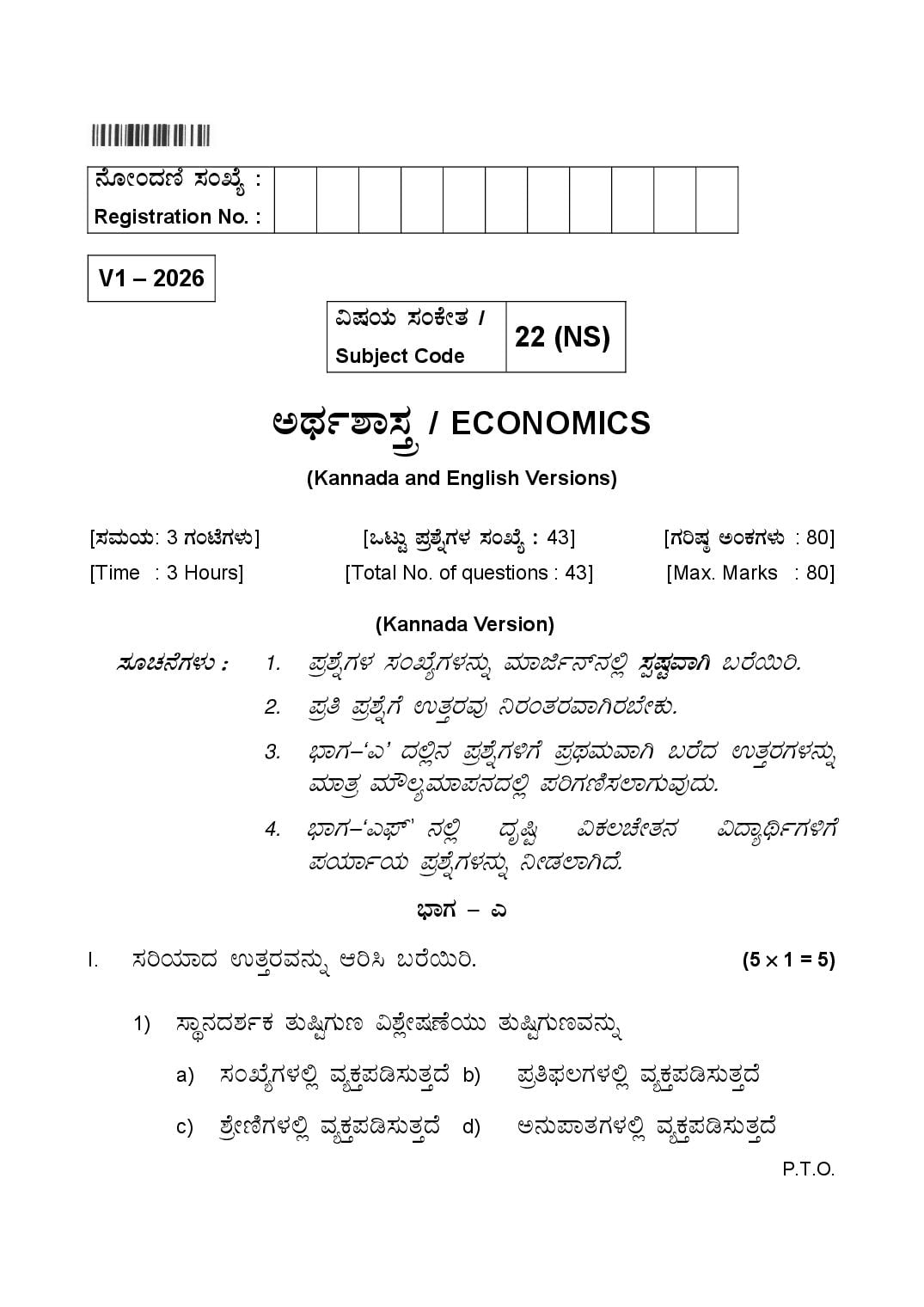
Karnataka 2nd PUC Question Paper 2026 Economics
Finished viewing? Save it for later —
Download Karnataka 2nd PUC Question Paper 2026 Economics (PDF · 16 pages)About Karnataka 2nd PUC Question Paper 2026 Economics
Karnataka 2nd PUC Question Paper 2026 Economics is available here for free download. Published by Karnataka Board for Class 12, this question paper can be viewed online or downloaded as a PDF (16 pages). Candidates preparing for Class 12 can use Karnataka 2nd PUC Question Paper 2026 Economics to understand the exam pattern, the type of questions asked, and the overall difficulty level.
Frequently Asked Questions
How can I download Karnataka 2nd PUC Question Paper 2026 Economics?
Open this page and click the Download button to save Karnataka 2nd PUC Question Paper 2026 Economics as a PDF. It is completely free on AglaSem Docs.
Is Karnataka 2nd PUC Question Paper 2026 Economics free to download?
Yes. Karnataka 2nd PUC Question Paper 2026 Economics can be viewed online and downloaded as a PDF free of cost on AglaSem Docs.
How many pages does Karnataka 2nd PUC Question Paper 2026 Economics have?
Karnataka 2nd PUC Question Paper 2026 Economics contains 16 pages, which you can read online or download together as a single PDF.
Where can I find more Class 12 study material?
You can find more Class 12 question papers, sample papers, syllabus, and answer keys on AglaSem Docs.
Karnataka 2nd PUC Question Paper 2026 Economics – Text
Read the full text of this question paper below — useful to quickly search, copy and reference the content online without downloading the PDF.
📄 View text version (16 pages)
Page 1
Registration No. :
V1 – 2026
«µÀAiÀÄ ¸ÀAPÉÃvÀ /
22 (NS)
Subject Code
CxÀð±Á¸ÀÛç / ECONOMICS
(Kannada and English Versions)
[¸ÀªÀÄAiÀÄ: 3 UÀAmÉUÀ¼ÀÄ] [MlÄÖ ¥Àæ±ÉßUÀ¼À ¸ÀASÉå : 43] [UÀjµÀ× CAPÀUÀ¼ÀÄ : 80]
[Time : 3 Hours] [Total No. of questions : 43] [Max. Marks : 80]
(Kannada Version)
ÓÜãaÜ®æWÜÙÜá : 1. ¥Àæ±ÉßUÀ¼À ¸ÀASÉåUÀ¼À£ÀÄß ªÀiÁfð£ï£À°è ¸ÀàµÀÖªÁV §gɬÄj.
2. ¥Àæw ¥Àæ±ÉßUÉ GvÀÛgÀªÀÅ ¤gÀAvÀgÀªÁVgÀ¨ÉÃPÀÄ.
3. ¨sÁUÀ-‘J’ zÀ°è£À ¥Àæ±ÉßUÀ½UÉ ¥ÀæxÀªÀĪÁV §gÉzÀ GvÀÛgÀUÀ¼À£ÀÄß
ªÀiÁvÀæ ªÀiË®åªÀiÁ¥À£ÀzÀ°è ¥ÀjUÀt¸À¯ÁUÀĪÀÅzÀÄ.
4. ¨sÁUÀ-‘J¥sï ’ £À°è zÀ馅 «PÀ®ZÉÃvÀ£À «zÁåyðUÀ½UÉ
¥ÀAiÀiÁðAiÀÄ ¥Àæ±ÉßUÀ¼À£ÀÄß ¤ÃqÀ¯ÁVzÉ.
¨sÁUÀ - J
I. ¸ÀjAiÀiÁzÀ GvÀÛgÀªÀ£ÀÄß Dj¹ §gɬÄj. (5 × 1 = 5)
1) ¸ÁÜ£ÀzÀ±ÀðPÀ vÀĶÖUÀÄt «±ÉèõÀuÉAiÀÄÄ vÀĶÖUÀÄtªÀ£ÀÄß
a) ¸ÀASÉåUÀ¼À°è ªÀåPÀÛ¥Àr¸ÀÄvÀÛzÉ b) ¥Àæw¥sÀ®UÀ¼À°è ªÀåPÀÛ¥Àr¸ÀÄvÀÛzÉ
c) ±ÉæÃtÂUÀ¼À°è ªÀåPÀÛ¥Àr¸ÀÄvÀÛzÉ d) C£ÀÄ¥ÁvÀUÀ¼À°è ªÀåPÀÛ¥Àr¸ÀÄvÀÛzÉ
P.T.O.
Page 2
2) TFC AiÀÄÄ 200 gÀÆ.UÀ¼ÀÄ ªÀÄvÀÄÛ TVC AiÀÄÄ 225 gÀÆ.UÀ½zÁÝUÀ,
MlÄÖ ªÉZÀѪÀ£ÀÄß PÀAqÀÄ»r¬Äj.
a) 125 b) 225
c) 425 d) 25
3) GvÁàzÀ£ÁAUÀ ªÉZÀÑzÀ°è ¤ªÀé¼À gÁ¶ÖçÃAiÀÄ GvÀà£ÀߪÀ£ÀÄß »ÃUÉ£ÀÄßvÉÛêÉ.
a) gÁ¶ÖçÃAiÀÄ DzÁAiÀÄ b) vÀ¯ÁzÁAiÀÄ
c) zÉòÃAiÀÄ DzÁAiÀÄ d) ªÉÊAiÀÄQÛPÀ DzÁAiÀÄ
4) ¸ÀªÀÄUÀæ ºÀtPÁ¹£À ¸ÀA¥À£ÀÆ䮪À£ÀÄß »ÃUÉ PÀgÉAiÀÄÄvÁÛgÉ.
a) M4 b) M3
c) M2 d) M1
5) PɼÀV£ÀªÀÅUÀ¼À°è AiÀiÁªÀÅzÀÄ ‘PÁUÀzÀzÀ vÉjUÉ’UÉ GzÁºÀgÀuÉAiÀiÁVzÉ?
a) DzÁAiÀÄ vÉjUÉ b) C§PÁj vÉjUÉ
c) DªÀÄzÀÄ gÀ¥sÀÄÛ ¸ÀÄAPÀ d) ¸ÀA¥ÀwÛ£À vÉjUÉ
II. DªÀgÀtzÀ°ègÀĪÀ ¸ÀjAiÀiÁzÀ GvÀÛgÀªÀ£ÀÄß Dj¹, SÁ° ©lÖ ¸ÀܼÀUÀ¼À£ÀÄß
¨sÀwð ªÀiÁr. (5 × 1 = 5)
(¸ÀªÀÄ GvÀà£Àß gÉÃSÉ / «Ä±Àæ / ºÀÆrPÉ / ªÀåªÀºÁgÀUÀ¼À / ¥Àj¥ÀÆtð
¥ÉÊ¥ÉÆÃn / «gÀÄzÀÞ)
6) ªÁ¸ÀÛªÀªÁV J¯Áè DyðPÀvÉUÀ¼ÀÄ ____________ DyðPÀvÉUÀ¼ÁVªÉ.
7) MAzÉà UÀjµÀ× ªÀÄlÖzÀ GvÁàzÀ£ÉAiÀÄ£ÀÄß ¤ÃqÀĪÀ JgÀqÀÄ DzÁ£ÀUÀ¼À J¯Áè
¸ÀA¨sÀªÀ¤ÃAiÀÄ ¸ÀAAiÉÆÃd£ÉUÀ¼À ¸ÀªÀÄƺÀªÀ£ÀÄß ____________ JAzÀÄ
PÀgÉAiÀÄÄvÉÛêÉ.
Page 3
8) ¨É¯É ¥ÀqÉAiÀÄĪÀ ªÀvÀð£ÉAiÀÄÄ ____________ ªÀiÁgÀÄPÀmÉÖAiÀÄ «©ü£Àß
UÀÄt®PÀëtªÁVzÉ.
9) ºÀtªÀ£ÀÄß ElÄÖPÉƼÀÄîªÀ ¥ÀæªÀÄÄR GzÉÝñÀªÉAzÀgÉ ____________ £ÀÄß
¤¨sÁ¬Ä¸ÀĪÀÅzÀÄ.
10) ____________ AiÀÄ£ÀÄß ¨sËwPÀ §AqÀªÁ¼À ¸ÀAUÀæºÀPÉÌ DUÀĪÀ ¸ÉÃ¥ÀðqÉ
JAzÀÄ ªÁåSÁ夸À¯ÁVzÉ.
III. ºÉÆA¢¹ §gɬÄj. (5 × 1 = 5)
A B
11) a) ¸ÀgÀ¼À ¨ÉÃrPÉ gÉÃSÉ i) TR – TC
b) π = ii) qÀnð ºÉÆAzÁtÂPÉ
c) DqÀA ¹ävï iii) zÁ¸ÁÛ£ÀÄ ZÀ®PÀ
d) vÀ¥À²Ã®Ä ¥ÀnÖ iv) d(p) = a − bp
e) ¤ªÀðºÀuÁ ºÉÆAzÁtÂPÉ v) PÁtzÀ PÉÊ PÁAiÀiÁðZÀgÀuÉ
vi) PÀÆ°
IV. F PɼÀV£À ¥Àæ±ÉßUÀ½UÉ MAzÀÄ ªÁPÀå CxÀªÁ ¥ÀzÀzÀ°è GvÀÛj¹j. (5 × 1 = 5)
12) MRS – «¸ÀÛj¹.
13) ¥ÀÆgÉÊPÉ JAzÀgÉãÀÄ?
Page 4
14) gÀ¥sÀÄÛUÀ¼À CxÀð ¤Ãr.
15) ¸ÀªÀÄUÀæ ¨ÉÃrPÉAiÀÄ ªÉÄÃ¯É ¥Àæ¨sÁªÀ ©ÃgÀĪÀ AiÀiÁªÀÅzÁzÀgÀÆ MAzÀÄ
PÉÆòÃAiÀÄ ZÀ®PÀªÀ£ÀÄß ºÉ¸Àj¹.
16) ¸ÀézÉò ºÀtzÀ ªÀiË®å KjPÉ JAzÀgÉãÀÄ?
¨sÁUÀ - ©
V. F PɼÀV£À AiÀiÁªÀÅzÁzÀgÀÆ DgÀÄ ¥Àæ±ÉßUÀ½UÉ ¥ÀæwAiÉÆAzÀPÀÆÌ 4 ªÁPÀåUÀ¼À°è
GvÀÛj¹. (6 × 2 = 12)
17) ªÀÄÆ® DyðPÀ ZÀlĪÀnPÉUÀ¼À£ÀÄß ¥ÀnÖ ªÀiÁr.
18) ¨ÉÃrPÉAiÀÄ ¤zsÁðgÀPÀUÀ¼À£ÀÄß ¥ÀnÖ ªÀiÁr.
19) ¢ÃWÁðªÀ¢ü ªÉZÀÑUÀ¼ÁªÀŪÀÅ?
20) ¥Àj¥ÀÆtð ¥ÉÊ¥ÉÆÃn ªÀiÁgÀÄPÀmÉÖAiÀÄ°è GzÀåªÀÄ WÀlPÀªÉÇAzÀÄ ¯Á¨sÀªÀ£ÀÄß
UÀjµÀ×UÉƽ¸ÀÄ«PÉUÉ CUÀvÀå«gÀĪÀ µÀgÀvÀÄÛUÀ¼À£ÀÄß w½¹.
21) ¸ÀÜVvÀvÉAiÀÄ ©AzÀÄ«£À CxÀðªÀ£ÀÄß ¤Ãr.
22) ªÀÄzsÀåAvÀgÀ ¸ÀgÀPÀÄUÀ¼À CxÀðªÀ£ÀÄß MAzÀÄ GzÁºÀgÀuÉAiÉÆA¢UÉ ¤Ãr.
23) ¨ÁºÀåvÉUÀ¼ÉAzÀgÉ K£ÉAzÀÄ CxÉÊð¸ÀÄ«j? CzÀgÀ JgÀqÀÄ «zsÀUÀ¼À£ÀÄß
ºÉ¸Àj¹.
24) MPC AiÀÄ ªÀiË®åªÀÅ 0.60 DzÁUÀ, MPS £À ªÀiË®å ªÀÄvÀÄÛ ºÀÆrPÉ UÀÄtPÀzÀ
ªÀiË®åªÀ£ÀÄß ¯ÉPÀÌ ºÁQ.
25) ¸ÁªÀðd¤PÀ ¸ÀgÀPÀÄ ªÀÄvÀÄÛ SÁ¸ÀV ¸ÀgÀPÀÄUÀ¼À £ÀqÀÄ«£À ªÀåvÁå¸À w½¹.
26) ¥ÀæªÀiÁuÁ£ÀÄUÀÄt DzÁAiÀÄ vÉjUÉAiÀÄÄ ¸ÀéAiÀÄAZÁ°vÀ PÀA¥À£ÀUÁæºÀPÀªÁV
KPÉ PÉ®¸À ªÀiÁqÀÄvÀÛzÉ?
Page 5
¨sÁUÀ - ¹
VI. F PɼÀV£À AiÀiÁªÀÅzÁzÀgÀÆ LzÀÄ ¥Àæ±ÉßUÀ½UÉ ¥ÀæwAiÉÆAzÀPÀÆÌ 12 ªÁPÀåUÀ¼À°è
GvÀÛj¹. (5 × 4 = 20)
27) ªÀiÁgÀÄPÀmÉÖ CxÀðªÀåªÀ¸ÉÜAiÀÄÄ ºÉÃUÉ PÁAiÀÄð¤ªÀð»¸ÀÄvÀÛzÉ? «ªÀj¹.
28) M§â C£ÀĨsÉÆÃVAiÀÄÄ MAzÀÄ ¸Éé£À ¨É¯É 10 gÀÆ.UÀ½zÁÝUÀ
25 ¸ÉçÄUÀ¼À£ÀÄß Rjâ¸ÀÄvÁÛ¼É. ªÀÄvÀÄÛ ¥Àæw ¸Éé£À ¨É¯É 15 gÀÆ.UÀ½UÉ
KjPÉAiÀiÁzÁUÀ CªÀ¼ÀÄ ¸Éé£À ¨ÉÃrPÉAiÀÄ£ÀÄß 18 PÉÌ PÀrªÉÄ ªÀiÁqÀÄvÁÛ¼É.
¨É¯É ¨ÉÃrPÉ ¹Üw¸ÁÜ¥ÀPÀvÀéªÀ£ÀÄß PÀAqÀÄ»r¬Äj.
29) GzÀåªÀÄ WÀlPÀzÀ ¥ÀÆgÉÊPÉ gÉÃSÉAiÀÄ ¤zsÁðgÀPÀUÀ¼À£ÀÄß «ªÀj¹.
30) ¨ÉÃrPÉ ªÀÄvÀÄÛ ¥ÀÆgÉÊPÉAiÀÄ KPÀPÁ°PÀ ¥À®èlUÀ½AzÀ ¸ÀªÀÄvÉÆî£ÀzÀ ªÉÄð£À
¥ÀjuÁªÀĪÀ£ÀÄß vÉÆÃj¸ÀĪÀ PÉÆõÀÖPÀªÀ£ÀÄß §gɬÄj.
31) C©üªÀÈ¢Þ ºÉÆA¢zÀ ªÀÄvÀÄÛ C©üªÀȢ޲î zÉñÀUÀ¼ÉgÀqÀgÀ°è ¸ÀPÁðgÀzÀ
(gÁdå) ªÀÄvÀÄÛ PÀÄlÄA§ ªÀ®AiÀÄUÀ¼À ¥ÁvÀæªÀ£ÀÄß PÀÄjvÀÄ §gɬÄj.
32) ‘ºÀtªÀÅ ¯ÉPÀÌzÀ CvÀåAvÀ C£ÀÄPÀÆ®PÀgÀ WÀlPÀªÁV PÁAiÀÄð¤ªÀð»¸ÀÄvÀÛzÉ’.
F ºÉýPÉAiÀÄ£ÀÄß GzÁºÀgÀuÉAiÉÆA¢UÉ «ªÀj¹.
33) C£ÀĨsÉÆÃUÀ ©A§PÀªÀ£ÀÄß gÉÃSÁavÀæzÉÆA¢UÉ «ªÀj¹.
34) ¸ÀPÁðgÀzÀ ªÀÄÄAUÀqÀ¥ÀvÀæzÀ ¥ÀlªÀ£ÀÄß §gɬÄj.
35) ªÀÄÄPÀÛ DyðPÀvÉAiÀÄ ªÀÄÆgÀÄ PÉÆArUÀ¼À£ÀÄß «ªÀj¹.
Page 6
¨sÁUÀ - r
VII. F PɼÀV£À AiÀiÁªÀÅzÁzÀgÀÆ ªÀÄÆgÀÄ ¥Àæ±ÉßUÀ½UÉ ¥ÀæwAiÉÆAzÀPÀÆÌ 20 ªÁPÀåUÀ¼À°è
GvÀÛj¹. (3 × 6 = 18)
36) E½ªÀÄÄR ¹ÃªÀiÁAvÀ vÀĶÖUÀÄt ¤AiÀĪÀĪÀ£ÀÄß PÉÆõÀÖPÀ ªÀÄvÀÄÛ gÉÃSÁavÀæzÀ
¸ÀºÁAiÀÄ¢AzÀ «ªÀj¹.
37) MlÄÖ GvÀà£Àß (TP), ¸ÀgÁ¸Àj GvÀà£Àß (AP) ªÀÄvÀÄÛ ¹ÃªÀiÁAvÀ GvÀà£Àß
(MP) gÉÃSÉUÀ¼À DPÁgÀUÀ¼À£ÀÄß «ªÀj¹.
38) ¤¢ðµÀÖ ªÀµÀðzÀ°è MAzÀÄ zÉñÀzÀ GDPMP AiÀÄÄ
gÀÆ.4,000 PÉÆÃn EzÉ JAzÀÄPÉƼÉÆîÃt. «zÉñÀUÀ½AzÀ ¤ªÀé¼À
GvÁàzÀ£ÁAUÀ DzÁAiÀÄ (NFIA) gÀÆ. 600 PÉÆÃn EzÉ. ¸ÀªÀPÀ½
ªÉZÀÑ gÀÆ. 500 PÉÆÃn ªÀÄvÀÄÛ ¤ªÀé¼À ¥ÀgÉÆÃPÀë vÉjUÉUÀ¼À ªÀiË®å (NIT)
gÀÆ. 400 PÉÆÃn EzÉ. F PɼÀV£À PÉÆõÀÖPÀªÀ£ÀÄß ¥ÀÆtðUÉƽ¹.
ªÀiË®åUÀ¼ÀÄ
C£À£ÀåvÉUÀ¼ÀÄ
(PÉÆÃn gÀÆ.UÀ¼À°è)
GDPMP 4,000
GDPFC
NDPMP
NDPFC
GNPMP
GNPFC
NNPMP
39) ªÁtÂdå ¨ÁåAPÀÄUÀ¼À oÉêÀt ªÀÄvÀÄÛ ¸Á® (¥ÀvÀÄÛ) ¤ªÀiÁðt ¥ÀæQæAiÉÄAiÀÄ
ªÉÄÃ¯É CPÀ̸Á°UÀ ¯Á¯Á£À PÀxÉAiÀÄ£ÀÄß §gɬÄj.
40) ¸ÀAzÁAiÀÄ ¨ÁQAiÀÄ SÁvÉUÀ¼À£ÀÄß PÀÄjvÀÄ §gɬÄj.
Page 7
¨sÁUÀ - E
VIII. F PɼÀV£À AiÀiÁªÀÅzÁzÀgÀÆ JgÀqÀÄ PÁAiÀÄð¨sÁgÀ ªÀÄvÀÄÛ ¤AiÉÆÃd£É DzsÁjvÀ
¥Àæ±ÉßUÀ½UÉ GvÀÛj¹. (2 × 5 = 10)
41) M§â C£ÀĨsÉÆÃVAiÀÄÄ JgÀqÀÄ ¸ÀgÀPÀÄUÀ¼À£ÀÄß C£ÀĨsÉÆÃV¸À®Ä §AiÀĹzÀÄÝ,
X1 ¸ÀgÀQ£À ¨É¯É gÀÆ. 15 ªÀÄvÀÄÛ X2 ¸ÀgÀQ£À ¨É¯É gÀÆ. 25 DVzÉ.
C£ÀĨsÉÆÃVAiÀÄ DzÁAiÀÄ gÀÆ. 300 DVzÁÝUÀ F PɼÀV£ÀªÀÅUÀ½UÉ GvÀÛj¹.
(a) C£ÀĨsÉÆÃVAiÀÄÄ vÀ£Àß ¸ÀA¥ÀÆtð DzÁAiÀĪÀ£ÀÄß RZÀÄð ªÀiÁr JµÀÄÖ
¥ÀæªÀiÁtzÀ X1 ¸ÀgÀPÀ£ÀÄß C£ÀĨsÉÆÃV¸À§ºÀÄzÀÄ?
(b) C£ÀĨsÉÆÃVAiÀÄÄ vÀ£Àß ¸ÀA¥ÀÆtð DzÁAiÀĪÀ£ÀÄß RZÀÄð ªÀiÁr JµÀÄÖ
¥ÀæªÀiÁtzÀ X2 ¸ÀgÀPÀ£ÀÄß C£ÀĨsÉÆÃV¸À§ºÀÄzÀÄ?
(c) §eÉmï gÉÃSÉAiÀÄ E½eÁgÀÄ PɼÀªÀÄÄR CxÀªÁ
ªÉÄîÄäRªÁVgÀÄvÀÛzÉAiÉÄÃ?
(d) §eÉmï gÉÃSÉAiÀÄ ªÉÄð£À J¯Áè ¸ÀAAiÉÆÃd£ÉUÀ¼ÀÄ C£ÀĨsÉÆÃVAiÀÄ
DzÁAiÀÄPÉÌ ¸ÀªÀÄ£ÁVgÀÄvÀÛªÉAiÉÄà CxÀªÁ E®èªÉÃ?
(e) C£ÀĨsÉÆÃVAiÀÄÄ X1 ¸ÀgÀQ£À ºÉZÀÄѪÀj WÀlPÀªÀ£ÀÄß ¥ÀqÉAiÀÄ®Ä
§AiÀĹzÀgÉ X2 ¸ÀgÀPÀ£ÀÄß ©lÄÖPÉÆqÀ¨ÉÃPÁUÀÄvÀÛzÉ. EzÀÄ ¸ÀjAiÉÄÃ?
42) F PɼÀV£À PÉÆõÀÖPÀPÉÌ MAzÀÄ gÉÃSÁavÀæªÀ£ÀÄß gÀa¹ ªÀÄvÀÄÛ gÉÃSÁavÀæzÀ°è
¸ÀªÀÄvÉÆî£À ©AzÀÄ, ¸ÀªÀÄvÉÆî£À ¨É¯É, ¸ÀªÀÄvÉÆî£À ¥ÀæªÀiÁt,
C¢üPÀ ¨ÉÃrPÉ ºÁUÀÆ C¢üPÀ ¥ÀÆgÉÊPÉUÀ¼À£ÀÄß UÀÄgÀÄw¹.
P QD QS
10 25 5
20 20 10
30 15 15
40 10 20
50 5 25
Page 8
43) F PɼÀPÀAqÀ PÉÆõÀÖPÀzÀ°è PÁuÉAiÀiÁzÀ ªÀiË®åUÀ¼À£ÀÄß PÀAqÀÄ»r¬Äj.
GvÁàzÀ£Á MlÄÖ GvÁàzÀ£É ªÀÄzsÀåAvÀgÀ ªÀiË®åªÀzsÀð£É
ºÀAvÀUÀ¼ÀÄ ¸ÀgÀPÀÄUÀ¼À
§¼ÀPÉ
UÉÆâü (gÉÊvÀ) 800 0 –
»lÄÖ (VgÀtÂAiÀĪÀ£ÀÄ) – 800 200
¨Éæqï 1200 – 200
(¨ÉÃPÀjAiÀĪÀ£ÀÄ)
a®ègÉ CAUÀr – 1200 300
(ªÀiÁgÁlUÁgÀ)
MlÄÖ ªÀiË®åªÀzsÀð£É (GVA) –
¨sÁUÀ - J¥sï
[zÀ馅 «PÀ®ZÉÃvÀ£À «zÁåyðUÀ½UÉ ªÀiÁvÀæ]
42) ªÀiÁgÀÄPÀmÉÖ ¸ÀªÀÄvÉÆî£À, ¸ÀªÀÄvÉÆî£À ¨É¯É, ¸ÀªÀÄvÉÆî£À ¥ÀæªÀiÁt,
C¢üPÀ ¨ÉÃrPÉ ºÁUÀÆ C¢üPÀ ¥ÀÆgÉÊPÉUÀ¼À CxÀðªÀ£ÀÄß ¤Ãr.
43) GDPMP , NDPMP , GNPFC , NNPMP ªÀÄvÀÄÛ NNP FC UÀ¼À£ÀÄß «¸ÀÛj¹.
—————————
Page 9
(English Version)
Instructions : 1. Write the question numbers legibly in the margin.
2. Answer for the questions should be continuous.
3. For PART – ‘A’ questions, only the first written answers
will be considered for evaluation.
4. In PART – ‘F’, alternative questions are given for visually
challenged students.
PART – A
I. Choose the correct answer. (5 × 1 = 5)
1) Ordinal utility analysis expresses utility in
a) Numbers b) Returns
c) Ranks d) Ratios
2) Find the Total Cost, where TFC is Rs. 200 and TVC is Rs. 225.
a) 125 b) 225
c) 425 d) 25
3) Net National product at factor cost is also known as
a) National Income
b) Per Capita Income
c) Domestic Income
d) Personal Income
Page 10
4) Aggregate monetary resources are also known as
a) M4 b) M3
c) M2 d) M1
5) Which of the following is an example for ‘Paper tax’?
a) Income tax
b) Excise tax
c) Customs duty
d) Wealth tax
II. Fill in the blanks by choosing correct answers from the bracket. (5 × 1 = 5)
(Isoquant / Mixed / Investment / Transactions / Perfect Competition / Opposite)
6) In reality, all economies are _________ economies.
7) _________ is the set of all possible combinations of two inputs that yield
the same maximum possible level of output.
8) Price taking behaviour is the distinguishing characteristic of _________
market.
9) The principal motive for holding money is to carry out _________,
10) _________ is defined as addition to the stock of physical capital.
Page 11
III. Match the following. (5 × 1 = 5)
A B
11) a) Linear demand curve i) TR – TC
b) π= ii) Dirty floating
c) Adam Smith iii) Stock Variable
d) Inventory iv) d(p) = a − bp
e) Managed floating v) Operation of invisible hand
vi) Wage
IV. Answer the following questions in a sentence or a word. (5 × 1 = 5)
12) MRS – Expand.
13) What is Supply?
14) Give the meaning of Exports.
15) Mention any one fiscal variable which influence aggregate demand.
16) What is appreciation of domestic currency?
PART – B
V. Answer any six of the following questions in 4 sentences each. (6 × 2 = 12)
17) List out the basic economic activities.
18) List out the determinants of demand.
19) What are long run costs?
Page 12
20) State the conditions needed for profit maximization by a firm under
perfect competition.
21) Give the meaning of shut down point.
22) Give the meaning of Intermediate goods with an example.
23) What do you mean by externalities? Mention its two types.
24) If the value of MPC is 0.60, calculate the value of MPS and Investment
Multiplier.
25) State the difference between public goods and private goods.
26) Why the proportional income tax acts as automatic stabilizer?
PART – C
VI. Answer any five of the following questions in 12 sentences each. (5 × 4 = 20)
27) How does the Market economy work? Explain.
28) Suppose an individual buys 25 apples at the price Rs. 10 per apple, and if
the price increases to Rs. 15 per apple, she reduces her demand to
18 apples. Find out the price elasticity of demand.
29) Explain the determinants of a firm’s supply curve.
30) Write a table to show the impact of simultaneous shifts in demand and
supply on equilibrium.
Page 13
31) Write about the role of the Government (State) and Household sectors in
both developed and developing countries.
32) ‘Money acts as a convenient unit of account.’ Explain this statement with
example.
33) Explain consumption function with diagram.
34) Write the chart of Government budget.
35) Explain the three linkages of Open economy.
PART – D
VII. Answer any three of the following questions in 20 sentences each. (3 × 6 = 18)
36) Explain the Law of Diminishing Marginal Utility with the help of table and
diagram.
37) Explain the shapes of Total Product (TP), Average Product (AP) and
Marginal Product (MP) curves.
38) Suppose the GDP MP of a country in a particular year was
Rs. 4,000 crores. Net Factor Income from Abroad (NFIA) was
Rs. 600 crores. The depreciation was Rs. 500 crores and the value of Net
Indirect Tax (NIT) was Rs. 400 crores. Complete the following table.
Identities Values
(Rs. in crores)
GDPMP 4,000
GDPFC
NDPMP
NDPFC
GNPMP
GNPFC
NNPMP
Page 14
39) Write the story of Goldsmith Lala on the process of deposit and loan
(credit) creation by Commercial banks.
40) Write about the Balance of payments accounts.
PART – E
VIII. Answer any two of the following project and assignment oriented questions.
(2 × 5 = 10)
41) A consumer wants to consume two goods, the price of good X1 is
Rs. 15 and the price of good X2 is Rs. 25. The consumer’s income is
Rs. 300. Answer the following.
(a) How many X1 goods a consumer can consume if the entire income
is spent on that good?
(b) How many X2 goods a consumer can consume if the entire income
is spent on that good?
(c) Is the slope of budget line downward or upward?
(d) Are the bundles on the budget line equal to the consumer income or
not?
(e) If consumer wants to have more of X1 good, X2 good has to be
given up. Is it true?
Page 15
42) Draw a diagram for the following table and identify the equilibrium point,
equilibrium price, equilibrium quantity, excess demand and excess supply
in the diagram.
P QD QS
10 25 5
20 20 10
30 15 15
40 10 20
50 5 25
43) Find out the missing values in the following table.
Production levels Total Intermediate Value
Production goods used Added
Wheat (Farmer) 800 0 –
Flour (A Miller) – 800 200
Bread (Baker) 1200 – 200
Retail shop (Seller) – 1200 300
Gross Value Added (GVA) –
PART – F
[For Visually Challenged Students only]
42) Give the meaning of market equilibrium, equilibrium price, equilibrium
quantity, excess demand and excess supply.
43) Expand GDPMP , NDPMP , GNPFC , NNPMP and NNPFC .
—————————
Page 16
Document Details
| Board / Org | Karnataka Board |
| Exam | Class 12 |
| Type | Question Paper |
| Pages | 16 |
| Language | english |
| Updated | 24 Sep 2026 |