Karnataka 2nd PUC Question Paper 2026 Logic
Finished viewing? Save it for later —
Download Karnataka 2nd PUC Question Paper 2026 Logic (PDF · 12 pages)About Karnataka 2nd PUC Question Paper 2026 Logic
Karnataka 2nd PUC Question Paper 2026 Logic is available here for free download. Published by Karnataka Board for Class 12, this question paper can be viewed online or downloaded as a PDF (12 pages). Candidates preparing for Class 12 can use Karnataka 2nd PUC Question Paper 2026 Logic to understand the exam pattern, the type of questions asked, and the overall difficulty level.
Frequently Asked Questions
How can I download Karnataka 2nd PUC Question Paper 2026 Logic?
Open this page and click the Download button to save Karnataka 2nd PUC Question Paper 2026 Logic as a PDF. It is completely free on AglaSem Docs.
Is Karnataka 2nd PUC Question Paper 2026 Logic free to download?
Yes. Karnataka 2nd PUC Question Paper 2026 Logic can be viewed online and downloaded as a PDF free of cost on AglaSem Docs.
How many pages does Karnataka 2nd PUC Question Paper 2026 Logic have?
Karnataka 2nd PUC Question Paper 2026 Logic contains 12 pages, which you can read online or download together as a single PDF.
Where can I find more Class 12 study material?
You can find more Class 12 question papers, sample papers, syllabus, and answer keys on AglaSem Docs.
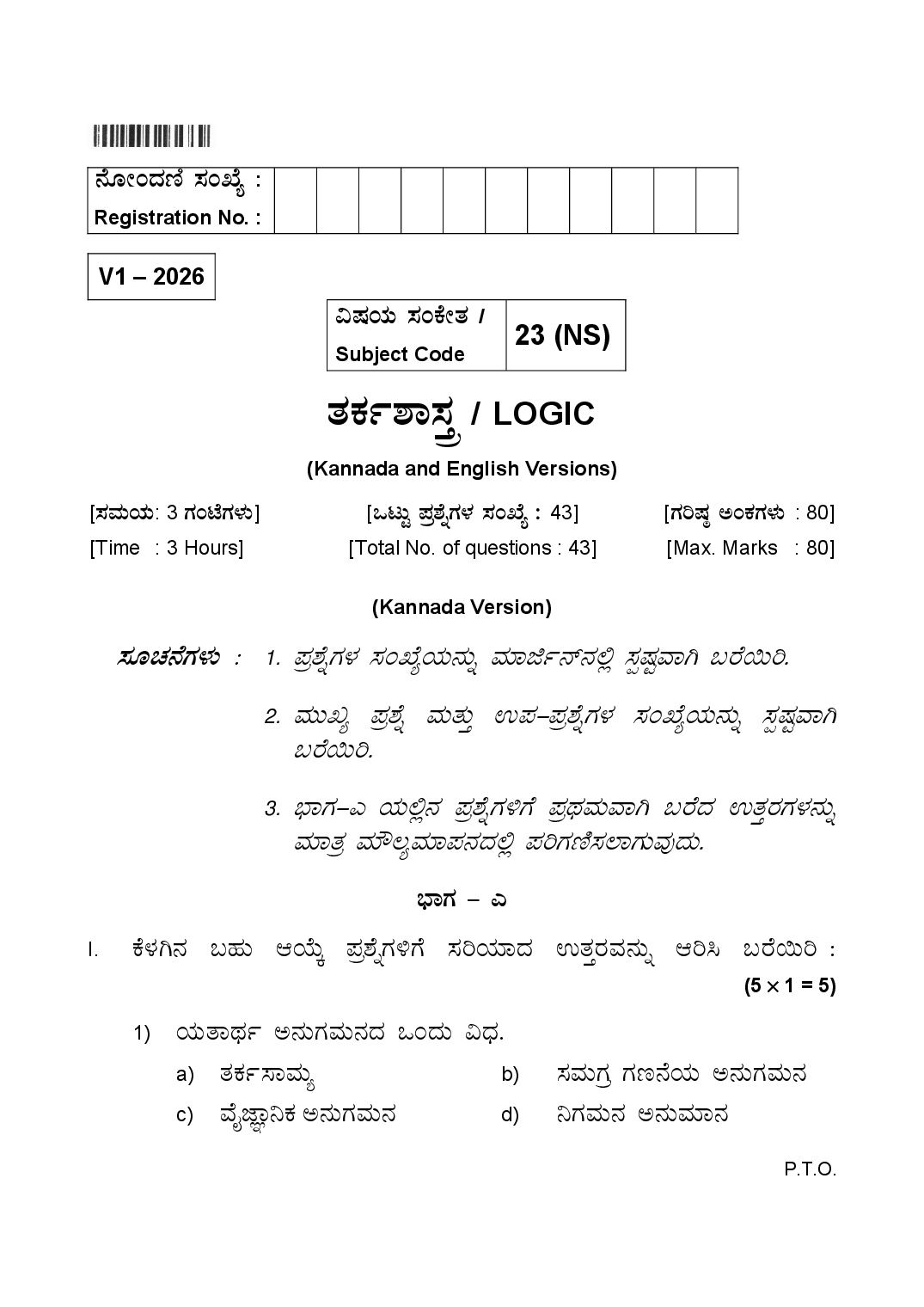
Karnataka 2nd PUC Question Paper 2026 Logic – Text
Read the full text of this question paper below — useful to quickly search, copy and reference the content online without downloading the PDF.
📄 View text version (12 pages)
Page 1
Registration No. :
V1 – 2026
«µÀAiÀÄ ¸ÀAPÉÃvÀ /
Subject Code
vÀPÀð±Á¸ÀÛç / LOGIC
(Kannada and English Versions)
[¸ÀªÀÄAiÀÄ: 3 UÀAmÉUÀ¼ÀÄ] [MlÄÖ ¥Àæ±ÉßUÀ¼À ¸ÀASÉå : 43] [UÀjµÀ× CAPÀUÀ¼ÀÄ : 80]
[Time : 3 Hours] [Total No. of questions : 43] [Max. Marks : 80]
(Kannada Version)
¸ÀÆZÀ£ÉUÀ¼ÀÄ : 1. ¥Àæ±ÉßUÀ¼À ¸ÀASÉåAiÀÄ£ÀÄß ªÀiÁfð£ï£À°è ¸ÀàµÀÖªÁV §gɬÄj.
2. ªÀÄÄRå¥Àæ±Éß ªÀÄvÀÄÛ G¥À-¥Àæ±ÉßUÀ¼À ¸ÀASÉåAiÀÄ£ÀÄß ¸ÀàµÀÖªÁV
§gɬÄj.
3. ¨sÁUÀ-J AiÀÄ°è£À ¥Àæ±ÉßUÀ½UÉ ¥ÀæxÀªÀĪÁV §gÉzÀ GvÀÛgÀUÀ¼À£ÀÄß
ªÀiÁvÀæ ªÀiË®åªÀiÁ¥À£ÀzÀ°è ¥ÀjUÀt¸À¯ÁUÀĪÀÅzÀÄ.
¨sÁUÀ - J
I. PɼÀV£À §ºÀÄ DAiÉÄÌ ¥Àæ±ÉßUÀ½UÉ ¸ÀjAiÀiÁzÀ GvÀÛgÀªÀ£ÀÄß Dj¹ §gɬÄj :
(5 × 1 = 5)
1) AiÀÄvÁxÀð C£ÀÄUÀªÀÄ£ÀzÀ MAzÀÄ «zsÀ.
a) vÀPÀð¸ÁªÀÄå b) ¸ÀªÀÄUÀæ UÀt£ÉAiÀÄ C£ÀÄUÀªÀÄ£À
c) ªÉÊeÕÁ¤PÀ C£ÀÄUÀªÀÄ£À d) ¤UÀªÀÄ£À C£ÀĪÀiÁ£À
P.T.O.
Page 2
2) «UÀªÀÄ£ÀzÀ «µÀAiÀiÁvÀäPÀ DzsÁgÀUÀ¼ÀÄ.
(i) ¤¸ÀUÀðzÀ KPÀ¥ÀæPÁgÀvÉAiÀÄ ¤AiÀĪÀÄ
(ii) PÁAiÀÄð-PÁgÀt ¤AiÀĪÀÄ
(iii) CªÀ¯ÉÆÃPÀ£À
(iv) ¥ÀæAiÉÆÃUÀ
a) (i) ªÀÄvÀÄÛ (ii) ¸Àj b) (ii) ªÀÄvÀÄÛ (iii) ¸Àj
c) (iii) ªÀÄvÀÄÛ (iv) ¸Àj d) (iv) ªÀÄvÀÄÛ (i) ¸Àj
3) MAzÀÄ ¸ÀAAiÀÄÄPÀÛ ¥ÀjuÁªÀĪÀ£ÀÄßAlÄ ªÀiÁqÀ®Ä C£ÉÃPÀ PÁgÀtUÀ¼ÀÄ MmÁÖV
QæAiÉÄUÉÊAiÀÄĪÀÅzÀÄ.
a) PÁgÀtUÀ¼À ¸ÀªÀÄÄZÀÒAiÀÄ
b) C£ÉÃPÀvÀé PÁgÀtªÁzÀ
c) ¥ÀjuÁªÀÄUÀ¼À CAvÀgï¸À«Ää±Àæt
d) PÁAiÀÄð-PÁgÀt ¤AiÀĪÀÄ
4) MAzÀÄ WÀl£ÉAiÀÄ£ÀÄß «ªÀj¸À®Ä AiÀiÁªÀÅzÉà ¸ÁPÁë åzsÁgÀUÀ¼ÀÄ E®èzÉÃ
EzÁÝUÀ vÁvÁÌ°PÀªÁV H»¹PÉÆAqÀ UÀæ»PÉ.
a) PÁgÀt b) DzsÁgÀPÀ®à£É
c) ¸ÁzÀȱÁå£ÀĪÀiÁ£À d) «ªÀgÀuÉ
5) eÉêÁ£ïì CªÀgÀ ¥ÀæPÁgÀ C£ÀÄUÀªÀÄ£ÀªÀÅ AiÀiÁªÀÅzÀ£ÀÄß CªÀ®A©¹zÉ?
a) ¸ÀA¨sÀªÀ¤ÃAiÀÄvÉ b) ¤UÀªÀÄ£À
c) PÁgÀt d) ¥ÀjuÁªÀÄ
Page 3
II. DªÀgÀtzÀ°è PÉÆnÖgÀĪÀ ¸ÀÆPÀÛªÁzÀ ¥ÀzÀªÀ£ÀÄß §¼À¹ ©lÖ ¸ÀܼÀUÀ¼À£ÀÄß
¨sÀwð ªÀiÁr : (5 × 1 = 5)
[ªÀåQÛ¤µÀ×, C£À£ÀåxÁ¹zÀÞ, SÁåw, zÀéAzÀé DzsÁgÀPÀ®à£É, C£ÉÃPÀvÀé PÁgÀtªÁzÀ,
ªÀfð¸ÀÄ«PÉ]
6) ««zsÀ ¸À¤ßªÉñÀUÀ¼À°è ««zsÀ PÁgÀtUÀ¼ÀÄ MAzÉà jÃwAiÀÄ
¥ÀjuÁªÀĪÀ£ÀÄßAlÄ ªÀiÁqÀĪÀÅzÀÄ ____________
7) ____________ JAzÀgÉ C£ÀUÀvÀå CxÀªÁ DPÀ¹äPÀªÁzÀ ¸À¤ßªÉñÀUÀ¼À£ÀÄß
¥ÀævÉåÃQ¸ÀĪÀÅzÀÄ.
8) MAzÀÄ WÀl£ÉAiÀÄ£ÀÄß «ªÀj¸À®Ä MAzÀQÌAvÀ ºÉZÀÄÑ DzsÁgÀPÀ®à£ÉUÀ½zÀÝgÉ
CzÀ£ÀÄß ____________ J£ÀÄߪÀgÀÄ.
9) ¯Áå¥ï¯ÉÃ£ï ªÀÄvÀÄÛ Pɬģïì fêÀ£ï EªÀgÀ ¥ÀæPÁgÀ ¸ÀA¨sÀªÀ¤ÃAiÀÄvÉAiÀÄ
DzsÁgÀªÀÅ ____________ DVzÉ.
10) ____________ JAzÀgÉ DPÀ¹äPÀªÁzÀ CªÀÄÄRåªÁzÀ CA±ÀUÀ¼ÀÄ.
III. PɼÀV£ÀªÀÅUÀ¼À£ÀÄß ºÉÆA¢¹ §gɬÄj : (5 × 1 = 5)
J ©
11) i) C£ÀªÀ¯ÉÆÃPÀ£À a) eÉ.J¸ï. «Ä¯ï
ii) PÁgÀt b) ±Á¹ÛçÃAiÀÄ vÀ¤SÉAiÀÄ ªÉÆzÀ®
ªÉÄnÖ®Ä
iii) ¥ÁæAiÉÆÃVPÀ «zsÁ£ÀzÀ c) ¸Àé¨sÁªÀªÁzÀ
¤gÀÆ¥ÀPÀ
iv) DzsÁgÀPÀ®à£É d) ¥ÀæwÃvÀå ¸ÀªÀÄÄvÁàzÀ
v) ¨ËzÀÞgÀ ¹zÁÞAvÀ e) CªÀ¯ÉÆÃPÀ£ÀzÀ zÉÆõÀ
f) vÀPëÀtzÀ ¥ÀǪÁðAUÀ
Page 4
IV. F PɼÀV£À J¯Áè ¥Àæ±ÉßUÀ½UÉ GvÀÛj¹ : (5 × 1 = 5)
12) ªÀåvÁå¸ÀzÀ «zsÁ£ÀªÀÅ ¥ÀæAiÉÆÃUÀzÀ «zsÁ£ÀªÉÃ?
13) «eÕÁ£ÀªÀ£ÀÄß ªÁåSÁ夹.
14) ¸ÀA¨sÀªÀ¤ÃAiÀÄvÉ JAzÀgÉãÀÄ?
15) «ªÀgÀuÉ JAzÀgÉãÀÄ?
16) «ªÀvÀðªÁzÀªÀ£ÀÄß ¥Àæw¥Á¢¹zÀªÀgÀÄ AiÀiÁgÀÄ?
¨sÁUÀ - ©
V. PɼÀV£À AiÀiÁªÀÅzÁzÀgÀÆ ºÀvÀÄÛ ¥Àæ±ÉßUÀ½UÉ GvÀÛj¹. (10 × 2 = 20)
17) CAiÀÄvÁxÀð C£ÀÄUÀªÀÄ£À JAzÀgÉãÀÄ?
18) ¸ÀgÀ¼À JtÂPÉAiÀÄ C£ÀÄUÀªÀÄ£À JAzÀgÉãÀÄ?
19) C£ÀÄUÀªÀÄ£ÀzÀ gÀÆ¥ÁvÀäPÀ DzsÁgÀUÀ¼À£ÀÄß §gɬÄj.
20) KPÀ¥ÀæPÁgÀvÉAiÀÄ ¥Àæ¨sÉÃzÀÀUÀ¼À£ÀÄß §gɬÄj.
21) GvÀÛªÀÄ CªÀ¯ÉÆÃPÀ£ÀzÀ ¹ÜwUÀw/¤§AzsÀ£ÉUÀ¼À£ÀÄß §gɬÄj.
22) ¥ÀæAiÉÆÃUÀzÀ JgÀqÀÄ ®PëÀtUÀ¼À£ÀÄß §gɬÄj.
23) ¥ÀjuÁªÀÄUÀ¼À CAvÀgï¸À«Ää±ÀætzÀ «zsÀUÀ¼À£ÀÄß §gɬÄj.
Page 5
24) ªÀåvÁå¸À «zsÁ£ÀzÀ ¸ÀÆvÀæªÀ£ÀÄß §gɬÄj.
25) ªÉÊeÕÁ¤PÀ «zsÁ£À JAzÀgÉãÀÄ?
26) DzsÁgÀPÀ®à£ÉUÀ¼À£ÀÄß ¸ÀÆa¸ÀĪÀ ªÀÄÆ®vÀvÀéUÀ¼À£ÀÄß w½¹.
27) DzsÁgÀPÀ®à£ÉAiÀÄ gÀZÀ£É ªÀÄvÀÄÛ ¨É¼ÀªÀtÂUÉAiÀÄ JgÀqÀÄ ºÀAvÀUÀ¼À£ÀÄß §gɬÄj.
28) ¸ÀA¨sÀªÀ¤ÃAiÀÄvÉAiÀÄ DzsÁgÀUÀ¼ÀÄ AiÀiÁªÀŪÀÅ?
29) «ªÀgÀuÉAiÀÄ «zsÀUÀ¼À£ÀÄß w½¹.
30) «ªÀgÀuÉAiÀÄ JgÀqÀÄ «ÄwUÀ¼À£ÀÄß §gɬÄj.
31) ¥ÀjuÁªÀÄzÀ «zsÀUÀ¼À£ÀÄß ºÉ¸Àj¹.
¨sÁUÀ - ¹
VI. PɼÀV£À AiÀiÁªÀÅzÁzÀgÀÆ £Á®ÄÌ ªÁzÀUÀ¼À ¸ÀªÀÄAd¸ÀvÉAiÀÄ£ÀÄß ¥Àj²Ã°¹ ªÀÄvÀÄÛ
«ªÀj¹ : (4 × 5 = 20)
32) £Á£ÀÄ UÀªÀĤ¹zÀ PÉ®ªÀÅ CªÉÄÃjPÀ£ÀßgÀÄ ¥ÁæªÀiÁtÂPÀgÀÄ. DzÀÝjAzÀ J¯èÁ
CªÉÄÃjPÀ£ÀßgÀÄ ¥ÁæªÀiÁtÂPÀgÀÄ.
33) £Á£ÀÄ £À£Àß vÀAzÉAiÀĪÀgÀ£ÀÄß JvÀÛgÀ, vÀÆPÀ ªÀÄvÀÄÛ §tÚUÀ¼À°è ºÉÆîÄvÉÛãÉ.
£À£Àß vÀAzÉAiÀĪÀgÀÄ M¼ÉîAiÀÄ ¸ÀAVÃvÀUÁgÀgÁVzÁÝgÉ. DzÀÝjAzÀ £Á£ÀÆ ¸ÀºÀ
M¼ÉîAiÀÄ ¸ÀAVÃvÀUÁgÀ£ÁUÀÄvÉÛãÉ.
34) PÀ£ÀßrAiÀÄÄ ¥Àæw©A©¸ÀÄvÀÛzÉ KPÉAzÀgÉ CzÀgÀ°è £ÁªÀÅ £ÀªÀÄä ¥Àæw©A§ªÀ£ÀÄß
£ÉÆÃqÀ§ºÀÄzÀÄ.
35) PÀ¥Éàa¥Àà£ÀÄß ¨É½î JAzÀÄ ¨sÁ«¸ÀĪÀÅzÀÄ.
Page 6
36) C±ÉÆÃPÀ£ÀÄ ¥ÀjÃPÉëUÉ ºÉÆÃUÀĪÁUÀ ¨ÉPÀÄÌ CqÀØ §A¢zÀÝjAzÀ DvÀ£ÀÄ
¥ÀjÃPÉëAiÀÄ°è C£ÀÄwÛÃtð£ÁzÀ£ÀÄ.
37) ¸ÀvÀåªÀ£ÀÄß ºÉüÀÄ E®è¢zÀÝgÉ ¤£Àß vÀ¯É§ÄgÀÄqÉ ¹Ã¼ÀĪÉ.
¨sÁUÀ - r
VII. PɼÀV£À AiÀiÁªÀÅzÁzÀgÀÆ JgÀqÀÄ ¥Àæ±ÉßUÀ½UÉ GvÀÛgÀ §gɬÄj : (2 × 5 = 10)
38) ¸ÀªÀÄUÀæ UÀt£ÉAiÀÄ C£ÀÄUÀªÀÄ£ÀªÀ£ÀÄß GzÁºÀgÀuÉAiÉÆA¢UÉ «ªÀj¹.
39) ªÉÊeÕÁ¤PÀ «zsÁ£ÀzÀ ®PÀëtUÀ¼À£ÀÄß «ªÀj¹.
40) ¸ÀªÀÄAd¸À DzsÁgÀPÀ®à£ÉAiÀÄ ®PëÀtUÀ¼À£ÀÄß «ªÀj¹.
41) ¨sÁgÀwÃAiÀÄ vÀPÀðzÀ ¥ÀæPÁgÀ PÁgÀtzÀ «zsÀUÀ¼À£ÀÄß GzÁºÀgÀuÉAiÉÆA¢UÉ
«ªÀj¹.
¨sÁUÀ - E
VIII. PɼÀV£À AiÀiÁªÀÅzÁzÀgÀÆ MAzÀÄ ¥Àæ±ÉßUÉ GvÀÛj¹ : (1 × 10 = 10)
42) PÁgÀtzÀ UÀÄt®PëÀtªÀ£ÀÄß §gɬÄj.
43) ¸ÀºÀ¥ÀjªÀvÀð£À «zsÁ£ÀªÀ£ÀÄß GzÁºÀgÀuÉ, UÀÄt ªÀÄvÀÄÛ zÉÆõÀUÀ¼ÉÆA¢UÉ
«ªÀj¹j.
———————
Page 7
(English Version)
Instructions : 1. Write the question numbers clearly in the margin.
2. Write main question and sub-question numbers clearly.
3. For Part-A questions only the first written answer will be
considered for evaluation.
PART – A
I. Answer the following multiple choice questions by choosing the correct
answer : (5 × 1 = 5)
1) A kind of Proper Induction.
a) Parity of reasoning
b) Induction per complete enumeration
c) Scientific Induction
d) Deductive Inference
2) Material grounds of Induction
(i) Law of Uniformity of Nature
(ii) Law of Causation
(iii) Observation
(iv) Experiment
a) (i) and (ii) are correct
b) (ii) and (iii) are correct
c) (iii) and (iv) are correct
d) (iv) and (i) are correct
Page 8
3) Several causes acting together to produce a joint effect is called as
a) Conjunction of causes
b) Plurality of causes
c) Intermixture of effect
d) Law of causation
4) A tentative assumption made to explain the facts when the evidence is
lacking
a) Cause
b) Hypothesis
c) Analogy
d) Explanation
5) According to Jevons Induction is based on
a) Probability
b) Deduction
c) Cause
d) Effect
II. Fill in the blanks by using appropriate word given in the bracket :
(5 × 1 = 5)
[Subjective, Ananyathasidda, Khyathi, Rival hypothesis, Plurality of Causes,
Elimination]
6) Same effect may be produced by different causes in different cases is
____________.
7) ____________ means exclusion of unnecessary and accidental
circumstances.
8) If there is more than one hypothesis to explain an event is called as
____________.
Page 9
9) According to Laplane and Keynes Jeevan ground of probability is
____________.
10) ____________ means accidental and insignificant factors.
III. Match the following : (5 × 1 = 5)
A B
11) i) Non observation a) J.S. Mill
ii) Cause b) First step in Scientific
Investigation
iii) Formulator of Experimental c) Swabhavavada
Method
iv) Hypothesis d) Pratitya Samutpada
v) Buddhist’s Theory e) Fallacy of observation
f) Immediate antecedent
IV. Answer all the following questions : (5 × 1 = 5)
12) Is the Method of Difference is a experimental method?
13) Define Science.
14) What is Probability?
15) What is Explanation?
16) Who advocated the Vivarthavada?
Page 10
PART – B
V. Answer any ten of the following questions : (10 × 2 = 20)
17) What is Improper Induction?
18) What is Induction per Simple Enumeration?
19) Write the formal grounds of Induction.
20) Write the kinds of uniformities.
21) Mention the conditions of good Observation.
22) Write two characteristics of Experiment.
23) Write the kinds of Intermixture of effects.
24) Write the canon of the method of difference.
25) What is Scientific Method?
26) Mention the principles which suggests Hypothesis.
27) Write any two stages in the formation and development of Hypothesis.
28) What are the grounds of Probability?
29) Mention the kinds of Explanation.
30) Write two limitations of Explanation.
31) Name the kinds of Parinama.
Page 11
PART – C
VI. Test and explain the validity of any four of the following argument :
(4 × 5 = 20)
32) I have seen few Americans who are honest. Therefore, All Americans are
honest.
33) I resemble my father in height, weight and colour. My father is a
great musician. Therefore I will also become a great musician.
34) Mirror is reflecting, because we can see our image in it.
35) Mistaking a seashell for silver.
36) Ashoka failed in the examination because a cat crossed him while he was
going to examination.
37) Tell the truth, otherwise I will break your skull.
PART – D
VII. Answer any two of the following questions : (2 × 5 = 10)
38) Explain Induction per Complete Enumeration with example.
39) Explain the characteristics of Scientific method.
40) Explain the characteristics of Valid Hypothesis.
41) Explain the kinds of causes with example according to Indian Logic.
Page 12
PART – E
VIII. Answer any one of the following questions : (1 × 10 = 10)
42) Explain the characteristics of cause.
43) Explain the method of Concomitant variation with example, merit and
demerits.
———————
Document Details
| Board / Org | Karnataka Board |
| Exam | Class 12 |
| Type | Question Paper |
| Pages | 12 |
| Language | english |
| Updated | 24 Sep 2026 |