Karnataka 2nd PUC Question Paper 2026 Political Science
Finished viewing? Save it for later —
Download Karnataka 2nd PUC Question Paper 2026 Political Science (PDF · 12 pages)About Karnataka 2nd PUC Question Paper 2026 Political Science
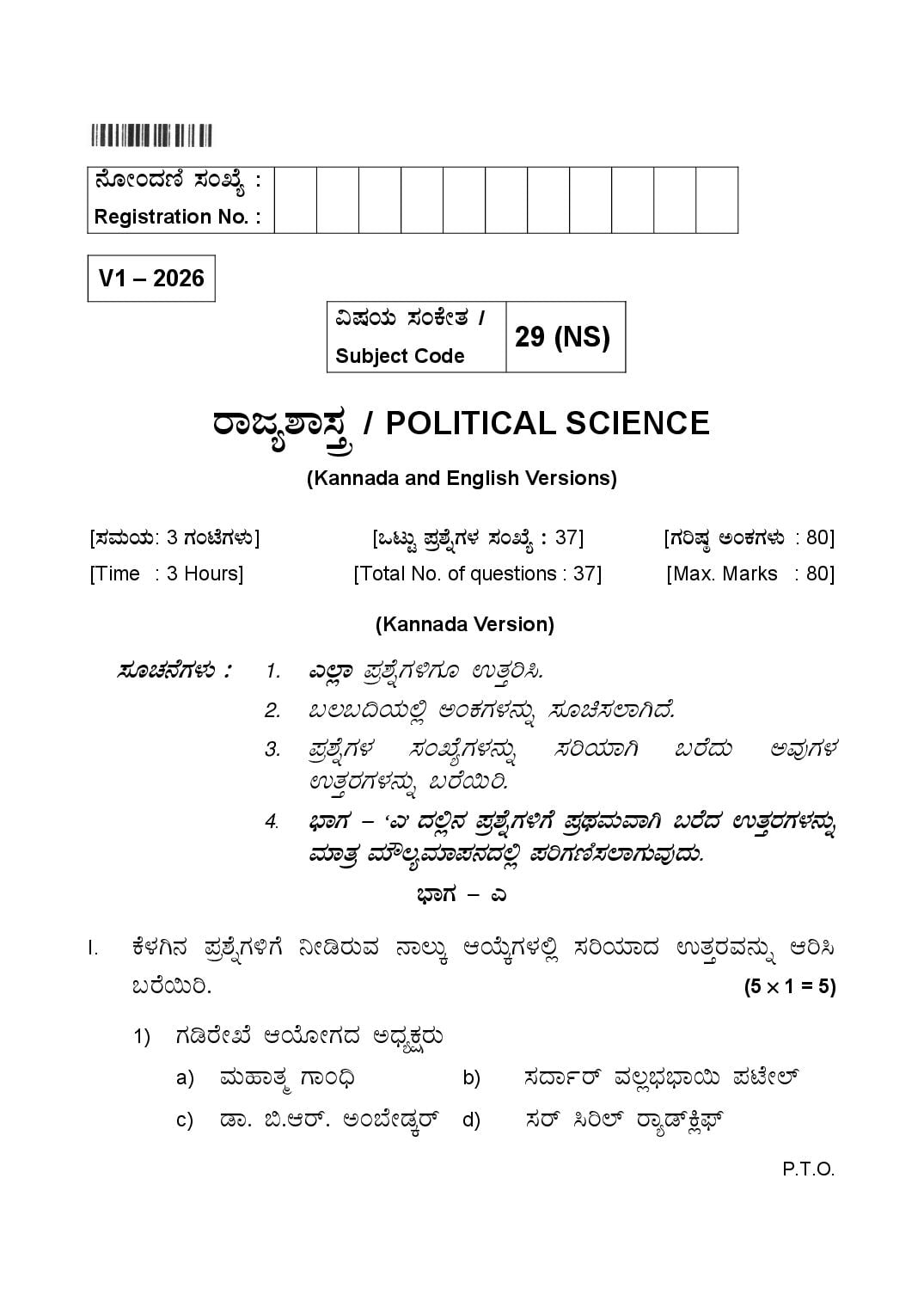
Karnataka 2nd PUC Question Paper 2026 Political Science is available here for free download. Published by Karnataka Board for Class 12, this question paper can be viewed online or downloaded as a PDF (12 pages). Candidates preparing for Class 12 can use Karnataka 2nd PUC Question Paper 2026 Political Science to understand the exam pattern, the type of questions asked, and the overall difficulty level.
Frequently Asked Questions
How can I download Karnataka 2nd PUC Question Paper 2026 Political Science?
Open this page and click the Download button to save Karnataka 2nd PUC Question Paper 2026 Political Science as a PDF. It is completely free on AglaSem Docs.
Is Karnataka 2nd PUC Question Paper 2026 Political Science free to download?
Yes. Karnataka 2nd PUC Question Paper 2026 Political Science can be viewed online and downloaded as a PDF free of cost on AglaSem Docs.
How many pages does Karnataka 2nd PUC Question Paper 2026 Political Science have?
Karnataka 2nd PUC Question Paper 2026 Political Science contains 12 pages, which you can read online or download together as a single PDF.
Where can I find more Class 12 study material?
You can find more Class 12 question papers, sample papers, syllabus, and answer keys on AglaSem Docs.
Karnataka 2nd PUC Question Paper 2026 Political Science – Text
Read the full text of this question paper below — useful to quickly search, copy and reference the content online without downloading the PDF.
📄 View text version (12 pages)
Page 1
Registration No. :
V1 – 2026
«µÀAiÀÄ ¸ÀAPÉÃvÀ /
29 (NS)
Subject Code
gÁdå±Á¸ÀÛç / POLITICAL SCIENCE
(Kannada and English Versions)
[¸ÀªÀÄAiÀÄ: 3 UÀAmÉUÀ¼ÀÄ] [MlÄÖ ¥Àæ±ÉßUÀ¼À ¸ÀASÉå : 37] [UÀjµÀ× CAPÀUÀ¼ÀÄ : 80]
[Time : 3 Hours] [Total No. of questions : 37] [Max. Marks : 80]
(Kannada Version)
¸ÀÆZÀ£ÉUÀ¼ÀÄ : 1. J¯èÁ ¥Àæ±ÉßUÀ½UÀÆ GvÀÛj¹.
2. §®§¢AiÀÄ°è CAPÀUÀ¼À£ÀÄß ¸ÀÆa¸À¯ÁVzÉ.
3. ¥Àæ±ÉßUÀ¼À ¸ÀASÉåUÀ¼À£ÀÄß ¸ÀjAiÀiÁV §gÉzÀÄ CªÀÅUÀ¼À
GvÀÛgÀUÀ¼À£ÀÄß §gɬÄj.
4. ¨sÁUÀ - ‘J’ zÀ°è£À ¥Àæ±ÉßUÀ½UÉ ¥ÀæxÀªÀĪÁV §gÉzÀ GvÀÛgÀUÀ¼À£ÀÄß
ªÀiÁvÀæ ªÀiË®åªÀiÁ¥À£ÀzÀ°è ¥ÀjUÀt¸À¯ÁUÀĪÀÅzÀÄ.
¨sÁUÀ - J
I. PɼÀV£À ¥Àæ±ÉßUÀ½UÉ ¤ÃrgÀĪÀ £Á®ÄÌ DAiÉÄÌUÀ¼À°è ¸ÀjAiÀiÁzÀ GvÀÛgÀªÀ£ÀÄß Dj¹
§gɬÄj. (5 × 1 = 5)
1) UÀrgÉÃSÉ DAiÉÆÃUÀzÀ CzsÀåPëÀgÀÄ
a) ªÀĺÁvÀä UÁA¢ü b) ¸ÀzÁðgï ªÀ®è¨sÀ¨sÁ¬Ä ¥ÀmÉïï
c) qÁ. ©.Dgï. CA¨ÉÃqÀÌgï d) ¸Àgï ¹j¯ï gÁåqïQè¥sï
P.T.O.
Page 2
2) ZÀÄ£ÁªÀuÉAiÀÄ ªÀÄÆ® ¥ÀzÀ
a) °§gï b) gÀA¦AiÀÄgï
c) J°UÉgï d) mÉgÀgÉ
3) ‘PÁ«ÄðPÀ ¢£ÁZÀgÀuÉ’AiÀÄ£ÀÄß DZÀj¸ÀĪÀ ¢£À
a) ªÉÄà 1 b) d£ÀªÀj 25
c) ªÉÄà 11 d) dÆ£ï 5
4) ‘CAvÀgÁ¶ÖçÃAiÀÄ ¸ÀA§AzsÀ’ JA§ ¥ÀzÀªÀ£ÀÄß ªÉÆlÖ ªÉÆzÀ°UÉ §¼À¹zÀªÀgÀÄ
a) eÉgÀ«Ä gÁåAqÀªÀiï b) eÉgÀ«Ä ¨ÉAxÁåªÀiï
c) fÃ£ï ¨ÉÆÃr£ï d) ¥ÁªÀÄgï ªÀÄvÀÄÛ ¥ÀQð£ïì
5) F PɼÀV£À AiÀiÁªÀ ºÉýPÉAiÀÄÄ ¸ÀÆPÀÛªÁVzÉ?
a) EA¢gÁ UÁA¢ü ªÀÄvÀÄÛ gÉhÄqï.J. ¨sÀÄmÉÆÖà vÁµÉÌAmï M¥ÀàAzÀPÉÌ ¸À»
ºÁQzÀgÀÄ
b) CAiÀÄƨï SÁ£ï ªÀÄvÀÄÛ EA¢gÁ UÁA¢ü ¹ªÀiÁè M¥ÀàAzÀPÉÌ ¸À»
ºÁQzÀgÀÄ
c) dªÀºÀgï¯Á¯ï £ÉºÀgÀÄ ªÀÄvÀÄÛ eË-J£ï-¯ÁAiÀiï ¥ÀAZÀ²Ã® vÀvÀéPÉÌ
¸À» ºÁQzÀgÀÄ
d) «.¦. ¹AUï ªÀÄvÀÄÛ £ÀªÁeï µÀjÃ¥sï ¯ÁºÉÆÃgï M¥ÀàAzÀPÉÌ ¸À»
ºÁQzÀgÀÄ
Page 3
II. DªÀgÀtzÀ°è PÉÆnÖgÀĪÀ GvÀÛgÀUÀ¼À°è ¸ÀjAiÀiÁzÀÄzÀ£ÀÄß Dj¹ ©lÖ ¸ÀܼÀUÀ¼À£ÀÄß
¨sÀwð ªÀiÁr. (5 × 1 = 5)
[L.A. PÁ¥sïªÀÄ£ï, 1971, ªÀĸÀÆìj, ªÉÄÃzsÁ ¥ÁlÌgï, MA§ÆqïìªÀÄ£ï, 1974]
6) ¯Á¯ï §ºÀzÀÆÝgï ±Á¹Ûç DPÁqÉ«Ä EgÀĪÀ ¸ÀܼÀ ____________.
7) ____________ gÀªÀgÀÄ £ÀªÀÄðzÁ §ZÁªÉÇà DAzÉÆî£ÀzÀ £ÁAiÀÄPÀgÀÄ.
8) ___________ gÀªÀgÀÄ C¹ävÉ gÁdPÁgÀtªÀ£ÀÄß UÀÄwð¹zÀgÀÄ.
9) ¹éÃqÀ£ï£À ¨sÀæµÁÖZÁgÀ ¤UÀæºÀ ¸ÀA¸ÉÜ ____________.
10) ¨ÁAUÁè zÉñÀ GzÀAiÀĪÁzÀ ªÀµÀð ____________.
III. ºÉÆA¢¹ §gɬÄj. (5 × 1 = 5)
11) a) ¨sÁgÀvÀ gÁ¶ÖçÃAiÀÄ PÁAUÉæ¸ï i) eÉÆåÃw¨Á ¥sÀůÉ
b) CPëÀgÀ PÁæAw ii) ªÀÄÄPÀÛ ªÀiÁgÀÄPÀmÉÖ
c) ¯ÉøÀ¸ï ¥sÉÃgï iii) 1885
d) °ÃUï D¥sï £ÉõÀ£ïì iv) ¥ÀÅ£ÀgïgÀZÀ£É
e) ¥ÉgɸÉÆÖçÃAiÀÄÌ v) 1920
vi) qÁ. ©.Dgï. CA¨ÉÃqÀÌgï
Page 4
IV. PɼÀV£À ¥Àæ±ÉßUÀ½UÉ ¥ÀæwAiÉÆAzÀPÀÆÌ 1 ªÁPÀåzÀ°è GvÀÛj¹ : (5 × 1 = 5)
12) ¨sÁgÀvÀzÀ°è ªÀÄvÀ ZÀ¯Á¬Ä¸À®Ä PÀ¤µÀ× ªÀAiÉÆëÄw JµÀÄÖ?
13) ‘ªÀÄÆPÀ £ÁAiÀÄPÀ’ ¥ÀwæPÉAiÀÄ£ÀÄß ¥ÁægÀA©ü¹zÀªÀgÀÄ AiÀiÁgÀÄ?
14) f¯èÉAiÀÄ°è ªÀiÁ£ÀªÀ ºÀPÀÄÌUÀ¼À£ÀÄß gÀQë¸ÀĪÀ ªÀÄÄRå¸ÀÜgÀÄ AiÀiÁgÀÄ?
15) ‘BRICS’ C£ÀÄß «¸ÀÛj¹.
16) ¨sÁgÀvÀ ¸ÀA«zsÁ£ÀzÀ AiÀiÁªÀ «¢üAiÀÄÄ «zÉñÁAUÀ ¤ÃwAiÀÄ §UÉÎ
G¯èÉÃT¸ÀÄvÀÛzÉ?
¨sÁUÀ - ©
V. PɼÀV£À AiÀiÁªÀÅzÁzÀgÀÆ LzÀÄ ¥Àæ±ÉßUÀ½UÉ ¥ÀæwAiÉÆAzÀPÀÆÌ 2-3 ªÁPÀåUÀ¼À°è
GvÀÛj¹. (5 × 2 = 10)
17) ¥ÀævÀåPëÀ ZÀÄ£ÁªÀuÉ JAzÀgÉãÀÄ? GzÁºÀgÀuÉ PÉÆr.
18) CT® ¨sÁgÀvÀ ¸ÉêÉUÀ¼ÀÄ JAzÀgÉãÀÄ?
19) ¸ÀPÁðgÀzÀ JgÀqÀÄ E¯ÁSÉUÀ¼À£ÀÄß w½¹.
20) ‘»AzÀÆ «qÉÆÃ¸ï ºÉÆêÀiï’ J°è ªÀÄvÀÄÛ AiÀiÁªÁUÀ ¥ÁægÀA¨sÀªÁ¬ÄvÀÄ?
21) PÉÆêÀÄĪÁzÀ JAzÀgÉãÀÄ?
22) ¹jAiÀiÁzÀ JgÀqÀÄ d£ÁAVÃAiÀÄ UÀÄA¥ÀÅUÀ¼À£ÀÄß ºÉ¸Àj¹.
23) ¸ÁPïð£À AiÀiÁªÀÅzÁzÀgÀÆ JgÀqÀÄ ¸ÀzÀ¸Àå gÁµÀÖçUÀ¼À£ÀÄß §gɬÄj.
24) ¨sÁgÀvÀzÀ «zÉñÁAUÀ ¤ÃwUÉ PÉÆqÀÄUÉAiÀÄ£ÀÄß ¤ÃrzÀ E§âgÀÄ £ÁAiÀÄPÀgÀ£ÀÄß
ºÉ¸Àj¹.
Page 5
¨sÁUÀ - ¹
VI. PɼÀV£À AiÀiÁªÀÅzÁzÀgÀÆ DgÀÄ ¥Àæ±ÉßUÀ½UÉ ¥ÀæwAiÉÆAzÀPÀÆÌ 15-20 ªÁPÀåUÀ¼À°è
GvÀÛj¹. (6 × 5 = 30)
25) 1947 gÀ ¨sÁgÀvÀ ¸ÁévÀAvÀæ å PÁAiÉÄÝAiÀÄ ªÀÄÄSÁåA±ÀUÀ¼À£ÀÄß «ªÀj¹.
26) ‘ªÀÄzsÀåAvÀgÀ ¸ÀPÁðgÀ’zÀ PÀÄjvÀÄ n¥Ààt §gɬÄj.
27) £ÁUÀjÃPÀ ¸ÉêÁªÀUÀðzÀ ®PëÀtUÀ¼À£ÀÄß «ªÀj¹.
28) ªÀÄ»¼Á ZÀ¼ÀĪÀ½AiÀÄ PÁgÀtUÀ¼ÁªÀŪÀÅ?
29) ¨sÁgÀvÀ ¸ÀA«zsÁ£ÀzÀ°ègÀĪÀ ««zsÀ jÃwAiÀÄ vÀÄvÀÄð ¥Àj¹ÜwUÉ ¸ÀA§A¢ü¹zÀ
«¢üUÀ¼À£ÀÄß «ªÀj¹.
30) ¸À«Ää±Àæ ¸ÀPÁðgÀzÀ UÀÄtUÀ¼ÁªÀŪÀÅ?
31) gÁµÀÖç ¤ªÀiÁðtzÀ ««zsÀ CUÀvÁåA±ÀUÀ¼À£ÀÄß «ªÀj¹.
32) CAvÀgÁ¶ÖçÃAiÀÄ ¸ÀA§AzsÀUÀ¼À ¥ÀjPÀ®à£ÉUÀ¼À£ÀÄß ZÀað¹.
33) «±Àé¸ÀA¸ÉÜAiÀÄ zsÉåÃAiÉÆÃzÉÝñÀUÀ¼ÁªÀŪÀÅ?
Page 6
¨sÁUÀ - r
VII. PɼÀV£À AiÀiÁªÀÅzÁzÀgÀÆ JgÀqÀÄ ¥Àæ±ÉßUÀ½UÉ ¥ÀæwAiÉÆAzÀPÀÆÌ 30-40 ªÁPÀåUÀ¼À°è
GvÀÛj¹. (2 × 10 = 20)
34) ¨sÁgÀvÀzÀ°è ¥ÀPÀë ¥ÀzÀÞwAiÀÄ ¸ÀégÀÆ¥ÀªÀ£ÀÄß «ªÀj¹.
35) eÁUÀwÃPÀgÀtzÀ CxÀð, ¥ÁæªÀÄÄRåvÉ ªÀÄvÀÄÛ gÁdQÃAiÀÄ ¥ÀjuÁªÀÄUÀ¼À£ÀÄß
«ªÀj¹.
36) C¸ÀªÀiÁ£ÀvÉ ¥ÀæeÁ¥Àæ¨sÀÄvÀéPÉÌ ºÉÃUÉ MAzÀÄ vÉÆqÀPÁVzÉ? ZÀað¹.
37) ¨sÁgÀvÀ ªÀÄvÀÄÛ CªÉÄÃjPÁ zÉñÀUÀ¼À £ÀqÀÄ«£À ¸ÀA§AzsÀUÀ¼À£ÀÄß «ªÀj¹.
––––––––––––––––––
Page 7
(English Version)
Instructions : 1. Answer all the questions.
2. Figures in the right side indicate marks.
3. Write the correct question numbers for your answers.
4. For Part – ‘A’ questions, only the first written answers
will be considered for evaluation.
PART – A
I. Answer the following questions by choosing the correct answers among the
four options given below. (5 × 1 = 5)
1) The Chairman of Boundary Commission
a) Mahatma Gandhi b) Sardar Vallabhabhai Patel
c) Dr. B.R. Ambedkar d) Sir Cyrill Radcliffe
2) The root word of Election
a) Liber b) Rumpere
c) Eligere d) Terrere
3) The ‘Labour Day’ is celebrated on
a) May 1st b) January 25th
c) May 11th d) June 5th
Page 8
4) The word ‘International Relations’ was first used by
a) Jeremy Randum b) Jeremy Bentham
c) Jean Bodin d) Palmer and Perkins
5) Which of the following is best suitable statement?
a) Indira Gandhi and Z.A. Bhutto signed Tashkent Agreement
b) Ayub Khan and Indira Gandhi signed Simla Agreement
c) Jawaharlal Nehru and Zou-en-Lai signed Panchasheel
d) V.P. Singh and Nawaz Sharieff signed Lahore convention
II. Fill in the blanks with appropriate answer in the bracket. (5 × 1 = 5)
[L.A. Kauffman, 1971, Massourie, Medha Patkar, Ombudsman, 1974]
6) Lal Bahadur Shastri Academy is located in _________.
7) _________ was a leader of Narmada Bachavo Andolan.
8) _________ identified the Identity politics.
9) The Anti-corruption organization of Sweden is _________.
10) Bangladesh was born on _________.
Page 9
III. Match the following. (5 × 1 = 5)
11) a) Indian National Congress i) Jyothiba Phule
b) Akshara Kranthi ii) Free market
c) Laissez Faire iii) 1885
d) League of Nations iv) Reconstruction
e) Perestroika v) 1920
vi) Dr. B.R. Ambedkar
IV. Answer the following questions in 1 sentence each. (5 × 1 = 5)
12) What is the minimum age to cast vote in India?
13) Who started the newspaper ‘Mooka Naika’?
14) Name the head who protect the human rights in the district.
15) Expand ‘BRICS’.
16) Which Article of the Indian Constitution states about the India’s Foreign
Policy?
PART – B
V. Answer any five of the following questions in 2-3 sentences each. (5 × 2 = 10)
17) What is Direct Election? Give an example.
18) What is All India Service?
19) State any two departments of the Government.
20) When did the ‘Hindu Widow’s Home’ established and where?
Page 10
21) What is Communalism?
22) Name any two ethnic groups in Syria.
23) Write any two member countries of the SAARC.
24) Name any two leaders who contributed for Indian Foreign Policy.
PART – C
VI. Answer any six of the following questions in 15-20 sentences each.
(6 × 5 = 30)
25) Explain the provisions of Indian Independence Act of 1947.
26) Write a short note on ‘Interim Government’.
27) Explain the features of Civil Services.
28) What are causes for Feminist Movement?
29) Explain the various emergency provisions in the Indian Constitution.
30) What are the merits of Coalition Government?
31) Describe the various components of Nation Building.
32) Discuss the concepts of International Relations.
33) What are the objectives of the UN?
Page 11
PART – D
VII. Answer any two of the following questions in 30-40 sentences each.
(2 × 10 = 20)
34) Explain the nature of party system in India.
35) Describe the meaning, importance and political implications of Globalisation.
36) How inequality is a slur to democracy? Discuss.
37) Explain the relations between India and America.
—————————
Page 12
Document Details
| Board / Org | Karnataka Board |
| Exam | Class 12 |
| Type | Question Paper |
| Pages | 12 |
| Language | english |
| Updated | 24 Sep 2026 |