Karnataka 2nd PUC Question Paper 2026 Sociology
Finished viewing? Save it for later —
Download Karnataka 2nd PUC Question Paper 2026 Sociology (PDF · 12 pages)About Karnataka 2nd PUC Question Paper 2026 Sociology
Karnataka 2nd PUC Question Paper 2026 Sociology is available here for free download. Published by Karnataka Board for Class 12, this question paper can be viewed online or downloaded as a PDF (12 pages). Candidates preparing for Class 12 can use Karnataka 2nd PUC Question Paper 2026 Sociology to understand the exam pattern, the type of questions asked, and the overall difficulty level.
Frequently Asked Questions
How can I download Karnataka 2nd PUC Question Paper 2026 Sociology?
Open this page and click the Download button to save Karnataka 2nd PUC Question Paper 2026 Sociology as a PDF. It is completely free on AglaSem Docs.
Is Karnataka 2nd PUC Question Paper 2026 Sociology free to download?
Yes. Karnataka 2nd PUC Question Paper 2026 Sociology can be viewed online and downloaded as a PDF free of cost on AglaSem Docs.
How many pages does Karnataka 2nd PUC Question Paper 2026 Sociology have?
Karnataka 2nd PUC Question Paper 2026 Sociology contains 12 pages, which you can read online or download together as a single PDF.
Where can I find more Class 12 study material?
You can find more Class 12 question papers, sample papers, syllabus, and answer keys on AglaSem Docs.
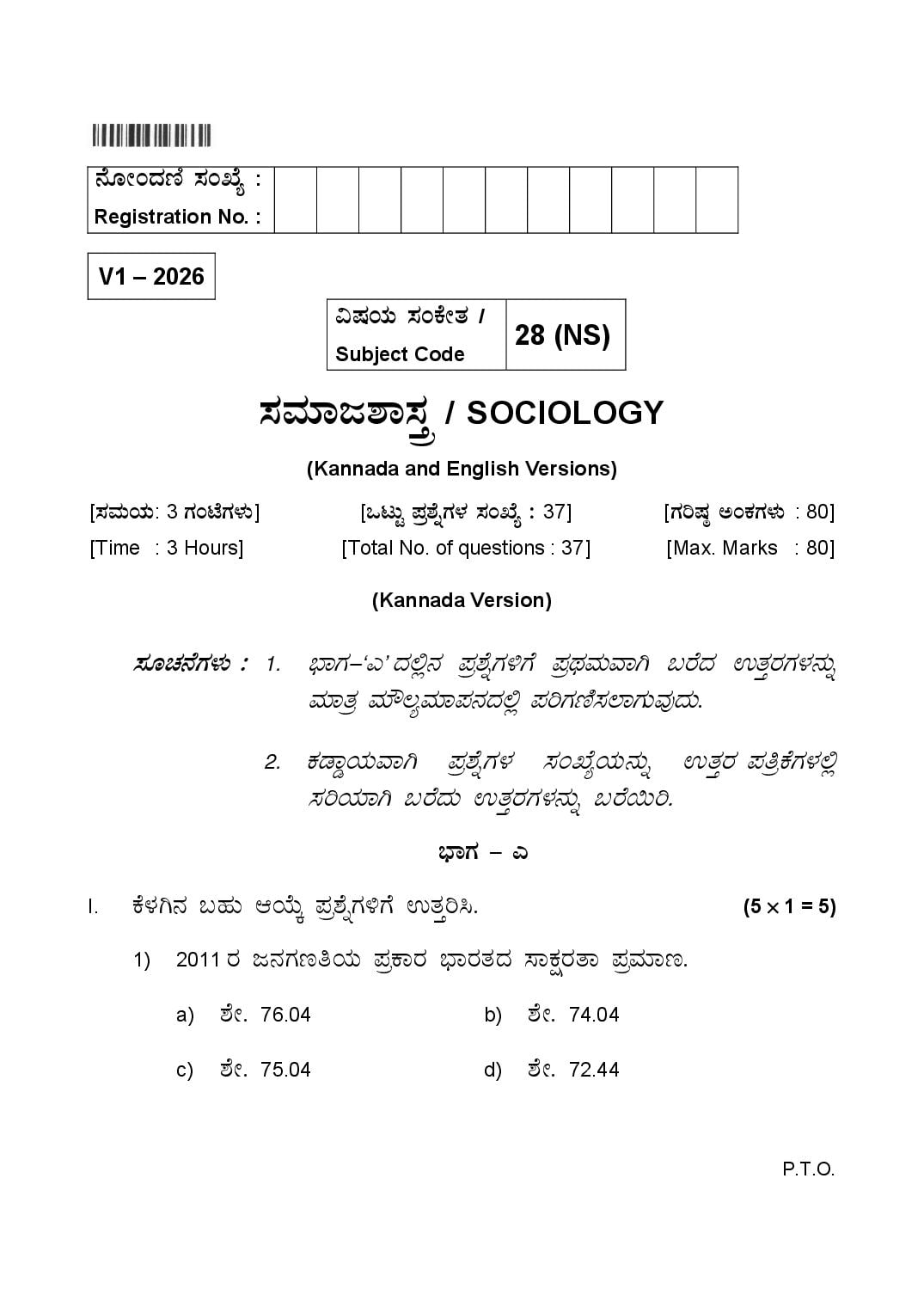
Karnataka 2nd PUC Question Paper 2026 Sociology – Text
Read the full text of this question paper below — useful to quickly search, copy and reference the content online without downloading the PDF.
📄 View text version (12 pages)
Page 1
Registration No. :
V1 – 2026
«µÀAiÀÄ ¸ÀAPÉÃvÀ /
28 (NS)
Subject Code
¸ÀªÀiÁd±Á¸ÀÛç / SOCIOLOGY
(Kannada and English Versions)
[¸ÀªÀÄAiÀÄ: 3 UÀAmÉUÀ¼ÀÄ] [MlÄÖ ¥Àæ±ÉßUÀ¼À ¸ÀASÉå : 37] [UÀjµÀ× CAPÀUÀ¼ÀÄ : 80]
[Time : 3 Hours] [Total No. of questions : 37] [Max. Marks : 80]
(Kannada Version)
¸ÀÆZÀ£ÉUÀ¼ÀÄ : 1. ¨sÁUÀ-‘J’ zÀ°è£À ¥Àæ±ÉßUÀ½UÉ ¥ÀæxÀªÀĪÁV §gÉzÀ GvÀÛgÀUÀ¼À£ÀÄß
ªÀiÁvÀæ ªÀiË®åªÀiÁ¥À£ÀzÀ°è ¥ÀjUÀt¸À¯ÁUÀĪÀÅzÀÄ.
2. PÀqÁØAiÀĪÁV ¥Àæ±ÉßUÀ¼À ¸ÀASÉåAiÀÄ£ÀÄß GvÀÛgÀ ¥ÀwæPÉUÀ¼À°è
¸ÀjAiÀiÁV §gÉzÀÄ GvÀÛgÀUÀ¼À£ÀÄß §gɬÄj.
¨sÁUÀ - J
I. PɼÀV£À §ºÀÄ DAiÉÄÌ ¥Àæ±ÉßUÀ½UÉ GvÀÛj¹. (5 × 1 = 5)
1) 2011 gÀ d£ÀUÀtwAiÀÄ ¥ÀæPÁgÀ ¨sÁgÀvÀzÀ ¸ÁPëÀgÀvÁ ¥ÀæªÀiÁt.
a) ±ÉÃ. 76.04 b) ±ÉÃ. 74.04
c) ±ÉÃ. 75.04 d) ±ÉÃ. 72.44
P.T.O.
Page 2
2) ‘PÁå¸ïÖ CAqï gÉøï E£ï EArAiÀiÁ’ JA§ PÀÈwAiÀÄ£ÀÄß §gÉzÀªÀgÀÄ.
a) JA.J£ï. ²æäªÁ¸ï
b) J¸ï.«. PÉÃvÀÌgï
c) f.J¸ï. WÀÄAiÉÄð
d) eÉ.JZï. ºÀlÖ£ï
3) ‘¸ÀÄ®¨sï EAlgï£ÁåµÀ£À¯ï’ ¸ÀA¸ÉÜAiÀÄ£ÀÄß ¸Áܦ¹zÀªÀgÀÄ.
a) qÁ. ©AzÉñÀégï ¥ÁoÀPï
b) qÁ. ºÉZï. ¸ÀÄzÀ±Àð£ï
c) PÉ. ¸ÀAvÁ£ÀA
d) E¼Á Dgï. ¨sÀmï
4) ¨sÁgÀvÀzÀ°è ¥ÀAZÁAiÀÄvïgÁeï ªÀåªÀ¸ÉÜAiÀÄ£ÀÄß ²¥sÁgÀ¸ÀÄì ªÀiÁrzÀ ¸À«Äw.
a) zÁégÀPÀ£ÁxÀ ¸À«Äw
b) §®ªÀAvÀgÁAiÀiï ªÉĺÀvÁ ¸À«Äw
c) f.PÉ. «ÃgÉñÀ ¸À«Äw
d) ¸ÀA¥ÀÇuÁð£ÀAzÀ ¸À«Äw
Page 3
5) ºÉýPÉ [A] : “«zÀÄå£Áä£À ªÀiÁzsÀåªÀĪÀÅ eÁUÀwPÀ UÁæªÀĪÀ£ÀÄß
¸ÀȶֹzÉ”.
PÁgÀt [B] : ªÉ¨ïPÁ¹ÖAUï ªÀÄvÀÄÛ PÉç¯ï ¸ÀA¥ÀPÀðUÀ¼À vÀAvÀæeÕÁ£À
¥ÀæUÀw¬ÄAzÀ CAvÀeÁð®zÀ ªÀÄÆ®PÀ ªÀiÁ»wUÀ¼ÀÄ
d£ÀjUÉ PëÀuÁzsÀðzÀ°è vÀ®Ä¥ÀÅvÀÛªÉ.
a) [A] ªÀÄvÀÄÛ [B] JgÀqÀÆ ¸ÀjAiÀiÁVªÉ ºÁUÀÆ [B] AiÀÄÄ [A] UÉ ¸ÀjAiÀiÁzÀ
PÁgÀtªÁVzÉ
b) [A] ªÀÄvÀÄÛ [B] JgÀqÀÆ ¸ÀjAiÀiÁVªÉ DzÀgÉ [B] AiÀÄÄ [A] UÉ ¸ÀjAiÀiÁzÀ
PÁgÀtªÀ®è
c) [A] ¸ÀjAiÀiÁVzÉ ªÀÄvÀÄÛ [B] vÀ¥ÁàVzÉ
d) [A] vÀ¥ÁàVzÉ ªÀÄvÀÄÛ [B] ¸ÀjAiÀiÁVzÉ
II. PɼÀV£À DªÀgÀtzÀ°è PÉÆnÖgÀĪÀ ¸ÀjAiÀiÁzÀ GvÀÛgÀUÀ¼À£ÀÄß Dj¹ §gɬÄj.
(5 × 1 = 5)
(E®èA, ºÀÄnÖ¤AzÀ, eÁ£ï J¥sï. PÉ£Àr, ©. ±ÁåªÀĸÀÄAzÀgï,
²æà £ÁgÁAiÀÄt UÀÄgÀÄ, dA§Æ¢éÃ¥À)
6) ¨sÁgÀvÀzÀ ¥ÁæaãÀ ºÉ¸ÀgÀÄ _______________.
7) eÁwAiÀÄ ¸ÀzÀ¸ÀåvÀéªÀÅ _______________ ¤zsÁðgÀªÁUÀÄvÀÛzÉ.
Page 4
8) ‘¤±ÀÑAiÀiÁvÀäPÀ QæAiÉÄ’ ¥ÀzÀªÀ£ÀÄß ¥ÀjZÀ¬Ä¹zÀªÀgÀÄ _______________.
9) PÉÃgÀ¼ÀzÀ £ÀA§ÆzÀj ¦vÀÈ¥ÀæzsÁ£À C«¨sÀPÀÛ PÀÄlÄA§ªÀ£ÀÄß _____________
JAzÀÄ PÀgÉAiÀÄÄvÁÛgÉ.
10) ‘©üêÀĸÉãÁ’ ¸ÀAWÀl£ÉAiÀÄ£ÀÄß ¥ÁægÀA©ü¹zÀªÀgÀÄ _______________.
III. ºÉÆA¢¹ §gɬÄj. (1 × 5 = 5)
11) J ©
a) PÉ£É ¥ÀzÀgÀ i) AiÀıÀ¹é¤
b) ºÀjd£À ªÀÄvÀÄÛ ii) ªÉÄÊPÀ¯ï D¯ïrjZï
AiÀÄAUï EArAiÀiÁ
c) DgÉÆÃUÀå «ªÀiÁ AiÉÆÃd£É iii) vÉAUÀÄ ¨É¼É
d) mÉ°±Á¦AUï iv) ¸ÀÄPÀ£Àå ¸ÀªÀÄÈ¢Þ
e) ¤ÃgÁ ZÀ¼ÀĪÀ½ v) ¸ÀAvÁ£ÀA DAiÉÆÃUÀ
vi) UÁA¢üÃf
Page 5
IV. PɼÀV£À ¥Àæ±ÉßUÀ½UÉ ¥ÀæwAiÉÆAzÀPÀÆÌ MAzÀÄ ¥ÀzÀ CxÀªÁ ªÁPÀåzÀ°è GvÀÛj¹.
(5 × 1 = 5)
12) d£À¸ÀASÁå ¤ÃwAiÀÄ£ÀÄß C¼ÀªÀr¹PÉÆAqÀ ¥ÀæxÀªÀÄ zÉñÀ AiÀiÁªÀÅzÀÄ?
13) IRDP AiÀÄ£ÀÄß «¸ÀÛj¹.
14) ¥ÀŵÀÌgÀ ªÁ¶ðPÀ eÁvÉæ AiÀiÁªÀ gÁdåzÀ°è £ÀqÉAiÀÄÄvÀÛzÉ?
15) M¼ÀUÉƼÀÄîªÀ ZÀ¼ÀĪÀ½UÉ MAzÀÄ GzÁºÀgÀuÉ PÉÆr.
16) ‘¥Á±ÁÑwåÃPÀgÀt’ ¥ÀjPÀ®à£ÉAiÀÄ£ÀÄß ¥ÀjZÀ¬Ä¹zÀªÀgÀÄ AiÀiÁgÀÄ?
¨sÁUÀ - ©
V. PɼÀV£À AiÀiÁªÀÅzÁzÀgÀÆ LzÀÄ ¥Àæ±ÉßUÀ½UÉ ¥ÀæwAiÉÆAzÀPÀÆÌ 2-3 ªÁPÀåzÀÀ°è GvÀÛj¹.
(5 × 2 = 10)
17) ‘qɪÉÆÃUÀæ¦ü’ JA§ ¥ÀzÀzÀ GvÀàwÛ w½¹.
18) ªÉÃzÀ ¸Á»vÀåzÀ°è G¯èÉÃT¹gÀĪÀ AiÀiÁªÀÅzÁzÀgÀÆ JgÀqÀÄ §ÄqÀPÀlÄÖ
¥ÀAUÀqÀUÀ¼À£ÀÄß ºÉ¸Àj¹.
19) ¹Ûçà ±ÀQÛAiÀÄ JgÀqÀÄ GzÉÝñÀUÀ¼À£ÀÄß §gɬÄj.
Page 6
20) gÉÊvÀgÀ DvÀäºÀvÉåUÉ f.PÉ. «ÃgÉñÀ ¸À«Äw w½¹gÀĪÀ JgÀqÀÄ PÁgÀtUÀ¼À£ÀÄß
w½¹.
21) zÀÆgÀzÀ±Àð£ÀªÀ£ÀÄß d£À¦æAiÀÄUÉƽ¹zÀ ªÀĺÁPÁªÀåUÀ¼À£ÀÄß ºÉ¸Àj¹.
22) ¨sÁgÀvÀzÀ AiÀiÁªÀÅzÁzÀgÀÆ JgÀqÀÄ ªÀÄ»¼Á ¸ÀAWÀl£ÉUÀ¼À£ÀÄß §gɬÄj.
23) ¸ÀA¸ÀÌøvÁ£ÀÄPÀgÀtªÀ£ÀÄß ªÁåSÁ夹.
24) ‘eÁUÀwPÀ C£À£ÀåvÉ’ JAzÀgÉãÀÄ?
¨sÁUÀ - ¹
VI. PɼÀV£À AiÀiÁªÀÅzÁzÀgÀÆ DgÀÄ ¥Àæ±ÉßUÀ½UÉ ¥ÀæwAiÉÆAzÀPÀÆÌ 15 ªÁPÀåUÀ¼À°è GvÀÛj¹.
(6 × 5 = 30)
25) qÁ. ©.J¸ï. UÀĺÁgÀªÀgÀ ¨sÁgÀwÃAiÀÄ d£ÁAVÃAiÀÄ ¸ÀªÀÄƺÀUÀ¼À
ªÀVÃðPÀgÀtªÀ£ÀÄß «ªÀj¹.
26) C¸Ààø±ÀåvÁ ¤ªÁgÀuÉAiÀÄ°è qÁ. ©.Dgï. CA¨ÉÃqÀÌgïgÀªÀgÀ ¥ÁvÀæªÀ£ÀÄß «ªÀj¹.
27) ªÀÄ»¼Á ¸À§°ÃPÀgÀtzÀ PÁAiÀÄðvÀAvÀæUÀ¼À£ÀÄß ¥ÀnÖ ªÀiÁr.
Page 7
28) vÀgÀªÁr£À §UÉÎ n¥Ààt §gɬÄj.
29) C«¨sÀPÀÛ PÀÄlÄA§zÀ §zÀ¯ÁªÀuÉUÉ PÁgÀtªÁzÀ LzÀÄ CA±ÀUÀ¼À£ÀÄß ZÀað¹.
30) UÁæªÀÄ ¥ÀAZÁAiÀÄwAiÀÄ PÁAiÀÄðUÀ¼À£ÀÄß §gɬÄj.
31) zÉÆgÁ¬Ä D¢ªÁ¹ ªÀiÁgÀÄPÀmÉÖ PÀÄjvÀÄ n¥Ààt §gɬÄj.
32) PÀ£ÀßqÀzÀ AiÀiÁªÀÅzÁzÀgÀÆ LzÀÄ d£À¦æAiÀÄ ªÁvÁð¥ÀwæPÉUÀ¼À£ÀÄß
(Newspapers) PÀÄjvÀÄ «ªÀj¹.
33) ‘DzsÀĤÃPÀgÀt’PÉÌ PÁgÀtªÁzÀ CA±ÀUÀ¼À£ÀÄß «ªÀj¹.
¨sÁUÀ - r
VII. PɼÀV£À AiÀiÁªÀÅzÁzÀgÀÆ JgÀqÀÄ ¥Àæ±ÉßUÀ½UÉ ¥ÀæwAiÉÆAzÀPÀÆÌ 30 ªÁPÀåUÀ¼À°è GvÀÛj¹.
(2 × 10 = 20)
34) gÁ¶ÖçÃAiÀÄ ¨sÁªÉÊPÀåvÉAiÀÄ£ÀÄß ªÁåSÁ夹. gÁ¶ÖçÃAiÀÄ ¨sÁªÉÊPÀåvÉAiÀÄ
¸ÀªÁ®ÄUÀ¼À£ÀÄß «ªÀj¹.
35) ©ænõÀgÀ CªÀ¢üAiÀÄ°è eÁw ªÀåªÀ¸ÉÜAiÀÄ°è GAmÁzÀ ¥ÀjªÀvÀð£ÉUÀ¼À£ÀÄß
ZÀað¹.
36) ¨sÁgÀvÀzÀ £ÀUÀgÀUÀ¼À ¸ÀªÀĸÉåUÀ¼À£ÀÄß ¸ÀAQë¥ÀÛªÁV «ªÀj¹.
37) ¨sÁgÀvÀzÀ°è »AzÀĽzÀ ªÀUÀðUÀ¼À ZÀ¼ÀĪÀ½AiÀÄ£ÀÄß ZÀað¹.
–––––––––––––
Page 8
(English Version)
Instructions : 1. Only the first written answers in PART – ‘A’ will be
considered for evaluation.
2. Correct question number should be written
compulsorily for your answer paper.
PART – A
I. Answer the following multiple choice questions. (5 × 1 = 5)
1) According to the 2011 censes Indian literacy rate.
a) 76.04% b) 74.04%
c) 75.04% d) 72.44%
2) The author of the book “Caste and Race in India”.
a) M.N. Srinivas b) S.V. Kethkar
c) G.S. Ghurye d) J.H. Hutton
3) ‘Sulabh International’ founded by
a) Dr. Bindeshwar Pathak b) Dr. H. Sudarshan
c) K. Santhanam d) Ela R. Bhat
4) The Committee recommended Panchayat Raj system in India is
a) Dwarakanath Committee b) Balwant Rai Mehta Committee
c) G.K. Veeresha Committee d) Sampoornanand Committee
Page 9
5) Statement [A] : “Electronic media has created a global village”.
Reason [B] : Development in web casting and cable connection
through the internet have made information reach to
the people instantly.
a) [A] and [B] both are correct and [B] is correct reason for [A]
b) [A] and [B] both are correct but [B] is not correct reason for [A]
c) [A] is correct and [B] is incorrect
d) [A] is incorrect and [B] is correct
II. Fill in the blanks choosing the correct answer given in the bracket below.
(5 × 1 = 5)
(Illam, By Birth, John F. Kennedy, B. Shamsundar, Sri Narayana Guru,
Jambudweepa)
6) __________ is ancient names of India.
7) The membership of caste decided by __________.
8) The term of ‘Affirmative Action’ introduced by __________.
9) Nambudri Patriarchal joint family of Kerala is called as __________.
10) ‘The Bheema sena’ organization was started by __________.
Page 10
III. Match the following. (1 × 5 = 5)
11) A B
a) Creamy Layer i) Yeshaswini
b) Harijan and Young India ii) Michael Aldrich
c) Health Insurance Scheme iii) Coconut Crop
d) Teleshopping iv) Sukanya Samrudhi
e) Neera Movement v) Santhanam Commission
vi) Gandhiji
IV. Answer the following questions in a word or sentence each. (5 × 1 = 5)
12) Which is the first country to adopt Population Policy?
13) Expand IRDP.
14) In which state Puskar annual fair takes place?
15) Give an example for inclusivist movement.
16) Who introduced the concept of ‘Westernisation’?
Page 11
PART – B
V. Answer any five of the following questions in 2 to 3 sentences each.
(5 × 2 = 10)
17) Mention the term ‘Demography’ derived.
18) Name any two tribes mentioned in Vedic literature.
19) Write two objectives of Stree Shakthi.
20) Mention two reasons given by G.K. Veeresha Committee for farmer’s
suicide.
21) Name the epics which popularized Doordarshan.
22) Write any two women organisation in India.
23) Define Sanskritization.
24) What is ‘Global Identity’?
PART – C
VI. Answer any six of the following questions in 15 sentences each. (6 × 5 = 30)
25) Explain the Dr. B.S. Guha’s classification of Indian racial groups.
26) Explain the role of Dr. B.R. Ambedkar in eradicating untouchability.
27) List out the strategies for women empowerment.
Page 12
28) Write a note on Tarwad.
29) Discuss the five causes for changes in joint family.
30) Write the functions of Village Panchayat.
31) Write a note on Dorai Tribal Market.
32) Explain any five leading Kannada newspapers.
33) Explain the causes for ‘Modernization’.
PART – D
VII. Answer any two of the following questions in 30 sentences each.
(2 × 10 = 20)
34) Define National Integration. Explain the challenges to National
Integration.
35) Discuss the changes in caste system during British rule.
36) Briefly explain the problems of Indian Cities.
37) Discuss the backward classes movement in India.
———————–
Document Details
| Board / Org | Karnataka Board |
| Exam | Class 12 |
| Type | Question Paper |
| Pages | 12 |
| Language | english |
| Updated | 24 Sep 2026 |