Kerala Class 10 First Term Model Question Paper 2025 Physics
Finished viewing? Save it for later —
Download Kerala Class 10 First Term Model Question Paper 2025 Physics (PDF · 14 pages)About Kerala Class 10 First Term Model Question Paper 2025 Physics
Kerala Class 10 First Term Model Question Paper 2025 Physics is available here for free download. Published by Kerala Board for Class 10, this sample paper can be viewed online or downloaded as a PDF (14 pages). Candidates preparing for Class 10 can use Kerala Class 10 First Term Model Question Paper 2025 Physics to understand the exam pattern, the type of questions asked, and the overall difficulty level.
Frequently Asked Questions
How can I download Kerala Class 10 First Term Model Question Paper 2025 Physics?
Open this page and click the Download button to save Kerala Class 10 First Term Model Question Paper 2025 Physics as a PDF. It is completely free on AglaSem Docs.
Is Kerala Class 10 First Term Model Question Paper 2025 Physics free to download?
Yes. Kerala Class 10 First Term Model Question Paper 2025 Physics can be viewed online and downloaded as a PDF free of cost on AglaSem Docs.
How many pages does Kerala Class 10 First Term Model Question Paper 2025 Physics have?
Kerala Class 10 First Term Model Question Paper 2025 Physics contains 14 pages, which you can read online or download together as a single PDF.
Where can I find more Class 10 study material?
You can find more Class 10 question papers, sample papers, syllabus, and answer keys on AglaSem Docs.
Kerala Class 10 First Term Model Question Paper 2025 Physics – Text
Read the full text of this sample paper below — useful to quickly search, copy and reference the content online without downloading the PDF.
📄 View text version (14 pages)
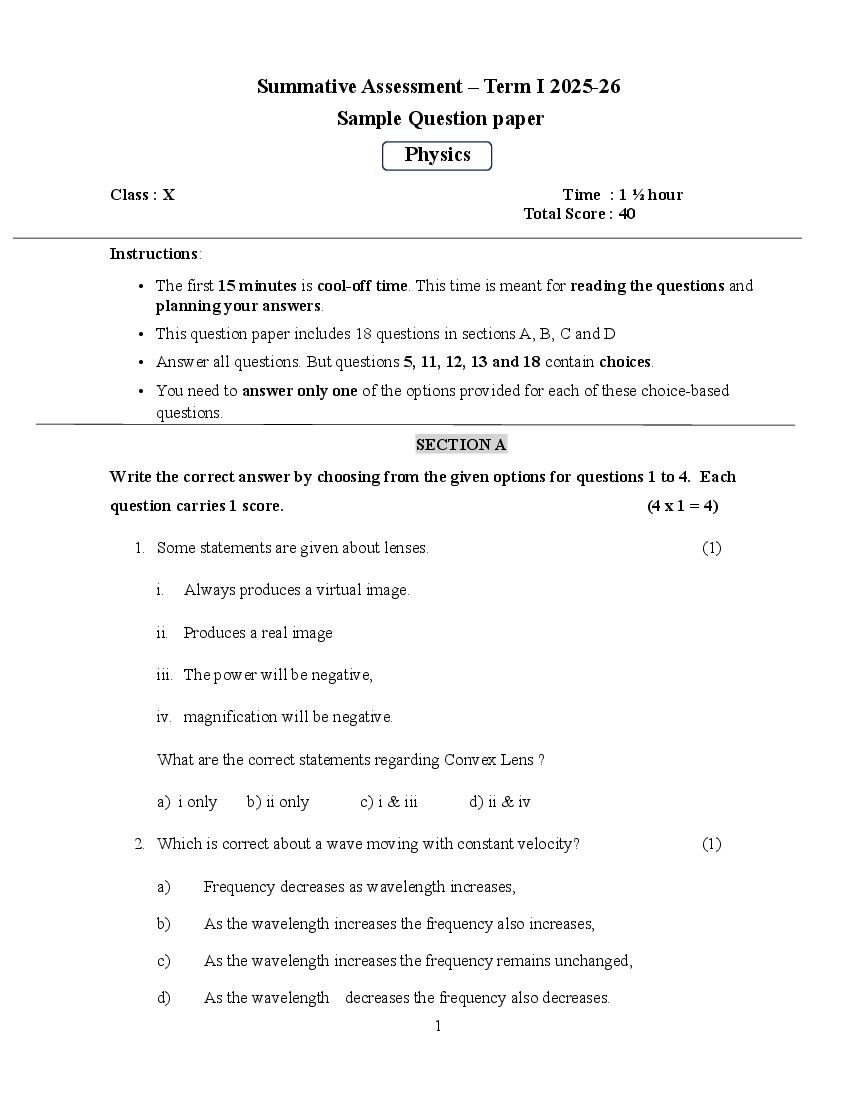
Page 1
Sample Question paper
Physics
Class : X Time : 1 ½ hour
Total Score : 40
Instructions:
• The first 15 minutes is cool-off time. This time is meant for reading the questions and
planning your answers.
• This question paper includes 18 questions in sections A, B, C and D
• Answer all questions. But questions 5, 11, 12, 13 and 18 contain choices.
• You need to answer only one of the options provided for each of these choice-based
questions.
SECTION A
Write the correct answer by choosing from the given options for questions 1 to 4. Each
question carries 1 score. (4 x 1 = 4)
1. Some statements are given about lenses. (1)
i. Always produces a virtual image.
ii. Produces a real image
iii. The power will be negative,
iv. magnification will be negative.
What are the correct statements regarding Convex Lens ?
a) i only b) ii only c) i & iii d) ii & iv
2. Which is correct about a wave moving with constant velocity? (1)
a) Frequency decreases as wavelength increases,
b) As the wavelength increases the frequency also increases,
c) As the wavelength increases the frequency remains unchanged,
d) As the wavelength decreases the frequency also decreases.
1
Page 2
Which picture depicts correct path of the light ray?
4. The deviation that occurs when a light ray passes through a prism is shown in the figure.
(1)
What factors does the deviation of a light ray depend on?
i) Depends only on the refractive index of the medium.
ii) Depends only on the wavelength of the light.
iii) Does not depend on the refractive index of the medium and the wavelength of the
light.
iv) Depends on the refractive index of the medium and the wavelength of the light.
a) i only b) ii only c) i & iii d) iv only
SECTION B
Write the answers to questions 5 to 11. Questions 5 and 11 have choices. Each question
carries 2 score. (7 x 2 = 14)
5 A. The prescription given by the doctor for the purchase of spectacles states +1.00 D.
(a) What is indicated in the prescription? What does D indicate? (1)
(b) What type of lens should be used in the spectacles? (1)
2
Page 3
5 B. Observe the picture. (2)
What is the focal length of the convex lens in the picture? (Use Cartesian Sign Convention)
6. If a simple pendulum takes 40 s to complete 10 oscillations,
a) What will be its period? (1)
b) How much will the frequency of another pendulum which is in resonance with this
Pendulum? (1)
7. Earthquakes and volcanic eruptions often cause major disasters.
a) What is the name given to the waves that travel through the earth's crust as a result of
earthquakes and volcanic eruptions? (1)
b) On which scale is the intensity of earthquakes recorded? (1)
8. A sonar signal is sent from a scuba diver and returns after reflecting off an obstacle in 0.5s.
If the speed of sound in water is 1500 m/s, how far away is the obstacle? (2)
9. The figure shows a wave pattern travelling through a slinky with both ends pulled together.
(a) What type of wave pattern is this? What are its characteristics? (1)
(b) If 6 compressions and 6 rarefactions are formed in the slinky in 2 seconds, what will
be the frequency of the wave in the slinky? (1)
3
Page 4
sunlight passes through a prism.
P
Sun light Q
a) What colors are seen at positions P and Q? (1)
b) What is the reason for the colors you found to be arranged at those positions? (1)
11 A. An object is placed between F and 2F of a convex lens.
a) Draw a diagram of the image formation. (1)
b) What are the characteristics of the image? (1)
OR
11 B. An object 12 cm high is placed 28 cm from a concave lens of focal length 20 cm. Draw a
diagram using a suitable scale. Measure and write the length of the image. (2)
SECTION C
Write the answers to questions 12 to 17. Question 12 and 13 have a choice. Each question
carries 3 score. (6 x 3 = 18)
12.A. Observe the figure. In the figure, L indicates the lens.
(a) Which type of lens is indicated in the figure? Justify your answer. (1)
(b) What is the position of the image formed if an object is placed beyond 2F of the lens
indicated in the figure? (1)
(c) If an image is formed, write any two of its characteristics. (1)
OR
12 B. The number indicating the magnification of the image obtained when an object is
ା1
placed behind the principal focus of a lens is 3 .
a) What type of lens is this? Justify your answer. (1)
b) Draw a diagram of the image formation if the object is placed at 2F. (2)
4
Page 5
0.2 s. Then
o
A
Distance m
o A
Distance m
a) Find the frequency of each wave. (2)
b) Compare the velocities of the waves. (1)
OR
13 B. A board is shown with nails fixed to it and copper wires of the same thickness fixed to
them with the same tensile force. Each wire has a paper rider. When a tuning fork with a
frequency of 512 Hz is excited and its stem is pressed against the board, only the paper
rider on wire B flew off.
a) What is the natural frequency of wire B? (1)
b) What is the natural frequency of wire A with respect to B? (1)
c) Write any two factors influencing natural frequency of a body. (1)
14. It is known that sunlight contains many types of radiation besides visible light.
a) Which type of radiation is responsible for the heat in the solar radiation? (X-rays,
infrared radiation, ultraviolet radiation, gamma radiation) (1)
b) Which type of radiation helps in the production of vitamin D in our body? (1)
c) What is the speed of these radiations in vacuum? (1)
5
Page 6
(a) Complete the given figure. (2)
(b) Write two characteristics of the image. (1)
16. We know that a microscope is used to magnify small objects.
a) If you are making a microscope, what are the features of focal lengths of the convex
lenses used as the eye piece and the objective?
(The focal length of the eyepiece and the objective are equal, The focal length of the
eyepiece and the objective are very small, the focal length of the objective is greater
than the focal length of the eyepiece, the focal length of the eyepiece is greater than
the focal length of the objective) (1)
b) Explain how a large image of a small object is formed in a microscope. (2)
17. The focal length of a lens is 10 cm.
a) An object is located 15 cm from the lens. Calculate how far the screen should be located
to obtain a clear image. (2)
b) If the height of the object is 1.2 cm, what will be the height of the image formed on the
screen? (1)
SECTION D
Answer any one of the two questions. Each question carries 4 score. (4 x 1 = 4)
18 A There is a table with a natural frequency of 320 Hz and another table with the same
surface area made up of the same material in a class room.
a) How many times per second will the table vibrate if you tap the table with a frequency
of 320 Hz? (1)
b) Name the type of vibration produced on the first table, if the stem of an excited
tuning fork of frequency 256 Hz pressed on it? (1)
c) When the same tuning fork is pressed on the second table, the sound from that table is
heard loudly. Then what is the natural frequency of that table? Justify your answer.
(2)
6
Page 7
18 B. It is found that the wavelength of sound travelling through the air at a speed of 350 m/s
is 70 m, then
a) Can this sound be heard by humans? Validate. (1)
b) What is this type of sound known as? (1)
c) What is the audible range of sound that humans can hear? (1)
d) What is the name of a sound wave with a frequency higher than the audible range? (1)
7
Page 8
മാ ക േചാദ േപ ർ
ഭൗതികശാ ം
ാസ് – X സമയം : 1½ മണി ൂർ
ആെക േ ാർ : 40
നിർേദശ ൾ
ആദ െ 15 മിനി ് സമാശ ാസസമയമാണ്. ഈ സമയം േചാദ ൾ വായി ് മന ിലാ ാനും
ഉ ര ൾ ആസൂ ണം െച ാനും ഉപേയാഗി ുക.
ഈ േചാദ േപ റിൽ A, B, C, D എ ീ വിഭാഗ ളിലായി 18 േചാദ ളാണു ത്.
എ ാ േചാദ ൾ ും ഉ രെമഴുതണം. എ ാൽ 5, 11, 12, 13, 18 േചാദ ൾ ് Choice
നൽകിയി ു ്.
Choice നൽകിയി ു േചാദ ൾ ് ഒ ിനുമാ ം ഉ രം എഴുതിയാൽ മതി.
Section – A
1 മുതൽ 4 വെരയു േചാദ ൾ ് ശരിയായ ഉ രം െതെരെ ടുെ ഴുതുക. ഓേരാ
േചാദ ിനും 1 േ ാർ വീതം. (4 × 1 = 4)
1. െലൻസുകെള സംബ ി ് ചില ാവനകൾ നൽകിയിരി ു ു. (1)
i. എ ായ് േപാഴും മിഥ ാ തിബിംബം ഉ ാ ു ു.
ii. യഥാർഥ തിബിംബം ഉ ാ ു ു.
iii. പവർ െനഗ ീവ് ആയിരി ും.
iv. തിബിംബ ിെ ആവർധനം െനഗ ീവ് ആയിരി ും.
ഇവയിൽ േകാൺേകവ് െലൻസിെന സംബ ി ് ശരിയായ ാവനകൾ ഏെത ?
a) i മാ ം, b) ii മാ ം, c) i ഉം iii ഉം, d) ii ഉം iv ഉം
2. സമ േവഗ ിൽ സ രി ു ഒരു തരംഗെ സംബ ി ് ശരിയായത് ഏതാണ്? (1)
a) തരംഗൈദർഘ ം കൂടുേ ാൾ ആ ി കുറയു ു,
b) തരംഗൈദർഘ ം കൂടുേ ാൾ ആ ിയും കൂടു ു,
c) തരംഗൈദർഘ ം കൂടുേ ാൾ ആ ി മാ മി ാെത തുടരു ു,
d) തരംഗൈദർഘ ം കുറയുേ ാൾ ആ ിയും കുറയു ു.
1
Page 9
േപാകു കാശര ിയുെട പാത ചി ീകരി ിരി ു ു. കാശര ിയുെട ശരിയായ പാത
സൂചി ി ു ചി ം ഏതാണ്? (1)
(a)
(b)
(c) (d)
4. വായുവിൽ നി ും ിസ ിലൂെട കാശര ി കട ു േപാകുേ ാൾ ഉ ാകു വ തിയാനമാണ്
ചി ിൽ സൂചി ി ിരി ു ത്. കാശര ി ് ഉ ാകു വ തിയാനം ഏെത ഘടക െള
ആ യി ിരി ു ു? (1)
i) മാധ മ ിെ അപവർ നാ െ മാ ം ആ യി ു ു.
ii) കാശവർ ിെ തരംഗൈദർഘ െ മാ ം ആ യി ിരി ു ു.
iii) മാധ മ ിെ അപവർ നാ െ യും കാശവർ ിെ തരംഗൈദർഘ െ യും
ആ യി ു ി .
iv) മാധ മ ിെ അപവർ നാ െ യും കാശവർ ിെ തരംഗൈദർഘ െ യും
ആ യി ു ു.
a) i മാ ം b) ii മാ ം c) i & iii d) iv മാ ം
SECTION B
5 മുതൽ 11 വെരയു േചാദ ൾ ്ഉ രെമഴുതുക. 5, 11 േചാദ ൾ ് േചായ്സ് ഉ ്. ഓേരാ
േചാദ ിനും 2 േ ാർ വീതം. (7 x 2 = 14)
5 A. ക ട വാ ാനായി േഡാ ർ നൽകിയ കുറി ിൽ +1.00 D എ ് സൂചി ി ിരി ു ു.
(a) കുറി ിൽ സൂചി ി ിരി ു ത് എ ാണ്? D എ ത് എ ിെന സൂചി ി ു ു? (1)
(b) ഏതുതരം െലൻസ് ആണ് ക ടയിൽ ഉപേയാഗിേ ത്? (1)
2
Page 10
5 B. ചി ം നിരീ ി ുക. (2)
ചി ിെല േകാൺെവക്സ് െലൻസിെ േഫാ സ് ദൂരം എ യാണ്? (കാർ ീഷ ൻ ചിഹ്ന രീതി
ഉപേയാഗി ുക).
6. ഒരു സി ിൾ െപൻഡുലം 10 േദാലന ൾ ് 40 s സമയം എടു ുെ ിൽ
a) അതിെ പീരിയഡ് എ യായിരി ും? (1)
b) ഈ െപൻഡുലവുമായി അനുനാദ ിലാകു മെ ാരു െപൻഡുല ിെ ആ ി എ യാ
യിരി ും? (1)
7. ഭൂക വും അ ിപർ ത േ ാടനവും വൻദുര ൾ ് കാരണമാകാറു േ ാ.
a) ഭൂക ം, അ ിപർ ത േ ാടനം തുട ിയവയുെട ഫലമായി ഭൂപാളികളിലൂെട സ രി ു
തരംഗ ൾ ഏത് േപരിൽ അറിയെ ടു ു? (1)
b) ഭൂക ളുെട തീ ത േരഖെ ടു ു ത് ഏത് െ യിലിലാണ്? (1)
8. കടലിൽ മു ിയിരി ു ഒരു ൂബ ൈഡവർ പുറെ ടുവി േസാണാർ സി ൽ 0.5
െസ ൻഡിന് േശഷം തിപതി ് അേ ഹ ിന് വീ ും േകൾ ാൻ കഴി ു. ജല ിനു ിെല
ശ ിെ േവഗത 1500 m/s ആെണ ിൽ േസാണാർ സി ൽ ത ി തിപതി ാനിടയായ
തട ം ൂബ ൈഡവറിൽ നി ും എ അകെലയായിരി ും? (2)
9. ര ് അ വും വലി ു വ ിരി ു ഒരു ി ിയിലൂെട സ രി ു തരംഗ രൂപമാണ് ചി ിൽ
സൂചി ി ിരി ു ത്
(a) ഇത് ഏതുതരം തരംഗ രൂപമാണ്? അതിെ സവിേശഷതകൾ എെ ാമാണ് ? (1)
(b) ി ിയിൽ 2 െസ ൻഡിൽ 6 ഉ മർ േമഖലകളും 6 നീചമർ േമഖലകളും ഉ ാകു ു
എ ിൽ ി ിയിെല തരംഗ ിെ ആ ി എ യായിരി ും? (1)
3
Page 11
വർ െളയാണ് ചി ിൽ P ഉം Q ഉം സൂചി ി ു ത്.
P
സൂര കാശം Q
a) P, Q എ ീ ാന ളിൽ കാണു വർ ൾ ഏതാണ്? (1)
b) നി ൾ കെ ിയ വർ ൾആ ാന ളിൽ വിന സി െ ടാൻ ഉ കാരണം
എ ായിരി ും? (1)
11 A. ഒരു വ ു േകാൺെവക്സ് െലൻസിെ F നും 2F നും ഇടയിലായി വ ിരി ു ു.
a) തിബിംബരൂപീകരണ ിെ േരഖാചി ം വര ുക. (1)
b) തിബിംബ ിെ സവിേശഷതകൾ എെ ാമാണ്? (1)
OR
11 B. 20 cm േഫാ സ് ദൂരമു ഒരു േകാൺേകവ് െലൻസിൽ നി ും 28 cm അകെലയായി
12 cm ഉയരമു ഒരു വ ു വ ിരി ു ു. ഉചിതമായ േതാത് ഉപേയാഗി ് േരഖാചി ം
വര ുക. തിബിംബ ിെ നീളം അളെ ഴുതുക. (2)
SECTION C
12 മുതൽ 17 വെരയു േചാദ ൾ ് ഉ രെമഴുതുക. 12, 13 േചാദ ൾ ് േചായ്സ് ഉ ്.
ഓേരാ േചാദ ൾ ും 3 േ ാർ വീതം.
(6 x 3 = 18)
12 A. ചി ം നിരീ ി ുക. ത ിരി ു ചി ിൽ L എ ത് െലൻസിെന സൂചി ി ു ു.
(a) ചി ിൽ സൂചി ി ിരി ു െലൻസ് ഏതാണ്? ഉ രം സാധൂകരി ുക. (1)
(b) ചി ിൽ സൂചി ി ു െലൻസിെ 2F ന് അ ുറം വ ു െവ ാൽ ഉ ാകു തിബിംബ
ിെ ാനം ഏതാണ്? (1)
(c) തിബിംബം ഉ ാകുെമ ിൽ അതിെ ഏെത ിലും ര ് സവിേശഷതകൾ എഴുതുക. (1)
OR
12 B. ഒരു െലൻസിെ മുഖ േഫാ സിന ുറം ഒരു വ ു വ േ ാൾ ലഭി തിബിംബ ിെ
ା1
ആവർധനെ സൂചി ി ു സംഖ 3 ആണ്.
a) ഇത് ഏത് തരം െലൻസാണ്? സാധൂകരി ുക. (1)
b) വ ുു 2F ൽ വ ിരി ുകയാെണ ിൽ തിബിംബ രൂപീകരണ ിെ േരഖാ ചി ം
വര ുക. (2)
4
Page 12
സമയം 0.2 s ഉം ആണ്. എ ിൽ
o A
ദൂരം m
o A
ദൂരം m
a) ഓേരാ തരംഗ ിെ യും ആ ി കെ ുക. (2)
b) തരംഗ ളുെട േവഗം താരതമ ം െച ുക. (1)
OR
13 B. ഒരു പലകയിൽ ആണികൾ ഉറ ി േശഷം അവയിൽ ഒേര കനമു േകാ ർ ക ികൾ
സമാന വലിവ് ബല ിൽ ഉറ ി ിരി ു ത് ചി ീകരി ിരി ു ു. ഓേരാ ക ിയിലും
ഓേരാ േപ ർ ൈറഡർ ഉ ്. 512 Hz ആ ിയു ഒരു ട ൂണിങ് േഫാർ ് ഉേ ജി ി ്
അതിെ ത ് പലകയിൽ അമർ ിയേ ാൾ B എ ക ിയിെല േപ ർ ൈറഡർ മാ ം
െതറി ു േപായി.
a) Bഎ ക ിയുെട സ ാഭാവിക ആ ി എ യാണ്? (1)
b) Aഎ ക ിയുെട സ ാഭാവിക ആ ി, Bഎ ക ിയുെട സ ാഭാവിക ആ ിെയ
അേപ ി ് എ യായിരി ു? (1)
c) ഒരു വ ുവിെ സ ാഭാവിക ആ ിെയ സ ാധീനി ു ഏെത ിലും ര ് ഘടക ൾ
എഴുതുക. (1)
14. സൗര വികിരണ ളിൽ ശ കാശെ കൂടാെത അേനകം വികിരണ ൾ അട ിയി ുെ ്
അറിയാമേ ാ.
a) സൂര ര ികളിെല താപ ിന് കാരണമായ വികിരണം ഏതാണ്? (X- േറ, ഇൻ ാെറഡ്
വികിരണം, അൾ ാവയല ് വികിരണം, ഗാമാ വികിരണം) (1)
b) ന ുെട ശരീര ിൽ വി ാമിൻ D ഉത്പാദി ി ു തിന് സഹായി ു വികിരണം
ഏതാണ്? (1)
c) നി ൾ കെ ിയ വികിരണ ളുെട ശൂന തയിലൂെടയു േവഗത എ യാണ്? (1)
5
Page 13
(a) ത ി ു ചി ം പൂർ ീകരി ുക. (2)
(b) തിബിംബ ിെ 2 സവിേശഷതകൾ എഴുതുക. (1)
16. െചറിയ വ ു െള വലുതാ ി ാണു തിന് ൈമേ ാേ ാ ് ഉപേയാഗി ുെമ റിയാമേ ാ.
a) നി ൾ ഒരു ൈമേ ാേ ാ ് നിർ ി ുകയാെണ ിൽ ഐപീസായും, ഒബ്ജ ീവ് ആയും
ഉപേയാഗി ു േകാൺെവക്സ് െലൻസുകളുെട േഫാ സ് ദൂരം എ കാരമായിരി ും?
(ഐപീസിെ യും ഒബ്ജ ീവിെ യും േഫാ സ് ദൂരം തുല മാണ്, ഐപീസിെ യും ഒബ്ജ ീ
വിെ യും േഫാ സ് ദൂരം വളെര െചറുതാണ്, ഒബ്ജ ീവിെ േഫാ സ് ദൂരം ഐപീസിെ
േഫാ സ് ദൂരെ ാൾ വലുതാണ്. ഐപീസിെ േഫാ സ് ദൂരം ഒബ്ജ ീ വിെ േഫാ സ്
ദൂരെ ാൾ വലുതാണ്) (1)
b) ഒരു ൈമേ ാേ ാ ിൽ െചറിയ ഒരു വ ുവിെ വലു മു തിബിംബം രൂപീകരി െ ടു
വിധം വിശദീകരി ുക. (2)
17. ഒരു െലൻസിെ േഫാ സ്ദൂരം 10 cm ആണ്.
a) ഒരു വ ു െല സിൽ നി ് 15 cm അകെല ിതിെച ു ു. വ മായ തിബിംബം
ലഭി ാ ീ എ അകെല ിതി െച ണെമ ് കണ ാ ുക. (2)
b) വ ുവിെ ഉയരംം 1.2 cm ആെണ ി ീനി ശ മാകുു തിബിംബ ിെ ഉയരം
എ യായിരി ും? (1)
SECTION D
ഏെത ിലും 1 എ ിന് ഉ രം എഴുതുക. 4 േ ാർ വീതം. (4 x 1 = 4)
18 A. ഒരു ാസ് മുറിയിൽ 320 Hz സ ാഭാവിക ആ ിയു ഒരു േമശയും അേത പര ളവു
അേത വ ുെകാ ് നിർ ി തുമായ മെ ാരു േമശയും ഉ ്.
a) 320 Hz ആ ിയു േമശയിൽ ത ിയാൽ ഒരു െസ ിൽ േമശ എ ാവശ ം ക നം
െച ും? (1)
b) 256Hz ആ ിയു ട ൂണിങ് േഫാർ ് ഉേ ജി ി ് അതിെ ത ് ഒ ാമെ േമശയിൽ
വ ുേ ാൾ ഏത് തരം ക നമാണ് ഉ ാകു ത്? (1)
c) ഇേത ട ൂണിങ് േഫാർ ് ര ാമെ േമശയിൽ അമർ ിയേ ാൾ ആ േമശയിൽ നി ും ശ ം
വളെര കൂടിയ ഉ തയിൽ േക ു. എ ിൽ ആ േമശയുെട സ ാഭാവിക ആ ി എ ? നി ളുെട
ഉ രം സാധൂകരി ുക. (2)
6
Page 14
18 B. വായുവിലൂെട 350 m/s േവഗ ിൽ സ രി ു ശ ിെ തരംഗൈദർഘ ം 70 m
ആെണ ് കെ ി, എ ിൽ
a) ഈ ശ ം മനുഷ ന് േകൾ ാൻ സാധി ുേമാ? സാധൂകരി ുക. (1)
b) ഇ രം ശ ം ഏത് േപരിൽ അറിയെ ടു ു? (1)
c) മനുഷ ന് േകൾ ാൻ കഴിയു ശ ിെ വണ പരിധി എ യാണ്? (1)
d) വണ പരിധിെയ ാൾ കൂടിയ ആ ിയു ശ ം ഏത് േപരിൽ അറിയെ ടു ു (1)
***
7
Document Details
| Board / Org | Kerala Board |
| Exam | Class 10 |
| Type | Sample Paper |
| Pages | 14 |
| Updated | 24 Sep 2026 |