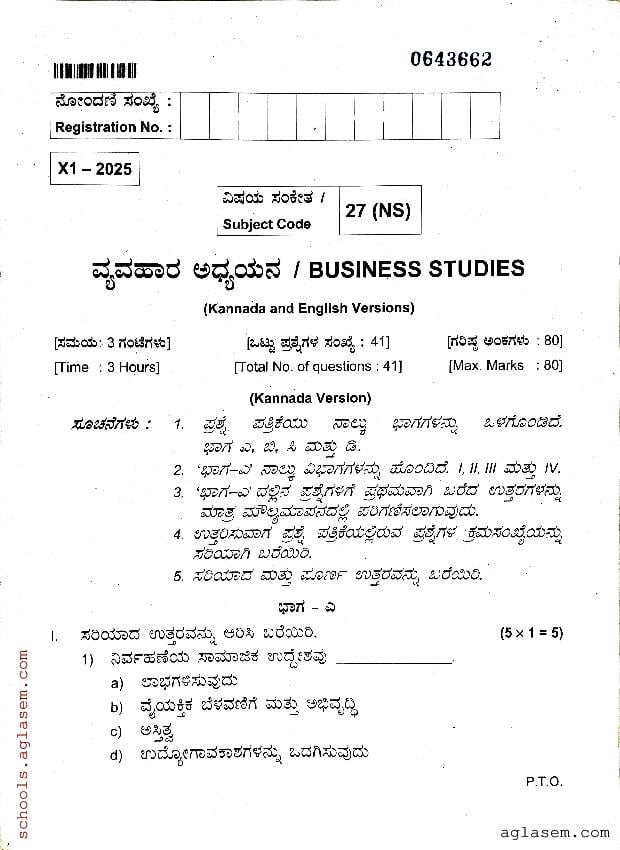
Karnataka 2nd PUC Question Paper 2025 Business Studies
Finished viewing? Save it for later —
Download Karnataka 2nd PUC Question Paper 2025 Business Studies (PDF · 6 pages)About Karnataka 2nd PUC Question Paper 2025 Business Studies
Karnataka 2nd PUC Question Paper 2025 Business Studies is available here for free download. Published by Karnataka Board for Class 12, this question paper can be viewed online or downloaded as a PDF (6 pages). Candidates preparing for Class 12 can use Karnataka 2nd PUC Question Paper 2025 Business Studies to understand the exam pattern, the type of questions asked, and the overall difficulty level.
Frequently Asked Questions
How can I download Karnataka 2nd PUC Question Paper 2025 Business Studies?
Open this page and click the Download button to save Karnataka 2nd PUC Question Paper 2025 Business Studies as a PDF. It is completely free on AglaSem Docs.
Is Karnataka 2nd PUC Question Paper 2025 Business Studies free to download?
Yes. Karnataka 2nd PUC Question Paper 2025 Business Studies can be viewed online and downloaded as a PDF free of cost on AglaSem Docs.
How many pages does Karnataka 2nd PUC Question Paper 2025 Business Studies have?
Karnataka 2nd PUC Question Paper 2025 Business Studies contains 6 pages, which you can read online or download together as a single PDF.
Where can I find more Class 12 study material?
You can find more Class 12 question papers, sample papers, syllabus, and answer keys on AglaSem Docs.
Karnataka 2nd PUC Question Paper 2025 Business Studies – Text
Read the full text of this question paper below — useful to quickly search, copy and reference the content online without downloading the PDF.
📄 View text version (14 pages)
Page 1
Karnataka Secondary Education Examination Board
Question Papers
Page 2
Registration No. :
X1 – 2025
«µÀAiÀÄ ¸ÀAPÉÃvÀ /
27 (NS)
Subject Code
ªÀåªÀºÁgÀ CzsÀåAiÀÄ£À / BUSINESS STUDIES
(Kannada and English Versions)
[¸ÀªÀÄAiÀÄ: 3 UÀAmÉUÀ¼ÀÄ] [MlÄÖ ¥Àæ±ÉßUÀ¼À ¸ÀASÉå : 41] [UÀjµÀ× CAPÀUÀ¼ÀÄ : 80]
[Time : 3 Hours] [Total No. of questions : 41] [Max. Marks : 80]
(Kannada Version)
¸ÀÆZÀ£ÉUÀ¼ÀÄ : 1. ¥Àæ±Éß ¥ÀwæPÉAiÀÄÄ £Á®ÄÌ ¨sÁUÀUÀ¼À£ÀÄß M¼ÀUÉÆArzÉ.
¨sÁUÀ J, ©, ¹ ªÀÄvÀÄÛ r.
2. ‘¨sÁUÀ-J’ £Á®ÄÌ «¨sÁUÀUÀ¼À£ÀÄß ºÉÆA¢zÉ. I, II, III ªÀÄvÀÄÛ IV.
3. ‘¨sÁUÀ-J’ zÀ°è£À ¥Àæ±ÉßUÀ½UÉ ¥ÀæxÀªÀĪÁV §gÉzÀ GvÀÛgÀUÀ¼À£ÀÄß
ªÀiÁvÀæ ªÀiË®åªÀiÁ¥À£ÀzÀ°è ¥ÀjUÀt¸À¯ÁUÀĪÀÅzÀÄ.
4. GvÀÛj¸ÀĪÁUÀ ¥Àæ±Éß ¥ÀwæPÉAiÀÄ°ègÀĪÀ ¥Àæ±ÉßUÀ¼À PÀæªÀĸÀASÉåAiÀÄ£ÀÄß
¸ÀjAiÀiÁV §gɬÄj.
5. ¸ÀjAiÀiÁzÀ ªÀÄvÀÄÛ ¥ÀÆtð GvÀÛgÀªÀ£ÀÄß §gɬÄj.
¨sÁUÀ – J
I. ¸ÀjAiÀiÁzÀ GvÀÛgÀªÀ£ÀÄß Dj¹ §gɬÄj. (5 × 1 = 5)
1) ¤ªÀðºÀuÉAiÀÄ ¸ÁªÀiÁfPÀ GzÉÝñÀªÀÅ _______________.
a) ¯Á¨sÀUÀ½¸ÀĪÀÅzÀÄ
b) ªÉÊAiÀÄQÛPÀ ¨É¼ÀªÀtÂUÉ ªÀÄvÀÄÛ C©üªÀÈ¢Þ
c) C¹ÛvÀé
d) GzÉÆåÃUÁªÀPÁ±ÀUÀ¼À£ÀÄß MzÀV¸ÀĪÀÅzÀÄ
P.T.O.
Page 3
2) £ÉêÀÄPÁwAiÀÄ DAvÀjPÀ ªÀÄÆ® _______________.
a) ªÀUÁðªÀuÉ b) GzÉÆåÃUÀ «¤ªÀÄAiÀÄ PÉÃAzÀæ
c) eÁ»ÃgÁvÀÄ d) DªÀgÀt £ÉêÀÄPÁw
3) CUÀvÀåvÉUÀ¼À£ÀÄß ªÀUÀð±ÉæÃtÂAiÀÄ DzsÁgÀzÀ°è ªÀVÃðPÀj¸ÀĪÀ ¥ÉæÃgÉÃ¥ÀuÉAiÀÄ
¹zÁÞAvÀªÀ£ÀÄß C©üªÀÈ¢Þ¥Àr¹zÀªÀgÀÄ _______________.
a) ¥sÉæqï ®ÆxÀ£ïì b) ¸ÁÌmï
c) C§æºÁA ªÀiÁ¸ÉÆèà d) ¦Ãlgï J¥sï. qÀæPÀÌgï
4) ¤AiÀÄAwæ¸ÀÄ«PÉ ¥ÀæQæAiÉÄAiÀÄ ªÉÆzÀ®£Éà ºÀAvÀ _______________.
a) £ÉÊd PÁAiÀÄð¤ªÀðºÀuÉAiÀÄ£ÀÄß C¼ÉAiÀÄĪÀÅzÀÄ
b) PÁAiÀÄð¤ªÀðºÀuÉAiÀÄ ²µÀÖUÀ¼À£ÀÄß ¤zsÀðj¸ÀĪÀÅzÀÄ
c) ªÀåvÁå¸ÀUÀ¼À£ÀÄß «±Éèö¸ÀĪÀÅzÀÄ
d) ¸Àj¥Àr¸ÀĪÀ PÀæªÀÄUÀ¼À£ÀÄß vÉUÉzÀÄPÉƼÀÄîªÀÅzÀÄ
5) PɼÀV£ÀªÀÅUÀ¼À°è AiÀiÁªÀÅzÀÄ ZÀgÁ¹ÛAiÀiÁVzÉ?
a) PÀlÖqÀ b) PÉÊAiÀÄ°ègÀĪÀ £ÀUÀzÀÄ
c) AiÀÄAvÉÆæÃ¥ÀPÀgÀt d) ¦ÃoÉÆÃ¥ÀPÀgÀt
Page 4
II. F PɼÀV£À ©lÖ ¸ÀܼÀUÀ½UÉ DªÀgÀtzÀ°è PÉÆnÖgÀĪÀ ¸ÀjAiÀiÁzÀ GvÀÛgÀªÀ£ÀÄß
DAiÉÄÌ ªÀiÁr §gɬÄj. (5 × 1 = 5)
[ªÀÄÄAUÀqÀ¥ÀvÀæ, gÀªÁ£ÉzÁgÀ, ¥ÀæZÁgÀ, eÁ»ÃgÁvÀÄ, ¥Àæw¤AiÉÆÃd£É,
¤ªÀðºÀuÉ vÀvÀé]
6) _______________ ¤zsÁðgÀ vÉUÉzÀÄPÉƼÀÄî«PÉ ªÀÄvÀÄÛ ªÀvÀð£ÉUÀ½UÉ «±Á®
ªÀÄvÀÄÛ ¸ÁªÀiÁ£Àå ªÀiÁUÀð¸ÀÆaAiÀiÁVzÉ.
7) _______________ ¤jÃQëvÀ ¥sÀ°vÁA±ÀUÀ¼À£ÀÄß CAQ-¸ÀASÉåUÀ¼À gÀÆ¥ÀzÀ°è
ªÀåPÀÛ¥Àr¹zÀ ºÉýPÉAiÀiÁVzÉ.
8) ªÉÄïÁ¢üPÁj¬ÄAzÀ C¢üãÀgÀªÀgÉUÉ PɼÀªÀÄÄRªÁV C¢üPÁgÀªÀ£ÀÄß
ªÀUÁð¬Ä¸ÀĪÀÅzÀÄ _______________ DVzÉ.
9) ¸ÀAªÀºÀ£À ¥ÀæQæAiÉÄAiÀÄ MAzÀÄ ªÀÄƯÁA±À _______________.
10) _______________ MAzÀÄ ¥ÁªÀw¸ÀzÉ EgÀĪÀ ¸ÀAªÀºÀ£À gÀÆ¥ÀªÁVzÉ.
III. ºÉÆA¢¹ §gɬÄj. (5 × 1 = 5)
11) J ©
a) £ÉÆÃlÄUÀ¼À CªÀiÁ¤åÃPÀgÀt i) ¨sÀ«µÀåPÉÌ ¸ÀA§A¢ü¹zÀ
HºÉUÀ¼ÀÄ
b) AiÉÆÃf¸ÀÄ«PÉAiÀÄ ¥Àj«ÄwUÀ¼ÀÄ ii) PÉ®¸ÀUÀ½UÉ d£ÀgÀ£ÀÄß Ej¸ÀĪÀÅzÀÄ
c) «¨sÁVÃAiÀÄ gÀZÀ£É iii) ¨sËwPÀ «vÀgÀuÉAiÀÄ WÀlPÁA±À
d) ¹§âA¢ ¤ªÀðºÀuÉ iv) GvÀà£Àß «±ÉõÀvÉ
e) ¸ÁjUÉ v) vÉjUÉ DqÀ½vÀ PÀæªÀÄ
vi) ¥ÀæªÀvÀð£Á «Ä±Àæt
Page 5
IV. PɼÀV£À ¥Àæ±ÉßUÀ½UÉ ¥ÀæwAiÉÆAzÀPÀÆÌ 1 ¥ÀzÀ CxÀªÁ 1 ªÁPÀåzÀ°è GvÀÛj¹.
(5 × 1 = 5)
12) ¤ªÀðºÀuÉAiÀÄ AiÀiÁªÀÅzÁzÀgÀÆ MAzÀÄ DAiÀiÁªÀĪÀ£ÀÄß ºÉ¸Àj¹.
13) ¸ÁªÀiÁ£Àå ¤ªÀðºÀuÉAiÀÄ ¦vÁªÀĺÀ JAzÀÄ AiÀiÁgÀ£ÀÄß PÀgÉAiÀÄÄvÁÛgÉ?
14) §AqÀªÁ¼À gÀZÀ£É JAzÀgÉãÀÄ?
15) ªÀiÁgÁl ¥ÀæQæAiÀiÁ ¤ªÀðºÀuÉAiÀÄ AiÀiÁªÀÅzÁzÀgÀÆ MAzÀÄ ¹zÁÞAvÀªÀ£ÀÄß
w½¹.
16) f¯èÁ §¼ÀPÉzÁgÀgÀ PÀÄAzÀÄPÉÆgÀvÉUÀ¼À ¥ÀjºÁgÀ DAiÉÆÃUÀzÀ°è
PÉÆÃgÀ§ºÀÄzÁzÀ ºÀtPÁ¹£À «Äw JµÀÄÖ?
¨sÁUÀ – ©
V. F PɼÀV£À AiÀiÁªÀÅzÁzÀgÀÆ DgÀÄ ¥Àæ±ÉßUÀ½UÉ ¥ÀæwAiÉÆAzÀPÀÆÌ 2 CxÀªÁ
3 ªÁPÀåUÀ¼À°è GvÀÛj¹. ¥Àæw ¥Àæ±ÉßUÉ 2 CAPÀUÀ¼ÀÄ. (6 × 2 = 12)
17) ¸ÀªÀÄ£ÀéAiÀÄvÉAiÀÄ AiÀiÁªÀÅzÁzÀgÀÆ JgÀqÀÄ ®PÀëtUÀ¼À£ÀÄß w½¹.
18) `±ÉæÃtÂÃPÀÈvÀ ¸ÀgÀ¥À½’ JAzÀgÉãÀÄ?
19) F PɼÀV£À ºÉýPÉUÀ¼À°è AiÉÆÃd£ÉAiÀÄ «zsÀªÀ£ÀÄß UÀÄgÀÄw¹ :
a) F ªÀµÀðzÀ°è ¸ÀgÀPÀÄUÀ¼À ªÀiÁgÁl ¥ÀæªÀiÁtªÀ£ÀÄß ±ÉÃPÀqÁ 10 gÀµÀÄÖ
ºÉZÀѼÀ ªÀiÁqÀĪÀÅzÀÄ.
b) £ËPÀgÀgÀÄ PÉ®¸ÀzÀ ªÉüÉAiÀÄ°è PÀqÁØAiÀĪÁV UÀÄgÀÄw£À aÃnAiÀÄ£ÀÄß
zsÀj¹gÀ¨ÉÃPÀÄ.
Page 6
20) `¸ÀAWÀn¸ÀÄ«PÉ’ AiÀÄ£ÀÄß ªÁåSÁ夹.
21) ¹§âA¢ ¤ªÀðºÀuÉAiÀÄ°è `C©ü²PëÀt’zÀ CxÀðªÀ£ÀÄß ¤Ãr.
22) £ÁAiÀÄPÀvÀézÀ AiÀiÁªÀÅzÁzÀgÀÆ JgÀqÀÄ ±ÉÊ°UÀ¼À£ÀÄß w½¹.
23) ¤AiÀÄAwæ¸ÀÄ«PÉAiÀÄ AiÀiÁªÀÅzÁzÀgÀÆ JgÀqÀÄ ¥ÁæªÀÄÄRåvÉAiÀÄ£ÀÄß §gɬÄj.
24) §AqÀªÁ¼À ªÀÄÄAUÀqÀ¥ÀvÀæ ¤tðAiÀÄzÀ ªÉÄÃ¯É ¥ÀjuÁªÀÄ ©ÃgÀĪÀ
JgÀqÀÄ CA±ÀUÀ¼À£ÀÄß w½¹.
25) ¢ÃWÀð¨Á½PÉAiÀÄ GvÀà£ÀßUÀ½UÉ JgÀqÀÄ GzÁºÀgÀuÉUÀ¼À£ÀÄß PÉÆr.
26) §¼ÀPÉzÁgÀgÀ gÀPëÀuÁ PÁ¬ÄzÉAiÀÄrAiÀÄ°è §¼ÀPÉzÁgÀjUÉ ®¨sÀå«gÀĪÀ
AiÀiÁªÀÅzÁzÀgÀÆ JgÀqÀÄ ¥ÀjºÁgÀUÀ¼À£ÀÄß w½¹.
¨sÁUÀ – ¹
VI. F PɼÀV£À AiÀiÁªÀÅzÁzÀgÀÆ DgÀÄ ¥Àæ±ÉßUÀ½UÉÀ 10-12 ªÁPÀåUÀ¼À°è GvÀÛj¹.
¥Àæw ¥Àæ±ÉßUÉ 4 CAPÀUÀ¼ÀÄ. (6 × 4 = 24)
27) J¥sï.qÀ§Æèå. mÉîgïgÀªÀgÀÄ PÉÆqÀÄUÉ ¤ÃrzÀ ªÉÊeÕÁ¤PÀ ¤ªÀðºÀuÉAiÀÄ
vÀvÀéUÀ¼À£ÀÄß ¸ÀAQë¥ÀÛªÁV «ªÀj¹.
28) ªÀåªÀ¸ÁÜ¥ÀPÀjUÉ ªÀåªÀºÁgÀ ¥Àj¸ÀgÀzÀ CxÀð ªÀiÁrPÉƼÀÄî«PÉ ºÉÃUÉ
¥ÀæªÀÄÄRªÁVzÉ JA§ÄzÀ£ÀÄß AiÀiÁªÀÅzÁzÀgÀÆ £Á®ÄÌ CA±ÀUÀ¼À ªÀÄÆ®PÀ
«ªÀj¹.
Page 7
29) F PɼÀV£À ºÉýPÉUÀ½UÉ ¸ÀA§AzsÀ¥ÀlÖ ªÀåªÀºÁgÀ ¥Àj¸ÀgÀzÀ DAiÀiÁªÀĪÀ£ÀÄß
UÀÄgÀÄw¹ ªÀÄvÀÄÛ «ªÀj¹.
a) ¨ÁåAPÀÄUÀ¼ÀÄ UÀȺÀ¸Á®UÀ¼À ªÉÄð£À §rØzÀgÀªÀ£ÀÄß E½¹ªÉ.
b) ¹UÀgÉÃmï eÁ»ÃgÁvÀÄUÀ¼ÀÄ, ±Á¸À£À «¢ü¹zÀ JZÀÑjPÉAiÀiÁzÀ
`¹UÀgÉÃmï ¸ÉêÀ£ÉAiÀÄÄ DgÉÆÃUÀåPÉÌ ºÁ¤PÀgÀ’ JA§ ªÀiÁ»wAiÀÄ£ÀÄß
ºÉÆA¢gÀ¨ÉÃPÀÄ.
30) AiÉÆÃf¸ÀÄ«PÉAiÀÄ AiÀiÁªÀÅzÁzÀgÀÆ £Á®ÄÌ ®PëÀtUÀ¼À£ÀÄß ¸ÀAQë¥ÀÛªÁV
«ªÀj¹.
31) PÁAiÉÄÃðvÀgÀ vÀgÀ¨ÉÃwAiÀÄ AiÀiÁªÀÅzÁzÀgÀÆ £Á®ÄÌ «zsÀUÀ¼À£ÀÄß ¸ÀAQë¥ÀÛªÁV
«ªÀj¹.
32) ¤AiÀÄAwæ¸ÀÄ«PÉAiÀÄ £Á®ÄÌ «ÄwUÀ¼À£ÀÄß «ªÀj¹.
33) XYZ PÀA¥À¤AiÀÄÄ ¨sÆ
À «Ä, PÀlÖqÀ ªÀÄvÀÄÛ AiÀÄAvÉÆæÃ¥ÀPg À t
À UÀ¼£
À ÀÄß
¥ÀqzÉ ÄÀ PÉƼÀî®Ä AiÉÆÃf¸ÀÄwÛz.É CzÀPÌÉ AiÀiÁªÀ «zsz À À §AqÀªÁ¼ÀzÀ
CªÀ±ÀåPÀvÉ EzÉ? CAvÀºÀ §AqÀªÁ¼ÀzÀ CªÀ±ÀåPÀvÉAiÀÄ ªÉÄÃ¯É ¥Àæ¨sÁªÀ ©ÃgÀĪÀ
AiÀiÁªÀÅzÁzÀgÀÆ ªÀÄÆgÀÄ CA±ÀUÀ¼À£ÀÄß «ªÀj¹.
34) M§â ªÀiÁgÁl ¥ÀæQæAiÀiÁ ªÀåªÀ¸ÁÜ¥ÀPÀgÁV, ¤ªÀÄä ¸ÀA¸ÉÜAiÀÄ GvÀà£ÀßPÉÌ GvÀÛªÀÄ
ªÀÄÄzÉæAiÀÄ ºÉ¸ÀgÀ£ÀÄß DAiÉÄÌ ªÀiÁqÀ®Ä ¤ÃªÀÅ UÀªÀÄ£ÀzÀ°èj¸À¨ÉÃPÁzÀ
AiÀiÁªÀÅzÁzÀgÀÆ £Á®ÄÌ UÀÄt®PëÀtUÀ¼À£ÀÄß w½¹.
35) eÁ»ÃgÁvÀÄ ªÀÄvÀÄÛ ªÉÊAiÀÄQÛPÀ ªÀiÁgÁlUÀ¼À £ÀqÀÄ«£À AiÀiÁªÀÅzÁzÀgÀÆ
£Á®ÄÌ ªÀåvÁå¸ÀUÀ¼À£ÀÄß §gɬÄj.
36) §¼ÀPÉzÁgÀgÀ AiÀiÁªÀÅzÁzÀgÀÆ £Á®ÄÌ ºÀPÀÄÌUÀ¼À£ÀÄß «ªÀj¹.
Page 8
¨sÁUÀ – r
VII. F PɼÀV£À AiÀiÁªÀÅzÁzÀgÀÆ ªÀÄÆgÀÄ ¥Àæ±ÉßUÀ½UÉ ¥ÀæwAiÉÆAzÀPÀÆÌ 20-25 ªÁPÀåUÀ¼À°è
GvÀÛj¹. ¥Àæw ¥Àæ±ÉßUÉ 8 CAPÀUÀ¼ÀÄ. (3 × 8 = 24)
37) `¤ªÀðºÀuÉAiÀÄÄ ¤gÀAvÀgÀ, ¥ÀgÀ¸ÀàgÀ ¸ÀA§A¢üvÀ ¸ÀgÀt PÁAiÀÄðªÁVzÉ’.
«ªÀIJð¹.
38) O¥ÀZÁjPÀ ¸ÀAWÀl£ÉAiÀÄ C£ÀÄPÀÆ®UÀ¼ÀÄ ªÀÄvÀÄÛ «ÄwUÀ¼À£ÀÄß w½¹.
39) ¤ªÀÄä£ÀÄß MAzÀÄ ¸ÀA¸ÉÜAiÀÄ ªÀiÁ£ÀªÀ ¸ÀA¥À£ÀÆä® ªÀåªÀ¸ÁÜ¥ÀPÀgÉAzÀÄ
¨sÁ«¹PÉÆAqÀÄ, £ËPÀgÀgÀ DAiÉÄÌ ¥ÀæQæAiÉÄAiÀÄ°è C£ÀĸÀj¸ÀĪÀ ºÀAvÀUÀ¼À£ÀÄß
«ªÀj¹.
40) ¤zÉÃð²¸ÀÄ«PÉAiÀÄ vÀvÀéUÀ¼À£ÀÄß «ªÀj¹.
41) ¨É¯É JAzÀgÉãÀÄ? ¨É¯É ¤zsÀðgÀuÉAiÀÄ ªÉÄÃ¯É ¥Àæ¨sÁªÀ ©ÃgÀĪÀ CA±ÀUÀ¼À£ÀÄß
«ªÀj¹.
––——–––––––––––––
Page 9
(English Version)
Instructions : 1. The question paper contains 4 Parts. Parts – A, B, C and D.
2. ‘Part – A’ consists of 4 sections. I, II, III and IV.
3. For ‘Part – A’ questions, only the first written answers
will be considered for evaluation.
4. Write the serial number of questions properly as given in
the question paper while answering.
5. Write the correct and complete answer.
PART – A
I. Choose and write the correct answer : (5 × 1 = 5)
1) Social objective of Management is __________.
a) Earning profits
b) Personal growth and development
c) Survival
d) Providing employment opportunities
2) Internal Source of Recruitment is __________.
a) Transfer
b) Employment Exchange
c) Advertisement
d) Campus Recruitment
3) The Motivation theory which classifies needs in hierarchical order is
developed by __________.
a) Fred Luthans
b) Scott
c) Abraham Maslow
d) Peter F. Drucker
Page 10
4) The first step in controlling process is __________.
a) Measurement of actual performance
b) Setting Performance Standards
c) Analysing deviations
d) Taking corrective actions
5) Which of the following is a current asset?
a) Building b) Cash in hand
c) Machinery d) Furniture
II. Fill in the blanks by choosing appropriate answers from those given in the
brackets : (5 × 1 = 5)
[Budget, Sender, Publicity, Advertisement, Delegation, Managerial Principle]
6) A __________ is a broad and general guideline for decision making and
behaviour.
7) __________ is a statement of expected results expressed in numerical
terms.
8) The downward transfer of authority from a superior to subordinate is
__________.
9) An element of communication process is __________.
10) ___________ is an unpaid form of Communication.
III. Match the following : (5 × 1 = 5)
11) A B
a) Demonetisation i) Assumptions about future
b) Planning Premises ii) Putting people to jobs
c) Divisional Structure iii) Component of Physical
Distribution
d) Staffing iv) Product Specialisation
e) Transportation v) Tax administration measure
vi) Promotion mix
Page 11
IV. Answer the following questions in 1 word or 1 sentence each : (5 × 1 = 5)
12) Name any one dimension of Management.
13) Who is called as the Father of General Management?
14) What is Capital Structure?
15) State any one Philosophy of Marketing Management.
16) What is the monetary limit of claim in District Consumer Disputes
Redressal Commission?
PART – B
V. Answer any six of the following questions in 2 or 3 sentences each.
Each question carries 2 marks : (6 × 2 = 12)
17) State any two features of coordination.
18) What is ‘Scalar Chain’?
19) Identify the type of plan in the following statements :
a) Increasing the quantity of goods sold by 10% in this year.
b) Wearing of ID card is compulsory for employees during work.
20) Define ‘Organising’.
21) Give the meaning of ‘Orientation’ in staffing.
22) State any two styles of Leadership.
23) Write any two importance of controlling.
24) State any two factors affecting Capital Budgeting Decisions.
25) Give any two examples for Durable Products.
26) State any two reliefs available to consumers under Consumer Protection
Act.
Page 12
PART – C
VI. Answer any six of the following questions in 10-12 sentences each.
Each question carries 4 marks : (6 × 4 = 24)
27) Briefly explain the principles of Scientific Management contributed by
F.W. Taylor.
28) Explain briefly any four points to show how important is the understanding
of Business environment for a Manager.
29) Identify and explain the related dimension of business environment in the
following statements :
a) Banks have reduced interest rates on Housing Loans.
b) Advertisements, including packets of cigarettes carry the statutory
warning ‘Cigarette smoking is injurious to health’.
30) Briefly explain any four features of Planning.
31) Explain briefly any four methods of Off-the-Job Training.
32) Explain four limitations of Controlling.
33) XYZ Company is planning to acquire Land, Building and Machinery.
Which type of capital is required for it? Explain any three factors affecting
such capital requirements.
34) As a Marketing Manager, state any four characteristics you would keep in
mind while choosing a good Brand name for your Company’s Product.
35) Write any four differences between Advertising and Personal Selling.
36) Explain any four Rights of Consumers.
Page 13
PART – D
VII. Answer any three of the following questions in 20-25 sentences each.
Each question carries 8 marks : (3 × 8 = 24)
37) ‘Management is a series of continuous, interrelated functions’. Comment.
38) State the advantages and limitations of Formal Organisation.
39) Assuming yourself as a Human Resource Manager of a Company,
explain the steps to be followed in the selection process of employees.
40) Explain the Principles of Directing.
41) What is Price? Explain the factors affecting Price Determination.
———————
Page 14
Share your recent question papers with us and get paid!
अपने हाल के न प हम भेज और कमाएँ!
To participate, email us with the following details:
भाग लेने के लए हम न न ववरण के साथ ईमेल कर:
- Your Name
- Your Class
- Your Board
- Details of the Question Papers you have
आपके पास उपल ध न प का ववरण
Our team will reach out to you with the next steps.
हमार ट म आगे क या के लए आपसे संपक करे गी।
Email: support@
Document Details
| Board / Org | Karnataka Board |
| Exam | Class 12 |
| Type | Question Paper |
| Pages | 6 |
| Updated | 29 Aug 2026 |