Karnataka 2nd PUC Question Paper 2025 Biology
Finished viewing? Save it for later —
Download Karnataka 2nd PUC Question Paper 2025 Biology (PDF · 10 pages)About Karnataka 2nd PUC Question Paper 2025 Biology
Karnataka 2nd PUC Question Paper 2025 Biology is available here for free download. Published by Karnataka Board for Class 12, this question paper can be viewed online or downloaded as a PDF (10 pages). Candidates preparing for Class 12 can use Karnataka 2nd PUC Question Paper 2025 Biology to understand the exam pattern, the type of questions asked, and the overall difficulty level.
Frequently Asked Questions
How can I download Karnataka 2nd PUC Question Paper 2025 Biology?
Open this page and click the Download button to save Karnataka 2nd PUC Question Paper 2025 Biology as a PDF. It is completely free on AglaSem Docs.
Is Karnataka 2nd PUC Question Paper 2025 Biology free to download?
Yes. Karnataka 2nd PUC Question Paper 2025 Biology can be viewed online and downloaded as a PDF free of cost on AglaSem Docs.
How many pages does Karnataka 2nd PUC Question Paper 2025 Biology have?
Karnataka 2nd PUC Question Paper 2025 Biology contains 10 pages, which you can read online or download together as a single PDF.
Where can I find more Class 12 study material?
You can find more Class 12 question papers, sample papers, syllabus, and answer keys on AglaSem Docs.
Karnataka 2nd PUC Question Paper 2025 Biology – Text
Read the full text of this question paper below — useful to quickly search, copy and reference the content online without downloading the PDF.
📄 View text version (22 pages)
Page 1
Karnataka Secondary Education Examination Board
Question Papers
Page 2
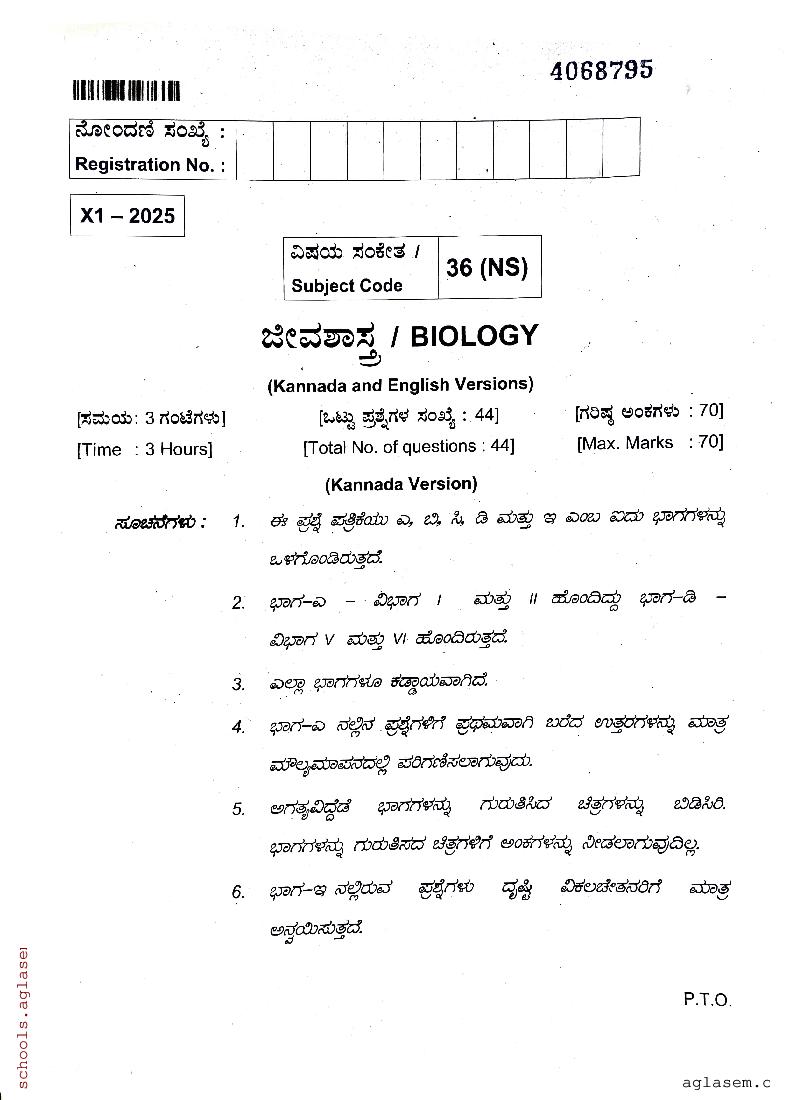
Registration No. :
X1 – 2025
«µÀAiÀÄ ¸ÀAPÉÃvÀ /
36 (NS)
Subject Code
fêÀ±Á¸ÀÛç / BIOLOGY
(Kannada and English Versions)
[¸ÀªÀÄAiÀÄ: 3 UÀAmÉUÀ¼ÀÄ] [MlÄÖ ¥Àæ±ÉßUÀ¼À ¸ÀASÉå : 44] [UÀjµÀ× CAPÀUÀ¼ÀÄ : 70]
[Time : 3 Hours] [Total No. of questions : 44] [Max. Marks : 70]
(Kannada Version)
¸ÀÆZÀ£ÉUÀ¼ÀÄ : 1. F ¥Àæ±Éß ¥ÀwæPÉAiÀÄÄ J, ©, ¹, r ªÀÄvÀÄÛ E JA§ LzÀÄ ¨sÁUÀUÀ¼À£ÀÄß
M¼ÀUÉÆArgÀÄvÀÛzÉ.
2. ¨sÁUÀ-J - «¨sÁUÀ I ªÀÄvÀÄÛ II ºÉÆA¢zÀÄÝ ¨sÁUÀ-r -
«¨sÁUÀ V ªÀÄvÀÄÛ VI ºÉÆA¢gÀÄvÀÛzÉ.
3. J¯Áè ¨sÁUÀUÀ¼ÀÆ PÀqÁØAiÀĪÁVzÉ.
4. ¨sÁUÀ-J £À°è£À ¥Àæ±ÉßUÀ½UÉ ¥ÀæxÀªÀĪÁV §gÉzÀ GvÀÛgÀUÀ¼À£ÀÄß ªÀiÁvÀæ
ªÀiË®åªÀiÁ¥À£ÀzÀ°è ¥ÀjUÀt¸À¯ÁUÀĪÀÅzÀÄ.
5. CUÀvÀå«zÉÝqÉ ¨sÁUÀUÀ¼À£ÀÄß UÀÄgÀÄw¹zÀ avÀæUÀ¼À£ÀÄß ©r¹j.
¨sÁUÀUÀ¼À£ÀÄß UÀÄgÀÄw¸ÀzÀ avÀæUÀ½UÉ CAPÀUÀ¼À£ÀÄß ¤ÃqÀ¯ÁUÀĪÀÅ¢®è.
6. ¨sÁUÀ-E £À°ègÀĪÀ ¥Àæ±ÉßUÀ¼ÀÄ zÀ馅 «PÀ®ZÉÃvÀ£ÀjUÉ ªÀiÁvÀæ
C£Àé¬Ä¸ÀÄvÀÛzÉ.
P.T.O.
Page 3
¨sÁUÀ - J
I. PɼÀUÉ ¤ÃqÀ¯ÁzÀ DAiÉÄÌUÀ½AzÀ ¸ÀjAiÀiÁzÀ ¥ÀAiÀiÁðAiÀĪÀ£ÀÄß DAiÉÄÌ ªÀiÁr :
(15 × 1 = 15)
1) ``¸ÉÆàÃgÉÆÃ¥Éǯɤ£ï EgÀĪÀÅzÀjAzÀ ¥ÀgÁUÀgÉÃtÄUÀ¼ÀÄ GvÀÛªÀÄ
¥À¼ÉAiÀÄĽPÉUÀ¼ÁV ¸ÀAgÀQë¸À®àn֪ɒ’. KPÉAzÀgÉ,
ºÉýPÉ I : ¸ÉÆàÃgÉÆÃ¥Éǯɤ£ï CvÀåAvÀ ¤gÉÆÃzsÀPÀ ¸ÁªÀAiÀĪÀ ªÀ¸ÀÄÛ«¤AzÀ
ªÀiÁqÀ®ànÖzÉ.
ºÉýPÉ II : E°èAiÀĪÀgÉUÉ ¸ÉÆàÃgÉÆÃ¥Éǯɤ£ï C£ÀÄß «WÀn¸ÀĪÀ AiÀiÁªÀÅzÉÃ
Qté w½¢®è.
a) ºÉýPÉ I ªÀÄvÀÄÛ II JgÀqÀÆ ¸ÀjAiÀiÁVzÉ
b) ºÉýPÉ I ¸ÀjAiÀiÁVzÉ ªÀÄvÀÄÛ ºÉýPÉ II vÀ¥ÁàVzÉ
c) ºÉýPÉ I ªÀÄvÀÄÛ II JgÀqÀÆ vÀ¥ÁàVzÉ
d) ºÉýPÉ I vÀ¥ÁàVzÉ ªÀÄvÀÄÛ II ¸ÀjAiÀiÁVzÉ
2) ¸ÀàªÀiÁðnqïUÀ¼ÀÄ «ÃAiÀiÁðtÄUÀ¼ÁV gÀÆ¥ÁAvÀgÀUÉƼÀÄîªÀÅzÀ£ÀÄß F jÃw
PÀgÉAiÀÄÄvÁÛgÉ.
a) «ÃAiÀiÁðtÄd£À£À b) ¸Àà«ÄðAiÉÆÃeɣɹ¸ï
c) ¸Àà«ÄðAiÉÄõÀ£ï d) CAqÁtÄd£À£À
3) F PɼÀV£ÀªÀÅUÀ¼À°è AiÀiÁªÀÅzÀÄ UÀ¨sÁð±ÀAiÀÄzÀ M¼À¸ÀÛjÃAiÀÄ ¤ªÀðºÀuÉUÉ
ºÁUÀÆ ¤µÉÃZÀ£ÉUÉÆAqÀ CAqÁ±ÀAiÀÄ £É¯ÉUÉƼÀÄî«PÉUÉ CUÀvÀåªÁVzÉ?
a) F¸ÉÆÖçÃd£ï
b) ¥ÉÆæeɸÉÖgÁ£ï
c) J¯ïJZï ªÀÄvÀÄÛ J¥sïJ¸ïJZï
d) DAqÉÆæÃd£ïUÀ¼ÀÄ
Page 4
4) ¨sÁgÀvÀzÀ°è£À ¸ÉÆáÃlPÀ d£À¸ÀASÁå ¨É¼ÀªÀtÂUÉUÉ EªÀÅUÀ¼À°è£À MAzÀÄ §ºÀıÀB
PÁgÀtªÁVgÀ§ºÀÄzÀÄ. DAiÉÄÌ ªÀiÁr.
a) vÁAiÀÄA¢gÀ ªÀÄgÀtzÀgÀ (MMR) KjPÉ
b) ²±ÀÄ ªÀÄgÀtzÀgÀ (IMR) KjPÉ
c) ¸ÀAvÁ£ÉÆÃvÀàwÛAiÀÄ ªÀAiÀĹì£À d£ÀgÀ ¸ÀASÉåAiÀÄ KjPÉ
d) ªÀÄgÀtzÀgÀ KjPÉ
5) EªÀÅUÀ¼À°è AiÀiÁªÀ UÀ¨sÀð¤gÉÆÃzsÀPÀªÀÅ OµÀ¢ü CxÀªÁ G¥ÀPÀgÀtzÀ §¼ÀPÉ
E®è¢gÀĪÀÅzÀÄ?
a) PÁAqÉÆêÀiï b) ¸ÀºÉð
c) UÀ¨sÁð±ÀAiÀÄ PÀAoÀºÉÆ¢PÉ d) ¸ÀA¨sÉÆÃUÀ PÁAiÀÄð¨sÀAUÀ
6) ¥ÀÅgÀĵÀ£À ¸ÀÍ®£ÀzÀ°è «ÃAiÀiÁðtÄ ¸ÀASÉå Cwà PÀrªÉÄ EzÀÄÝ, §AeÉvÀ£ÀPÉÌ
PÁgÀt«zÁÝUÀ, EªÀÅUÀ¼À°è£À AiÀiÁªÀ ¸ÀºÁ¬ÄvÀ ¥Àæd£ÀvÀAvÀæªÀ£ÀÄß
G¥ÀAiÉÆÃV¹ ¸Àj¥Àr¸À§ºÀÄzÀÄ?
a) CAqÁtÄ«£À CAvÀB CAqÀ£Á½ÃAiÀÄ ªÀUÁðªÀuÉ (GIFT)
b) CAvÀB UÀ¨sÁð±ÀAiÀÄ ªÀUÁðªÀuÉ (IUT)
c) AiÀÄÄUÀäzÀ CAvÀB CAqÀ£Á½ÃAiÀÄ ªÀUÁðªÀuÉ (ZIFT)
d) CAvÀB UÀ¨sÁð±ÀAiÀÄzÀ «ÃAiÀÄð¥ÀÇgÀt (IUI)
7) EªÀÅUÀ¼À°è AiÀiÁªÀÅzÀÄ ªÀiÁ£ÀªÀ£À ªÀA±ÀªÀÈPëÀ «±ÉèõÀuÉAiÀÄ°è
gÀPÀÛ¸ÀA§A¢üÃAiÀÄ ¸ÀA¨sÉÆÃUÀzÀ ¸ÀAPÉÃvÀªÁVzÉ?
a) b)
c) d)
Page 5
8) ªÀA±ÀªÁ»PÀ ªÀiÁ»wAiÀÄÄ ¥ÀæªÀ»¸ÀĪÀ PÀæªÀĪÀ£ÀÄß F PɼÀV£ÀªÀÅUÀ¼À°è
AiÀiÁªÀÅzÀÄ ¥Àæw¤¢ü¸ÀÄvÀÛzÉ?
a) JªÀiïDgïJ£ïJ → rJ£ïJ → ¥ÉÆæÃnãï
b) ¥ÉÆæÃnãï → JªÀiïDgïJ£ïJ → rJ£ïJ
c) rJ£ïJ → JªÀiïDgïJ£ïJ → ¥ÉÆæÃnãï
d) rJ£ïJ → ¥ÉÆæÃnãï → JªÀiïDgïJ£ïJ
9) ªÀA±ÀªÁ» DªÀvÀð£À §zÀ¯ÁªÀuÉ DPÀ¹äPÀªÁVAiÀiÁzÀgÉ, CzÀ£ÀÄß F jÃw
PÀgÉAiÀÄÄvÁÛgÉ.
a) ªÀA±ÀªÁ» ºÀjªÀÅ b) GvÀàjªÀvÀð£É
c) ªÀA±ÀªÁ»PÀ ¥ÀÅ£ÀgïgÀZÀ£É d) ªÀA±ÀªÁ»PÀ ¢PïZÀÄåw
10) M§â gÉÆÃVAiÀÄÄ ¤gÀAvÀgÀ PÁqÀĪÀ «¥ÀjÃvÀ dégÀ (39ºC – 40ºC),
§®»Ã£ÀvÉ, ºÉÆmÉÖ£ÉÆêÀÅ, ªÀÄ®§zÀÞvÉ, vÀ¯É£ÉÆêÀÅ ªÀÄvÀÄÛ
ºÀ¹«®è¢gÀÄ«PÉAiÀÄ ®PëÀtUÀ¼À£ÀÄß vÉÆÃgÀÄwÛzÀÝgÉ, CªÀ¤UÉ EªÀÅUÀ¼À°è£À
AiÀiÁªÀ ¥ÀjÃPÉëUÉ ¸À®ºÉ ¤ÃqÀ§ºÀÄzÀÄ?
a) ªÉÊqÁ¯ï ¥ÀjÃPÉë b) J°¸Á (ELISA)
c) ¹n (CT) d) JADgïL
11) F PɼÀV£ÀªÀÅUÀ¼À°è AiÀiÁªÀÅzÀ£ÀÄß eÉÊ«PÀ vÀAvÀæeÕÁ£À¢AzÀ ªÀiÁ¥ÁðlÄUÉƽ¹
``ºÉ¥ÀÄà ¤ªÁgÀPÀ’’ ªÁV §¼À¸ÀÄvÁÛgÉ?
a) ¯ÉÊ¥Éøï b) ¥ÉQÖ£Éøï
c) ¥ÉÆæÃnAiÉÄøï d) ¸ÉÖç¥ÉÆÖÃPÉÊ£Éøï
Page 6
12) F PɼÀV£ÀªÀÅUÀ¼À°è AiÀiÁªÀÅzÀÄ ¸À¸Àå fêÀPÉÆñÀUÀ¼À£ÀÄß rJ£ïJ ¤AzÀ
¸ÀªÀgÀ®àlÖ a£ÀßzÀ C¢üPÀ ªÉÃUÀzÀ ¸ÀÆPëÀ äPÀtUÀ¼À eÉÆvÉUÉ vÁqÀĪÀ
«zsÁ£ÀªÁVzÉ?
a) ªÉÄÊPÉÆæÃEAeÉPëÀ£ï b) §AiÉÆð¹ÖPïì
c) GµÁÚWÁvÀ d) vÀzÀÆ榸ÀȶÖ
13) AiÀiÁªÀÅzÉà MAzÀÄ ¥ÀæzÉñÀzÀ eÉÊ«PÀ ¸ÀA¥À£ÀÆä®UÀ¼À£ÀÄß DAiÀiÁ zÉñÀzÀ
CxÀªÁ DAiÀiÁ ¥ÀæzÉñÀzÀ d£ÀgÀ M¦àUÉ E®èzÉ ªÀÄvÀÄÛ ¸ÀjAiÀiÁzÀ
¥ÀjºÁgÀzsÀ£À ¤ÃqÀzÉ §ºÀÄgÁ¶ÖçÃAiÀÄ PÀA¥À¤UÀ¼ÀÄ G¥ÀAiÉÆÃV¸ÀĪÀÅzÀ£ÀÄß
F jÃw PÀgÉAiÀÄÄvÁÛgÉ.
a) eÉÊ«PÀ¥Àj±ÉÆÃzsÀ£É
b) eÉÊ«PÀ¸ÁgÀªÀzsÀð£É
c) eÉÊ«PÀ¸ÀA±ÉÆÃzsÀ£ÁZËAiÀÄð
d) eÉÊ«PÀ¥ÀæQæAiÉÄUÀ¼ÀÄ
14) EªÀÅUÀ¼À AiÀiÁªÀ MAzÀÄ «zsÁ£À¢AzÀ ºÀÆåªÀĸï C£ÀÄß PÉ®ªÀÅ
¸ÀÆPëÀ äfëUÀ¼ÀÄ ªÀÄgÀÄ«WÀn¹ ¤gÀAiÀĪÀ ¥ÉÇõÀPÁA±ÀUÀ¼À£ÀÄß ©qÀÄUÀqÉ
ªÀiÁqÀÄvÀÛzÉ?
a) PÁ뮣ÀQæAiÉÄ b) R¤fÃPÀgÀt
c) C¥ÀZÀAiÀÄ d) ºÀÆå«Ä¦üPÉõÀ£ï
15) EªÀÅUÀ¼À°è AiÀiÁªÀÅzÀÄ ºÉÆgÀ£É¯É ¸ÀAgÀPëÀuÉUÉ GzÁºÀgÀuÉAiÀiÁVzÉ?
a) ±ÉÊvÀå¸ÀAgÀPëÀuÉ b) fëUÀ¼À «ÄøÀ®ÄvÁt
c) gÁ¶ÖçÃAiÀÄ GzÁå£ÀªÀ£À d) C¨sÀAiÀiÁgÀtåUÀ¼ÀÄ
Page 7
II. F PɼÀUÉ ¤ÃqÀ¯ÁzÀ ¸ÀÆPÀÛ ¥ÀzÀ/¥ÀzÀUÀ¼À£ÀÄß Dj¸ÀĪÀ ªÀÄÆ®PÀ
SÁ° ©lÖ ¸ÀܼÀUÀ¼À£ÀÄß ¨sÀwð ªÀiÁr. (5 × 1 = 5)
(mÉæ ÊPÉÆÃ¥sÉÊmÁ£ï, C¯ÉÊAVPÀd£À£À, ¸Á¯ÉÖõÀ£ï, DQìmÉÆù£ï, J®ÆåµÀ£ï,
UÉÆèêÀĸï)
16) PÉ®ªÀÅ ºÀÆ©qÀĪÀ ¸À¸ÀåUÀ¼À ¥Àæ¨sÉÃzÀUÀ¼ÀÄ ¤µÉÃZÀ£À«®èzÉAiÉÄà ©ÃeÉÆÃvÁàzÀ£É
ªÀiÁqÀĪÀ ___________ PÁAiÀÄðvÀAvÀæªÀ£ÀÄß «PÀ¹¹PÉÆArªÉ.
17) MAzÉà ºÉeÉÓAiÀÄ §ÈºÀvï GvÀàjªÀvÀð£ÉAiÀÄ£ÀÄß ___________ JAzÀÄ
PÀgÉAiÀÄĪÀgÀÄ.
18) ¥Àæ¸ÀªÀ ¸ÀªÀÄAiÀÄzÀ°è ___________ UÀ¨sÁð±ÀAiÀÄzÀ ¸ÁßAiÀÄÄUÀ¼À ªÉÄïÉ
PÁAiÀÄð¤ªÀ𻹠¥À槮ªÁzÀ ¸ÀAPÉÆÃZÀUÀ½UÉ PÁgÀtªÁVzÉ.
19) ___________ eÁwAiÀÄ ²°ÃAzsÀæªÀÅ ²°ÃA¢üæÃAiÀÄ ¨ÉÃgÀ£ÀÄß gÀa¹
ªÀÄtÂÚ¤AzÀ gÀAdPÀªÀ£ÀÄß »ÃjPÉÆAqÀÄ ¸À¸ÀåPÉÌ ªÀUÁð¬Ä¸ÀÄvÀÛzÉ.
20) ¨ÉÃ¥ÀðlÖ rJ£ïJ ¥ÀnÖUÀ¼À£ÀÄß CUÀgÉÆøï eɯï¤AzÀ vÀÄAqÀj¹
ºÉÆgÀvÉUÉAiÀÄĪÀ «zsÁ£ÀPÉÌ ___________ JAzÀÄ ºÉ¸ÀgÀÄ.
¨sÁUÀ - ©
III. F PɼÀV£À AiÀiÁªÀÅzÁzÀgÀÆ LzÀÄ ¥Àæ±ÉßUÀ½UÉ CªÀ±Àå«zÉÝqÉ ¥ÀæwAiÉÆAzÀPÀÆÌ
3 jAzÀ 5 ªÁPÀåUÀ¼À°è GvÀÛj¹. (5 × 2 = 10)
21) ¢ézÀ¼À ¸À¸Àå¨sÀÆætzÀ CAzÀªÁzÀ avÀæ §gÉzÀÄ ¨sÁUÀUÀ¼À£ÀÄß UÀÄgÀÄw¹.
22) ¸ÀA®UÀßvÉ ºÁUÀÆ ¥ÀÅ£Àgï¸ÀAAiÉÆÃd£É ¥ÀzÀUÀ¼À ªÀåvÁå¸ÀªÀ£ÀÄß §gɬÄj.
23) ``AUG UÉ ¢éªÀÄÄR PÁAiÀÄðUÀ½ªÉ’’. F ºÉýPÉAiÀÄ£ÀÄß ¸ÀªÀÄyð¹.
Page 8
24) ªÀiÁ£ÀªÀ£À «PÁ¸ÀPÉÌ ¸ÀA§A¢ü¹zÀ F PÉÆõÀÖPÀªÀ£ÀÄß CªÀ¯ÉÆÃQ¹
A ªÀÄvÀÄÛ B UÀ½UÉ C£Àé¬Ä¸ÀĪÀ ªÉÊeÕÁ¤PÀ ºÉ¸ÀgÀ£ÀÄß PÀæªÀĪÁV §gɬÄj.
«PÀ¹vÀ ªÀiÁ£ÀªÀ£À ®PëÀtUÀ¼ÀÄ ªÉÊeÕÁ¤PÀ ºÉ¸ÀgÀÄ
ªÉÆlÖªÉÆzÀ® ªÀiÁ£ÀªÀ£ÀAvÀºÀ
fëAiÀiÁVzÀÄÝ, «ÄzÀĽ£À
A
¸ÁªÀÄxÀåðªÀÅ 650 cc jAzÀ 800 cc
900 cc AiÀÄ zÉÆqÀØ UÁvÀæzÀ
«ÄzÀĽzÀÄÝ, §ºÀıÀB
B
ªÀiÁA¸ÁºÁjAiÀiÁVzÀÝ.
25) ±À¸ÀÛçQæAiÉÄUÉ M¼ÀUÁzÀ gÉÆÃVUÀ½UÉ §ºÀ¼À G¥ÀPÁjAiÀiÁVgÀĪÀ ªÀiÁzÀPÀªÀ¸ÀÄÛ
AiÀiÁªÀÅzÀÄ? ªÀÄvÀÄÛ KPÉ?
26) ``ªÉÊgÀ¸ï ¸ÉÆÃAQUÉ M¼ÀUÁzÀ ¸À¸ÀåzÀ” AiÀiÁªÀ ¨sÁUÀ¢AzÀ DgÉÆÃUÀå¥ÀÇtð
¸À¸ÀåUÀ¼À£ÀÄß ¥ÀqÉAiÀħºÀÄzÁVzÉ? CAvÀºÀ vÀAvÀæeÕÁ£ÀzÀ ºÉ¸ÀgÉãÀÄ?
27) “GµÀÚªÀ®AiÀÄ ¥ÀæzÉñÀUÀ¼À°è CUÁzsÀªÁzÀ fêÀªÉÊ«zsÀåªÀ£ÀÄß vÀ£Àß°è
ºÉÆAzÀ®Ä” ¥Àj¸ÀgÀ «eÕÁ¤UÀ¼ÀÄ ªÀÄAr¹gÀĪÀ JgÀqÀÄ ¹zÁÞAvÀUÀ¼À£ÀÄß
w½¹.
¨sÁUÀ - ¹
IV. F PɼÀV£À AiÀiÁªÀÅzÁzÀgÀÆ LzÀÄ ¥Àæ±ÉßUÀ½UÉ ¥ÀæwAiÉÆAzÀPÀÆÌ CªÀ±Àå«zÉÝqÉ
40 jAzÀ 80 ¥ÀzÀUÀ¼À°è GvÀÛj¹. (5 × 3 = 15)
28) ªÁAiÀÄÄ¥ÀæªÁºÀ¢AzÀ ¥ÀgÁUÀ¸Àà±Àð ºÉÆAzÀĪÀ ºÀÆUÀ½UÉ CªÀ±Àå«gÀĪÀ
®PëÀtUÀ¼À£ÀÄß ¥ÀnÖ ªÀiÁr.
29) ¥ÀÅgÀĵÀ C£ÀĵÀAVPÀ UÀæAyUÀ¼À£ÀÄß ºÉ¸Àj¹.
30) LAiÀÄÄr (IUD) UÀ¼ÀÄ UÀ¨sÀð¤gÉÆÃzsÀPÀUÀ¼ÁV ºÉÃUÉ ¥ÀjuÁªÀÄPÁjAiÀiÁV
PÁAiÀÄð¤ªÀð»¸ÀÄvÀÛªÉ?
Page 9
31) a) ªÀiÁ£ÀªÀd£Àå ZÀlĪÀnPÉUÀ½AzÁUÀĪÀ «PÁ¸ÀzÀ AiÀiÁªÀÅzÁzÀgÀÆ
JgÀqÀÄ GzÁºÀgÀuÉUÀ¼À£ÀÄß §gɬÄj. (2)
b) ºÁrð-ªÉÊ£ï§Uïð vÀvÀéªÀ£ÀÄß ªÁåSÁ夹j. (1)
32) PÁå£Àìgïd£ÀPÀ (Carcinogen) JAzÀgÉãÀÄ? ¨sËwPÀ ªÀÄvÀÄÛ eÉÊ«PÀ
PÁå£Àìgïd£ÀPÀUÀ½UÉ MAzÉÆAzÀÄ GzÁºÀgÀuÉAiÀÄ£ÀÄß ¤Ãr.
33) PÀįÁAvÀj ¸À¸ÀåUÀ½AzÁUÀĪÀ ªÀÄÆgÀÄ jÃwAiÀÄ G¥ÀAiÀÄÄPÀÛvÉUÀ¼À£ÀÄß
¥ÀnÖ ªÀiÁr.
34) MAzÀÄ ¥Àj¸ÀgÀ ªÀåªÀ¸ÉÜAiÀÄ°è ¥ÁæxÀ«ÄPÀ GvÁàzÀPÀUÀ¼À ¸ÀASÉå 4 DVzÀÄÝ
ºÁUÀÆ ¥ÁæxÀ«ÄPÀ ¨sÀPëÀPÀgÀ ¸ÀASÉå 21 DVzÀÝ°è gÀZÀ£ÉAiÀiÁUÀĪÀ ¦gÀ«Äqï£À
avÀæªÀ£ÀÄß §gɬÄj.
¨sÁUÀ - r
V. F PɼÀV£À AiÀiÁªÀÅzÁzÀgÀÆ £Á®ÄÌ ¥Àæ±ÉßUÀ½UÉ CªÀ±Àå«zÉÝqÉ 200 jAzÀ
250 ¥ÀzÀUÀ¼À°è GvÀÛj¹. (4 x 5 = 20)
35) ¸ÀÛ£ÀUÀæAyAiÀÄ ¹Ã¼ÀÄ£ÉÆÃlzÀ CAzÀªÁzÀ avÀæªÀ£ÀÄß §gÉzÀÄ ¨sÁUÀUÀ¼À£ÀÄß
UÀÄgÀÄw¹.
36) a) ``¦ü£ÉʯïQmÉÆãÀÆåjAiÀiÁ gÉÆÃUÀªÀÅ ¦èAiÉÆÃmÉÆææUÉ MAzÀÄ
GzÁºÀgÀuÉAiÀiÁVzÉ’’. ºÉÃUÉ? (2)
b) eÉãÀÄ£ÉÆtzÀ°è£À °AUÀ ¤zsÁðgÀzÀ AiÉÆÃd£Á§zÀÞ avÀæªÀ£ÀÄß
§gɬÄj. (3)
37) C¥ÀÇtð ¥À槮vÉAiÀÄ£ÀÄß MAzÀÄ GzÁºÀgÀuÉAiÉÆA¢UÉ «ªÀj¹.
38) ªÀiÁ£ÀªÀ ªÀA±ÀªÁ» ¸ÀªÀÄÄzÁAiÀÄzÀ AiÀiÁªÀÅzÁzÀgÀÆ LzÀÄ ¥ÀæzsÁ£À
®PëÀtUÀ¼À£ÀÄß §gɬÄj.
Page 10
39) a) VqÀUÀ¼À ºÉãÀÄ ªÀÄvÀÄÛ ¸ÉƼÉîUÀ¼À£ÀÄß ¤ªÀÄÆð® ªÀiÁqÀĪÀ eÉÊ«PÀ
¤AiÀÄAvÀætPÁgÀPÀUÀ¼ÀÄ AiÀiÁªÀŪÀÅ? (2)
b) ¨Áå¹®¸ï vÀÄjAfAiÉĤì¸ï (Bt) ¨ÁåQÖÃjAiÀiÁªÀ£ÀÄß ºÉÃUÉ eÉÊ«PÀ
¤AiÀÄAvÀætPÁgÀPÀªÀ£ÁßV G¥ÀAiÉÆÃV¸À§ºÀÄzÀÄ? (3)
40) ¥ÀÅ£Àgï¸ÀAAiÉÆÃfvÀ rJ£ïJ vÀAvÀæeÕÁ£ÀzÀ ¥Àæw¤¢üvÀézÀ avÀæªÀ£ÀÄß §gɬÄj.
41) F PɼÀUÉ ¤ÃrgÀĪÀ GzÁºÀgÀuÉUÀ½UÉ/ºÉýPÉUÀ½UÉ fë¸ÀAzÀtÂUÀ¼À
¥ÀæwªÀvÀð£ÉUÉ ¸ÀA§A¢ü¹zÀAvÉ ¸ÀÆPÀÛ ¥ÀzÀUÀ¼À£ÀÄß ¤Ãr.
a) N¦üæ¸ï JA§ ªÉÄrlgÉäAiÀÄ£ï DQðqï ¸À¸ÀåªÀÅ ¥ÀgÁUÀ¸Àà±ÀðPÁÌV
C¼ÀªÀr¹PÉÆArgÀĪÀ «zsÁ£À.
b) ¸ÀàzsÉðAiÀÄ£ÀÄß JzÀÄj¸ÀĪÀ ¥Àæ¨sÉÃzÀªÀÅ ºÉÆgÀºÁPÀ®àqÀĪÀ §zÀ®Ä
¸ÀºÀ-C¹ÛvÀéªÀ£ÀÄß ¥ÉÆæÃvÁ컸ÀĪÀ PÁAiÀÄðvÀAvÀæzÀ ¥ÀæwªÀvÀð£É.
c) ¥ÀgÁªÀ®A© ¥ÀQëAiÀÄÄ CzÀgÀ CwxÉÃAiÀÄ ¥ÀQëAiÀÄ UÀÆr£À°è vÀ£Àß
ªÉÆmÉÖAiÀĤßlÄÖ PÁªÀÅPÉÆqÀĪÀÅzÀPÉÌ ©qÀĪÀÅzÀÄ.
d) ¨É¼ÀîQÌUÀ¼ÀÄ ªÀÄvÀÄÛ ªÉÄÃAiÀÄĪÀ eÁ£ÀĪÁgÀÄUÀ¼À £ÀqÀÄªÉ EgÀĪÀ ¤PÀl
MqÀ£Ál.
e) MAzÀÄ ¥Àæ¨sÉÃzÀªÀÅ ºÁ¤UÉƼÀUÁV ªÀÄvÉÆÛAzÀgÀ ªÉÄÃ¯É K£ÀÆ
¥ÀjuÁªÀÄ ©ÃgÀ¢gÀĪÀÅzÀÄ.
VI. F PɼÀV£À AiÀiÁªÀÅzÁzÀgÀÆ MAzÀÄ ¥Àæ±ÉßUÉ CªÀ±Àå«zÉÝqÉ 200 jAzÀ
250 ¥ÀzÀUÀ¼À°è GvÀÛj¹. (1 × 5 = 5)
42) F PɼÀV£À ºÉýPÉAiÀÄ£ÀÄß N¢PÉÆAqÀÄ PÉÆnÖgÀĪÀ ¥Àæ±ÉßUÀ½UÉ GvÀÛj¹.
``C¥ÉÃQëvÀ UÀÄt®PëÀtUÀ¼À£ÀÄß ¸ÀAAiÉÆÃf¹ ªÁtÂdåPÀªÁV ±ÉæõÀתÁzÀ
vÀ½UÀ¼À£ÀÄß GvÁࢸÀ®Ä M§â vÀ½UÁgÀ£ÀÄ «©ü£Àß ¸À¸Àå ¥Àæ¨sÉÃzÀUÀ¼À£ÀÄß
¸ÀAPÀgÀUÉƽ¸À®Ä D¸ÀQÛ vÉÆÃj¸ÀÄvÁۣɒ’.
a) vÀ½UÁgÀ£ÀÄ F UÀÄjAiÀÄ£ÀÄß ¸Á¢ü¸À®Ä “vÀ½ ¸ÀÄzsÁgÀuÁ AiÉÆÃd£É” AiÀÄ°è
AiÀiÁªÀ MAzÀÄ ¥ÀæªÀÄÄR CA±ÀªÀ£ÀÄß ¸À®ºÉAiÀiÁV ¤ÃqÀÄ«j? (1)
b) ¸ÀAPÀgÀtzÀ F ¥ÀæQæAiÉÄAiÀÄ°è£À ºÀAvÀUÀ¼À£ÀÄß «ªÀgÀªÁV ZÀað¹. (4)
Page 11
43) F PɼÀUÉ PÉÆnÖgÀĪÀ ¥Àæw¯ÉÃR£À WÀlPÀzÀ gÀZÀ£ÉAiÀÄ£ÀÄß CªÀ¯ÉÆÃQ¹,
PÉÆnÖgÀĪÀ ¥Àæ±ÉßUÀ½UÉ GvÀÛj¹.
a) avÀæzÀ°è£À A ªÀÄvÀÄÛ B ¨sÁUÀUÀ¼À£ÀÄß ºÉ¸Àj¹. (2)
b) ¥Àæw¯ÉÃR£À WÀlPÀzÀ AiÀiÁªÀ ¨sÁUÀªÀÅ DgïJ£ïJ ¥Á°ªÀÄgÉøï
C£ÀħAzsÀªÁUÀ®Ä CªÀPÁ±À PÀ°à¸ÀÄvÀÛzÉ? (1)
c) ªÀiÁzÀj CZÀÄÑJ¼É¬ÄAzÀ ¥Àæw¯ÉÃR£ÀUÉÆAqÀ JªÀiïDgïJ£ïJ J¼ÉAiÀÄ
C£ÀÄPÀæªÀÄtÂPÉAiÀÄ£ÀÄß §gɬÄj. (2)
44) ``£ÀªÀÄä zÉúÀªÀÅ ¤¢ðµÀÖªÀ®èzÀ, ««zsÀ jÃwAiÀÄ gÉÆÃUÀ¤gÉÆÃzsÀPÀvÉAiÀÄ
vÀqÉUÀ¼À£ÀÄß ºÀÄnÖ¤AzÀ¯Éà ¥ÀqÉ¢gÀÄvÀÛzÉ’’.
F ªÉÄð£À ºÉýPÉAiÀÄ£ÀÄß ¸ÀÆPÀÛ GzÁºÀgÀuÉUÀ¼ÉÆA¢UÉ ¸ÀªÀÄyð¹
§gɬÄj.
Page 12
¨sÁUÀ - E
(zÀ馅 «PÀ®ZÉÃvÀ£À «zÁåyðUÀ½UÉ ªÀiÁvÀæ)
7) PÉÆñÀ«¨sÀd£É ZÀPÀæzÀ°è PÉÆæªÀiÁånqïUÀ¼ÀÄ ¨ÉÃ¥ÀðqÀĪÀ QæAiÉÄ
£ÀqÉAiÀÄ¢zÀÝ°è GAmÁUÀĪÀ ¥sÀ°vÁA±À ____________
a) KPÀUÀÄtÂvÀvÉ
b) ¢éUÀÄtÂvÀvÉ
c) «UÀÄtÂvÀvÉ
d) §ºÀÄUÀÄtÂvÀvÉ
43) vÀ½ ¸ÀAPÉÃvÀzÀ ¥ÀæªÀÄÄR ®PëÀtUÀ¼À£ÀÄß ¥ÀnÖ ªÀiÁr.
–––––––––––––
Page 13
(English Version)
Instructions : 1. This question paper contains five Parts – A, B, C, D
and E.
2. PART–A consists of I and II and Part–D consists of
V and VI.
3. All Parts are compulsory.
4. For PART-A questions, only the first written answers
will be considered for evaluation.
5. Draw diagrams wherever necessary. Unlabelled
diagrams do not attract any marks.
6. PART-E consists of questions for Visually Challenged
students only.
PART – A
I. Select the correct alternative from the choices given below : (15 × 1 = 15)
1) “Pollen grains are well preserved as fossils” because of the presence of
sporopollenin” as
Statement I : Sporopollenin is the most resistant organic material known.
Statement II : No enzyme that degrades sporopollenin is so far known.
a) Both the Statements I and II are correct
b) Statement I is correct and Statement II is incorrect
c) Both the Statements I and II are incorrect
d) Statement I is incorrect and Statement II is correct
2) The process of transformation of spermatids into sperms is called
a) Spermatogenesis b) Spermiogenesis
c) Spermiation d) Oogenesis
Page 14
3) Which one among the following is essential for the maintenance of
endometrium and for the implantation of fertilized ovum?
a) Estrogen b) Progesteron
c) LH and FSH d) Androgens
4) Select the one among the given that is a probable reason for explosive
growth of population in India.
a) A rapid increase in MMR
b) A rapid increase in IMR
c) Increase in the number of people in reproducible age
d) A rapid increase in death rate
5) Which one among the following is a contraceptive method that involves
no medicine or device?
a) Condom b) Saheli
c) Cervical caps d) Coitus interruptus
6) Which one among the following ART can be used to rectify if the infertility
is due to low sperm count?
a) GIFT b) IUT
c) ZIFT d) IUI
7) Which one among the given is a symbol used in human pedigree analysis
for consanguineous mating?
a) b)
c) d)
Page 15
8) Which one among these represent the flow of genetic information?
a) mRNA → DNA → Protein
b) Protein → mRNA → DNA
c) DNA → mRNA → Protein
d) DNA → Protein → mRNA
9) If the change in gene frequency occurs by chance, it is called
a) Gene flow b) Mutation
c) Genetic recombination d) Genetic drift
10) Which is the test that can be suggested among the given for a patient
with symptoms such as - sustained high fever (39°C – 40°C), weakness,
stomach pain, constipation, headache and loss of appetite?
a) Widal test b) ELISA
c) CT d) MRI
11) Which among the following is an enzyme modified by genetic engineering
and used as “Clot buster”?
a) Lipase b) Pectinase
c) Protease d) Streptokinase
12) In which method the plant cells are bombarded with high velocity
microparticles of gold coated with DNA?
a) Microinjection b) Biolistics
c) Heat shock d) Cloning
13) The use of bioresources by multinational companies and other
organisations without proper authorisation and compensatory payment is
called as
a) Bioprospecting b) Biofortification
c) Biopiracy d) Bioprocessing
Page 16
14) In which of the processes given, the humus is degraded by some
microbes and release of inorganic nutrients occur?
a) Leaching b) Mineralisation
c) Catabolism d) Humification
15) Which one among these is an example for Ex-situ conservation?
a) Cryopreservation b) Biosphere reserve
c) National Park d) Sanctuaries
II. Fill in the blanks by choosing the appropriate word/words from those given
below : (5 × 1 = 5)
(Trichophyton, Apomixis, Saltation, Oxytocin, Elution, Glomus)
16) Few flowering plants have evolved a special mechanism to produce
seeds without fertilization called _____________.
17) Single step large mutation is known as _____________.
18) _____________ acts on uterine muscle and cause stronger
contractions during parturition.
19) Members of genus _____________ form mycorrhiza and absorb
phosphorous from soil and supply it to the plant.
20) The step in which bands of DNA are cutout and extracted from gel
piece is termed as _____________.
Page 17
PART – B
III. Answer any five of the following questions in 3 to 5 sentences wherever
applicable : (5 × 2 = 10)
21) Draw a neat labelled diagram of dicot embryo.
22) Differentiate between Linkage and Recombination.
23) “AUG has dual function”. Justify the statement.
24) Analyse the table given in relation to the human evolution and write the
scientific name for A and B respectively.
Features of Evolutionary man Scientific Name
First human like being the hominid with
brain capacity between 650 cc – 800 cc A
Large brain capacity around 900 cc and
probably ate meat B
25) Which drug is very useful in patients who have undergone surgery? And
why?
26) From which part of, “Virus infected plant” healthy plants can be
recovered? Name the technique involved.
27) “Tropical regions have greater biological diversity”.
Give two hypothesis proposed by ecologists in favour of the above given
statement.
Page 18
PART – C
IV. Answer any five of the following questions in about 40-80 words each,
wherever applicable : (5 × 3 = 15)
28) List the features required for the flowers pollinated by wind.
29) Name the human male accessory glands.
30) How do IUDs function in bringing about contraception effectively?
31) a) Mention any two examples for evolution by anthropogenic action. (2)
b) State Hardy-Weinberg principle. (1)
32) What is a carcinogen? Give an example each for Physical and Biological
carcinogens.
33) List the three uses of genetically modified plants.
34) In an ecosystem the number of primary producers is 4 and primary
consumers is 21.
Construct an ecological pyramid for this ecosystem.
PART – D
V. Answer any four of the following questions in about 200-250 words each,
wherever applicable : (4 × 5 = 20)
35) Draw a neat labelled diagrammatic sectional view of mammary gland.
36) a) How phenylketonuria is an example for Pleiotropy? (2)
b) Schematically represent the sex determination in honeybee. (3)
Page 19
37) Explain incomplete dominance with an example.
38) Write any five salient features of human genome.
39) a) Name the biocontrol agents of aphids and mosquitoes respectively.
(2)
b) How Bacillus thuringiensis can be used as biocontrol agent? (3)
40) Diagrammatically represent the recombinant DNA technology.
41) Give suitable terms for the following examples/statements with respect to
population interactions.
a) The method Mediterranean orchid ophrys employs to get pollinated.
b) Species facing competition might evolve mechanism that promote
co-existence rather than exclusion.
c) The parasitic bird lays eggs in the nest of its host and lets the
host bird incubate them.
d) The interaction between cattle egret and grazing cattle.
e) The interaction in which one species is harmed while, the other is
unaffected.
Page 20
VI. Answer any one of the following questions in about 200-250 words, wherever
applicable : (1 × 5 = 5)
42) Read the below given statement and answer the given questions.
“A breeder is interested in crossing different species of plants to combine
desirable characters to produce commercially superior varieties”.
a) What major approach in “Crop improvement programme”. Would you
suggest to the breeder to achieve this goal? (1)
b) Discuss in detail the techniques involved in the process. (4)
43) Analyse the below given transcription Unit diagram and answer the given
questions.
a) Name the Parts A and B in the diagram. (2)
b) Which site of transcription unit provides the binding site for RNA
polymerase? (1)
c) Write the sequence of bases of the mRNA transcribed from the
template given in the diagram. (2)
44) “Our body is provided with different types of non-specific immunity
barriers at the time of birth”.
Justify the above statement with suitable examples.
Page 21
PART – E
(For Visually Challenged Students only)
7) Failure of segregation of chromatids during cell division cycle results
in ____________
a) Haploidy
b) Diploidy
c) Aneuploidy
d) Polyploidy
43) List the salient features of genetic code.
———————
Page 22
Share your recent question papers with us and get paid!
अपने हाल के न प हम भेज और कमाएँ!
To participate, email us with the following details:
भाग लेने के लए हम न न ववरण के साथ ईमेल कर:
- Your Name
- Your Class
- Your Board
- Details of the Question Papers you have
आपके पास उपल ध न प का ववरण
Our team will reach out to you with the next steps.
हमार ट म आगे क या के लए आपसे संपक करे गी।
Email: support@
Document Details
| Board / Org | Karnataka Board |
| Exam | Class 12 |
| Type | Question Paper |
| Pages | 10 |
| Updated | 29 Aug 2026 |