Karnataka 1st PUC Biology Chemical Coordination and Integration MCQ with Answers
Finished viewing? Save it for later —
Download Karnataka 1st PUC Biology Chemical Coordination and Integration MCQ with Answers (PDF · 19 pages)About Karnataka 1st PUC Biology Chemical Coordination and Integration MCQ with Answers
Karnataka 1st PUC Biology Chemical Coordination and Integration MCQ with Answers is available here for free download. Published by Karnataka Board for Class 11, this question bank can be viewed online or downloaded as a PDF (19 pages). Candidates preparing for Class 11 can use Karnataka 1st PUC Biology Chemical Coordination and Integration MCQ with Answers to understand the exam pattern, the type of questions asked, and the overall difficulty level.
Frequently Asked Questions
How can I download Karnataka 1st PUC Biology Chemical Coordination and Integration MCQ with Answers?
Open this page and click the Download button to save Karnataka 1st PUC Biology Chemical Coordination and Integration MCQ with Answers as a PDF. It is completely free on AglaSem Docs.
Is Karnataka 1st PUC Biology Chemical Coordination and Integration MCQ with Answers free to download?
Yes. Karnataka 1st PUC Biology Chemical Coordination and Integration MCQ with Answers can be viewed online and downloaded as a PDF free of cost on AglaSem Docs.
How many pages does Karnataka 1st PUC Biology Chemical Coordination and Integration MCQ with Answers have?
Karnataka 1st PUC Biology Chemical Coordination and Integration MCQ with Answers contains 19 pages, which you can read online or download together as a single PDF.
Where can I find more Class 11 study material?
You can find more Class 11 question papers, sample papers, syllabus, and answer keys on AglaSem Docs.
Karnataka 1st PUC Biology Chemical Coordination and Integration MCQ with Answers – Text
Read the full text of this question bank below — useful to quickly search, copy and reference the content online without downloading the PDF.
📄 View text version (19 pages)
Page 1
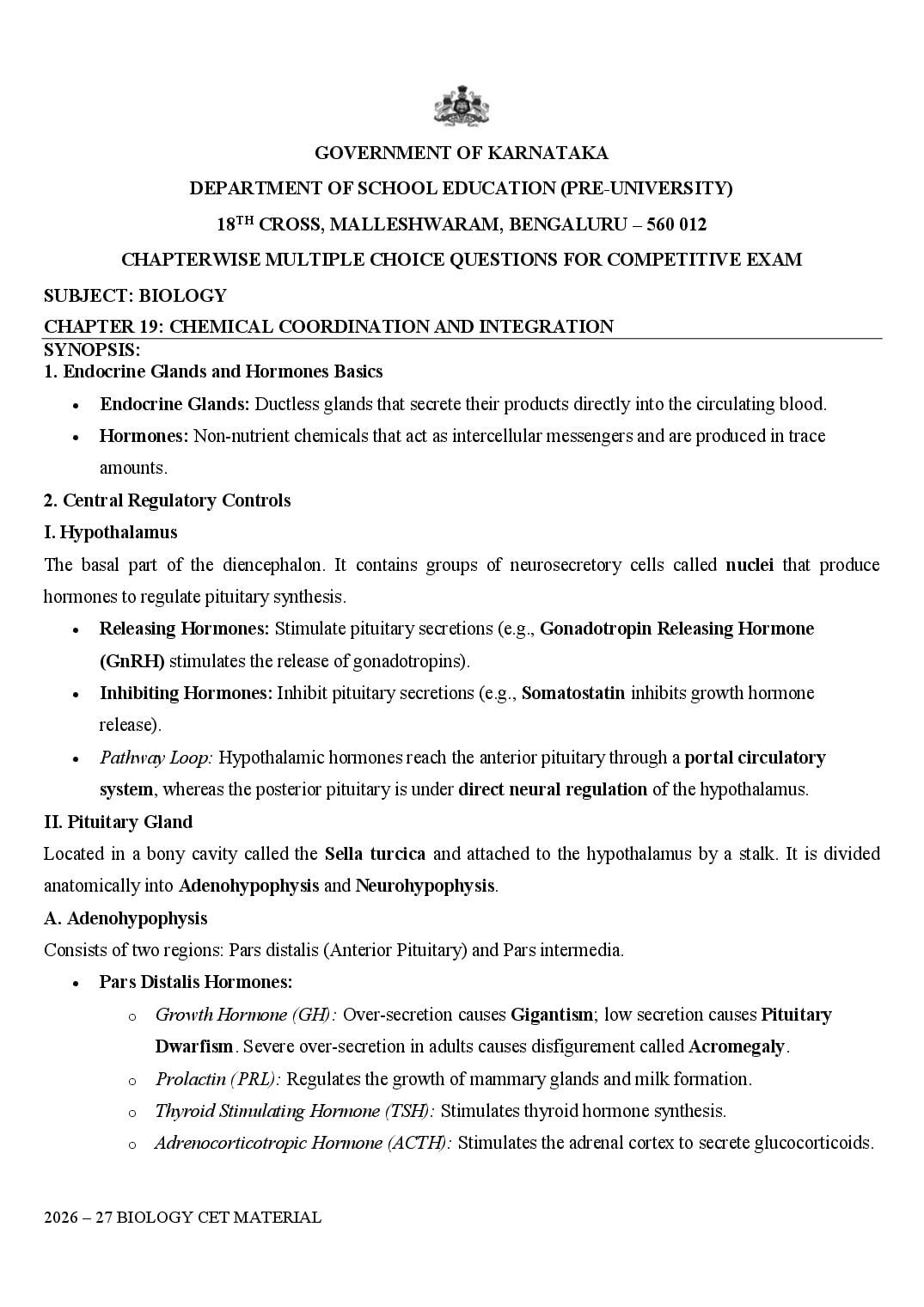
DEPARTMENT OF SCHOOL EDUCATION (PRE-UNIVERSITY)
18TH CROSS, MALLESHWARAM, BENGALURU – 560 012
CHAPTERWISE MULTIPLE CHOICE QUESTIONS FOR COMPETITIVE EXAM
SUBJECT: BIOLOGY
CHAPTER 19: CHEMICAL COORDINATION AND INTEGRATION
SYNOPSIS:
1. Endocrine Glands and Hormones Basics
• Endocrine Glands: Ductless glands that secrete their products directly into the circulating blood.
• Hormones: Non-nutrient chemicals that act as intercellular messengers and are produced in trace
amounts.
2. Central Regulatory Controls
I. Hypothalamus
The basal part of the diencephalon. It contains groups of neurosecretory cells called nuclei that produce
hormones to regulate pituitary synthesis.
• Releasing Hormones: Stimulate pituitary secretions (e.g., Gonadotropin Releasing Hormone
(GnRH) stimulates the release of gonadotropins).
• Inhibiting Hormones: Inhibit pituitary secretions (e.g., Somatostatin inhibits growth hormone
release).
• Pathway Loop: Hypothalamic hormones reach the anterior pituitary through a portal circulatory
system, whereas the posterior pituitary is under direct neural regulation of the hypothalamus.
II. Pituitary Gland
Located in a bony cavity called the Sella turcica and attached to the hypothalamus by a stalk. It is divided
anatomically into Adenohypophysis and Neurohypophysis.
A. Adenohypophysis
Consists of two regions: Pars distalis (Anterior Pituitary) and Pars intermedia.
• Pars Distalis Hormones:
o Growth Hormone (GH): Over-secretion causes Gigantism; low secretion causes Pituitary
Dwarfism. Severe over-secretion in adults causes disfigurement called Acromegaly.
o Prolactin (PRL): Regulates the growth of mammary glands and milk formation.
o Thyroid Stimulating Hormone (TSH): Stimulates thyroid hormone synthesis.
o Adrenocorticotropic Hormone (ACTH): Stimulates the adrenal cortex to secrete glucocorticoids.
Page 2
induces ovulation of mature Graafian follicles and maintains the corpus luteum.
o Follicle Stimulating Hormone (FSH): Regulates gametogenesis (spermatogenesis in males;
growth of ovarian follicles in females).
• Pars Intermedia Hormone: Secretes Melanocyte Stimulating Hormone (MSH), which acts on
melanocytes to regulate skin pigmentation. In humans, the pars intermedia is almost entirely merged
with the pars distalis.
B. Neurohypophysis (Pars nervosa / Posterior Pituitary)
Stores and releases two hormones actually synthesized by the hypothalamus and transported axonally:
• Oxytocin: Acts on smooth muscles; stimulates vigorous uterine contractions during childbirth and milk
ejection from mammary glands.
• Vasopressin / Antidiuretic Hormone (ADH): Acts mainly on the kidneys, driving water and
electrolyte reabsorption from distal tubules to prevent water loss (diuresis). A deficiency causes an
inability to conserve water, leading to dehydration and Diabetes Insipidus.
3. Peripheral Endocrine Glands: Functions and Disorders
I. Pineal Gland
Located on the dorsal side of the forebrain. Secretes Melatonin. Melatonin plays a central role in regulating the
24-hour diurnal (circadian) rhythm of our body (sleep-wake cycle, body temperature). It also influences
metabolism, pigmentation, menstrual cycles, and defense capability.
II. Thyroid Gland
Composed of two lobes located on either side of the trachea, interconnected by a thin connective tissue flap
called the isthmus. Made of follicles that synthesize Tetraiothyrone / Thyroxine ( ) and Triiodothyronine
( ). Iodine is essential for normal hormone synthesis.
• Functions: Regulates the Basal Metabolic Rate (BMR), supports red blood cell formation, controls
carbohydrate, protein, and fat metabolism, and maintains water-electrolyte balance. It also secretes a
protein hormone called Thyrocalcitonin (TCT), which lowers blood calcium levels.
• Disorders:
o Hypothyroidism: Deficiency causes thyroid enlargement (Goitre). Hypothyroidism during
pregnancy causes Cretinism in the infant (stunted growth, mental retardation, low IQ, abnormal
skin). In adult women, it causes irregular menstrual cycles.
o Hyperthyroidism: Cancer or nodular growth causes excessive hormone synthesis. It results in
Exophthalmic Goitre / Graves' Disease (characterized by thyroid enlargement, bulging eyes,
increased BMR, and weight loss).
III. Parathyroid Gland
Page 3
peptide hormone called Parathyroid Hormone (PTH).
• Function: PTH increases blood calcium levels (hypercalcemic hormone). It stimulates bone
resorption (demineralization), enhances reabsorption by renal tubules, and increases
absorption from digested food.
• Note: PTH acts dynamically in absolute opposition to TCT to maintain calcium homeostatic balance.
IV. Thymus Gland
A lobular structure located on the dorsal side of the heart and aorta. Secretes peptide hormones called
Thymosins.
• Function: Plays a major role in the differentiation of T-lymphocytes, providing cell-mediated
immunity. It also promotes antibody production to provide humoral immunity. The thymus
degenerates in old individuals, resulting in a weakened immune response.
V. Adrenal Gland
Located at the anterior part of each kidney. Composed of an centrally located Adrenal Medulla and an outer
Adrenal Cortex.
A. Adrenal Medulla
Secretes two hormones, Adrenaline (Epinephrine) and Noradrenaline (Norepinephrine), collectively called
Catecholamines or Emergency Hormones (Fight or Flight hormones).
• Effects: Alertness, pupillary dilation, piloerection (raising of hair), sweating, increased heart rate,
strength of heart contraction, and respiration rate. They stimulate glycogen, lipid, and protein
breakdown to raise blood glucose.
B. Adrenal Cortex
Divided into three distinct layers: Zona reticularis (inner), Zona fasciculata (middle), and Zona glomerulosa
(outer).
• Glucocorticoids (mainly Cortisol): Synthesized primarily by the zona fasciculata. Regulates
carbohydrate metabolism; stimulates gluconeogenesis, lipolysis, and proteolysis while inhibiting
cellular uptake of amino acids. Cortisol produces anti-inflammatory reactions, suppresses the immune
response, and maintains cardiovascular and kidney functions.
• Mineralocorticoids (mainly Aldosterone): Synthesized by the zona glomerulosa. Acts mainly on renal
tubules to stimulate reabsorption of and water, and excretion of and phosphate ions to
maintain electrolyte, osmotic, and blood pressure balance.
• Disorder: Alterations in cortex function cause Addison's Disease (characterized by carbohydrate
metabolism acute deficiency, bronze skin pigmentation, and extreme weakness).
VI. Pancreas (A Composite/Heterocrine Gland)
Page 4
million, making up 1–2% of pancreatic tissue).
• -cells: Secrete Glucagon, a hyperglycemic hormone. It acts on liver cells (hepatocytes), stimulating
glycogenolysis (breakdown of glycogen) and gluconeogenesis, thereby increasing blood sugar levels. It
also reduces cellular glucose uptake.
• -cells: Secrete Insulin, a hypoglycemic hormone. It enhances cellular glucose uptake and utilization
by hepatocytes and adipocytes (fat cells), drawing sugar out of the blood. It also drives glycogenesis
(conversion of glucose to glycogen).
• Disorder: Prolonged hyperglycemia leads to Diabetes Mellitus, characterized by loss of glucose
through urine and formation of toxic ketone bodies. Treated via insulin therapy.
VII. Gonads
• Testes: Located in the scrotum of males. Interstitial Leydig cells secrete Androgens (primarily
Testosterone). Androgens regulate the maturation of male accessory sex organs, stimulate
spermatogenesis, and drive male secondary sexual characteristics (low voice pitch, aggressiveness,
facial hair) and anabolic protein growth.
• Ovaries: Located in the abdomen of females.
o Estrogen: Secreted by growing ovarian follicles. Regulates female secondary sex organs, follicle
development, and secondary sexual traits (high voice pitch, mammary development).
o Progesterone: Secreted by the corpus luteum (remnants of follicle after ovulation). It is a
pregnancy-supporting hormone; it acts on mammary glands to stimulate the formation of
alveoli (milk-storing sacs) and milk secretion.
4. Hormones of Non-Endocrine Tissues
• Heart (Atrial Wall): Secretes Atrial Natriuretic Factor (ANF) when blood pressure rises. ANF
causes vasodilation to lower blood pressure.
• Kidney (Juxtaglomerular cells): Secretes a peptide hormone called Erythropoietin, which stimulates
erythropoiesis (red blood cell production).
• Gastrointestinal Tract: Secretes four major peptide hormones:
o Gastrin: Stimulates gastric glands to secrete and pepsinogen.
o Secretin: Stimulates the exocrine pancreas to secrete water and bicarbonate ions.
o Cholecystokinin (CCK): Stimulates the secretion of pancreatic enzymes from the pancreas and
bile juice from the gallbladder.
o Gastric Inhibitory Peptide (GIP): Inhibits gastric secretion and motility.
5. Mechanism of Hormone Action
Page 5
exclusively on target cells. Receptors form a hormone-receptor (H-R) complex, triggering biochemical
changes.
Based on their chemical nature, hormones utilize two entirely different structural pathways:
Type A: Water-Soluble Hormones
Includes Peptide, Polypeptide, Protein hormones (Insulin, Glucagon, Pituitary hormones) and Amino-acid
derivatives (Epinephrine).
• These hormones cannot pass through the lipid bilayer of the target cell membrane.
• They bind to membrane-bound receptors on the extracellular surface.
• This binding generates secondary messengers inside the cell (e.g., cyclic AMP ( ), , or
Calcium ions ( )), which trigger a cascade of biochemical changes to alter cellular metabolism
without the hormone ever entering the cell.
Type B: Lipid-Soluble Hormones
Includes Steroid hormones (Cortisol, Testosterone, Estradiol, Progesterone) and Iodothyronines (Thyroid
hormones).
• These hormones easily cross the cell membrane down their lipid solubility.
• They interact with intracellular receptors (mostly nuclear receptors) inside the cell.
• The H-R complex binds directly to the genome, altering gene expression at the transcription level
( ). This results in long-term physiological and developmental changes.
Classroom discussion questions
1. Ca+ level in body is controlled by
(A) Thyroid gland (B) parathyroid gland (C) adrenal gland (D) both (A) and (B)
2. The given figure shows main endocrine glands in human body. Identify A to G and select the correct option.
A B C D E F G
(A) Pineal Pituitary Thyroid and parathyroid Thymus Adrenal Testis Ovary
(B) Pituitary Pineal Thyroid and parathyroid Thymus Adrenal Ovary Testis
(C) Pituitary Pineal Thyroid and parathyroid Thymus Kidney Testis Ovary
Page 6
3. The signal transduction of steroid hormone across cell is through
(A) Binding of hormone to the cytoplasmic receptor and the complex binds to hormone response element on
DNA within promoter DNA
(B) Binding of hormone to the trans membrane receptor which initiates the production of second messenger
that activates enzymes which further activates transcription factors
(C) Binding of hormone to the trans membrane receptor which diffuse inside the cell cytoplasm and then
activates the enzyme necessary for the activation of transcription factors
(D) Binding of hormone to the cytoplasmic receptor that initiates the production of second messenger which
activates enzymes that further activate transcription factors
4. Thyroxine and triiodothyronine, produced by the thyroid gland, are synthesized from iodine and
(A) Phenylalanine (B) tyrosine (C) tryptophan (D) cholesterol
5. Which one of the following is proteinaceous in chemical nature?
(A) Thyroxine (B) FSH (C) Progesterone (D) Oxytocin
6. Progesterone is secreted by which of the following glands?
(A) Corpus luteum (B) Placenta (C) Anterior pituitary (D) Both (A) and (B)
7. Select the option that correctly identifies the labels A, B, C and D in the given diagram.
D
B
C
A
A B C D
(A) Anterior pituitary Posterior pituitary Blood vessels Thalamus
(B) Posterior pituitary Anterior pituitary Hypothalamus Thalamus
(C) Anterior pituitary Posterior pituitary Portal circulation Hypothalamic neurons
(D) Hypothalamic neurons Posterior pituitary Anterior pituitary Portal circulation
8. Which of the following statements regarding glucagon is false?
(A) It is secreted by -cells of Langerhans
(B) It acts antagonistically to insulin.
(C) It decreases blood sugar level
(D) The gland responsible for its secretion is a heterocrine gland
9. The Leydig’s cells secrete
(A) Oestrogen (B) testosterone (C) progesterone (D) corticosterone
Page 7
organs, then the target organ will
(A) Continue to respond to the hormone without any difference
(B) Not respond to the hormone
(C) Continue to respond to the hormone but will require higher concentration
(D) Continue to respond to the hormone but in the opposite way.
11. Which one of the following endocrine gland stores its secretion in the extracellular space before discharging
it into the blood?
(A) Testis (B) Thyroid (C) Pancreas (D) Adrenal
12. Which hormone stimulates the secretion of milk from female?
(A) Oxytocin (B) Progesterone (C) LH (D) Prolactin
13. The hormone which regulates the basal metabolism in our body is secreted from
(A) adrenal cortex (B) pancreas (C) pituitary (D) thyroid
14. The gonadotrophic hormones are secreted by
(A) Anterior lobe of pituitary (B) interstitial cells of testes
(C) Adrenal cortex (D) posterior part of thyroid
15. Secretion of progesterone by corpus luteum is initiated by
(A) Testosterone (B) thyroxine (C) MSH (D) LH
16. The function of oxytocin is to help in
(A) Child birth (B) gametogenesis (C) growth (D) all of these
17. Which part of body secretes the hormone secretin?
(A) Stomach (B) Oesophagus (C) Ileum (D) Duodenum
18. Read the given statements that define functions of a particular hormone.
(i) Regulate the development, maturation and functions of epididymis, vas deferens, seminal vesicle,
prostate gland, urethra, etc.
(ii) Stimulate muscular growth of facial and axillary hairs, aggressiveness, low pitch of voice, etc.
(iii) Stimulates spermatogenesis
(iv) Act on CNS and sexual behavior (libido)
(v) Produce anabolic (synthetic) effect on protein and carbohydrate metabolism
(vi) The Leydig’s cell/interstitial cells (present in intertubular space) secrete this hormone under the
influence of LH
Which of the following hormones is referred here?
(A) FSH (B) Progesterone (C) Androgen (D) Melatonin
19. MSH is secreted by
(A) Anterior lobe of pituitary (B) middle lobe of pituitary
(C) Posterior lobe of pituitary (D) endostyle
Page 8
(A) S.A. node (B) -cells of Langerhans
(C) Dorsal root of spinal nerve (D) epithelial cells of stomach
21. Chemically, hormones are
(A) Biogenic amines (B) proteins (C) steroids (D) all of these
22. Enzymes, vitamins and hormones can be classified into a single category of biological chemicals, because
all of these
(A) help in regulating metabolism
(B) are exclusively synthesized in the body of a living organism as at present
(C) are conjugated proteins
(D) enhance oxidative metabolism
23. Sertoli cells are regulated by the pituitary hormone known as
(A) LH (B) FSH (C) GH (D) prolactin
24. Which one of the following is not a second messenger in hormone action?
(A) cAMP (B) cGMP (C) Calcium (D) Sodium
25. Read the given paragraph and select the option that correctly fills the blanks in it.
Hormones produce their effect on target tissue by binding to specific A called hormone receptors located in
the target tissues only. B soluble hormones usually need C receptor that generate D messengers for
regulating cellular metabolism. E soluble hormones can pass through cell membrane and bind to F
receptors, mostly G receptors. The hormone receptor complex enter the H and mostly regulate gene
expression or chromosome function by interaction of hormone-receptor complex with the I.
A B C D E F G H I
(A) protein water membrane-bound second lipid intracellular nuclear nucleus genome
(B) lipid water membrane-bound second water intracellular nuclear nucleus genome
(C) protein water intracellular second lipid extracellular nuclear nucleus genome
(D) protein water membrane-bound primary lipid intracellular nuclear nucleus genome
26. Which one of the following statements is correct?
(A) Endocrine glands regulate neural activity, but not vice versa.
(B) Neurons regulate endocrine activity, but not vice versa.
(C) Endocrine glands regulate neural activity, and nervous system regulates endocrine glands.
(D) Neither hormones control neural activity nor the neurons control endocrine activity.
27. Which hormone causes dilation of blood vessels, increased oxygen consumption and glucogenesis?
(A) Glucagon (B) ACTH (C) Insulin (D) Adrenaline
28. What is hormone?
(A) Glandular secretion (B) Enzyme
(C) Chemical messenger (D) Organic complex substance
Page 9
(A) Stimulation of organs. (B) Release of inherent capacities.
(C) Proper growth. (D) Co - ordination of functions.
30. Rate of hormone synthesis and secretion depends upon
(A) Functional efficiency of the feedback system. (B) Amount of excitation in target tissue.
(C) Degree of inhibition caused. (D) Functional state of the tissue / organ.
31. Which of the following statements is not false?
(A) Hormone produced in thyroid stimulates metabolism.
(B) Hormone produced in ovary affects the uterine contraction.
(C) Hormone produced in small intestine stimulates heart.
(D) Hormone produced in adrenal cortex stimulates heartbeat.
32. According to the accepted concept of hormone action, if receptor molecules are removed from target organs
(A) The target organ will continue to respond to the hormone without any difference.
(B) The target organ will continue to respond to the hormone but will require higher concentration.
(C) The target organ will not respond to the hormone.
(D) The target organ will continue to respond to the hormone but in the opposite way.
33. The hormones of posterior pituitary are oxytocin and vasopressin; but latter is better known as
(A) Antidiuretic hormone (B) growth hormone
(C) Corticotropic hormone (D) Neurohypophyseal
34. Which hormone stops the release of FSH from the pituitary after fertilization?
(A) Placental hormone (B) Fertilizin
(C) Estradiol (D) Luteinizing hormone
35. The intermediate lobe of the pituitary gland produces a secretion which causes a dramatic darkening f the
skin of many fishes, amphibians and reptiles. It is
(A) ACTH (B) FSH (C) MSH (D) LH
36. Hormone released by posterior lobe of pituitary is concerned with
(A) Metabolism of carbohydrates. (B) Stimulation of thyroid.
(C) Secondary sexual characters. (D) Contraction of uterus.
37. Which is true for melanocyte stimulating hormone?
(A) It is same as melatonin.
(B) It is secreted by pars tuberalis of anterior pituitary.
(C) Its secretion is stimulated by hydrocortisone.
(D) It is secreted by pars intermedia of anterior pituitary.
38. Which of the following groups of endocrine glands are involved in carbohydrate metabolism?
(A) Pancreas, neurohypophysis and adrenal. (B) Pancreas, pituitary and thyroid.
Page 10
39. Secretin is secreted from
(A) Endocrine gland and acts on an endocrine gland. (B) Exocrine gland and acts on an exocrine gland.
(C) Endocrine gland and acts on an exocrine gland. (D) Exocrine gland and acts on an endocrine gland.
40. 'Exophthalmic goitre' (Gave's disease) is caused due to
(A) Hypofunction of the thyroid. (B) Hyperfunction of the thyroid
(C) hypofunction of the parathyroid. (D) hyperfunction of the parathyroid.
41. Why is thyroxine a hormone not an enzyme?
(A) It is secreted in small quantity. (B) It is not a polypeptide.
(C) It has no special effect. (D) It is directly poured into blood.
42. Hypoparathyroidism result in
(A) Upset in metabolism. (B) Improper gonadial function.
(C) Convulsions and tetany. (D) Nervousness and wasting.
43. Which of the following condition is responsible for human female to start developing male characteristics
like bearded, degeneration of uterus and ovaries, enlargement of clitoris etc.?
(A) Over production of estrogen and testosterone. (B) Damage to posterior pituitary.
(C) Over production of adrenal androgens. (D) Surgical removal of mammary gland.
44. Which of the following endocrine glands functions under nervous control?
(A) Cortex of adrenal glands. (B) Medulla of adrenal glands.
(C) Anterior pituitary glands. (D) Posterior pituitary gland.
45. Pineal body originates from
(A) Dorsal part of diencephalon. (B) Ventral part of diencephalon.
(C) Ventral part of cerebellum. (D) Dorsal part of cerebellum.
46. Which one of the following statements about sex hormones is correct?
(A) Testosterone is produced by Leydig cells under the influence of luteinizing hormone (LH).
(B) Progesterone is secreted by corpus luteum and soften ligaments during child birth.
(C) Estrogen is secreted by both Sertoli cells and corpus luteum.
(D) The progesterone produced by corpus luteum is biologically different from the one produced by
placenta.
47. Testosterone, a hormone responsible for the development of secondary sexual characteristics in male is
produced by the
(A) Spermatogonia. (B) Seminiferous tubules.
(C) Anterior lobe of the pituitary. (D) Cells that lie between seminiferous tubules.
48. Progesterone is
(A) An enzyme for digesting proteins.
(B) A hormone to initiate uterine contraction during child birth.
Page 11
(D) A hormone concerned with retention and growth of pregnancy.
49. Correct hormonal sequence in the increase of menstruation is
(A) Estrogen, FSH and progesterone. (B) Estrogen, progesterone and FSH
(C) FSH, progesterone and estrogen. (D) FSH, estrogen and progesterone.
50. High increase in oxytocin level in a pregnant lady result in
(A) Increased synthesis of milk. (B) Decrease in haemoglobin %
(C) Abortion. (D) High blood pressure.
51. Which hormone (s) of the following endocrine glands lacks peptides, amines and sulphur?
(A) Hormone of anterior pituitary. (B) Hormone of posterior pituitary and pancreas.
(C) Hormone of thyroid and adrenal gland. (D) Hormone of testes and ovary.
52. Which one of the following pair is the matching pair of the part and the hormone it secretes?
(A) Thyroid – Epinephrine (B) Alpha cells of pancreas – Glucagon
(C) Anterior pituitary – Adrenalin (D) Stomach epithelium - Secretin
53. The hormone glucagon
(A) Has the opposite effect as that of insulin. (B) Is produced in the beta cells of pancreas.
(C) Converts glucose into glycogen. (D) Is used in the treatment of diabetes mellitus.
54. Blood sugar level can be decreased by
(A) Insulin given from mouth. (B) Glucagon given through mouth.
(C) Intraveinal injection of insulin (D) Intraveinal injection of glucagon.
55. If the pancreatic duct of a healthy dog is blocked an hour after it had its food, which one of the following
functions of the pancreas will not be affected?
(A) Carbohydrate digestion (B) Neutralization of chime
(C) Break down of protein (D) Maintenance of normal blood sugar level
56. The structure of insulin consists of two polypeptide chains A and B. Which of the following statements
regarding the two polypeptide chains are true?
(A) Both the chains have equal number of amino acids.
(B) Chain A has 21 amino acids, while chain B has 30 amino acids.
(C) Chain A has 30 amino acids, while chain B has 21 amino acids.
(D) Chain A has 11 amino acids, while chain B has 40 amino acids.
57. Which one of the following hormones is anti - inflammatory?
(A) Secretin (B) Epinephrin
(C) Glycoprotein (D) Glucocorticoid
58. Assertion: Diabetes mellitus is a hypothalamic disorder
Reason: Low blood glucose level and cholesterol cause diabetes mellitus
59. Assertion; A person suffering from myxedema has puffy appearance and lack of alertness
Page 12
Practice questions
1. Select the right match of endocrine gland and their hormones among the options given below
Column I Column II
(a) Pineal (i) Epinephrine
(b) Thyroid (ii) Melatonin
(c) Ovary (iii) Estrogen
(d) Adrenal medulla (iv) Tetraiodothyronine
Options:
(A) (a) → (iv), (b) → (ii); (c) → (iii); (d) → (i) (B) (a) → (ii), (b) → (iv); (c) → (i); (d) → (iii)
(C) (a) → (iv), (b) → (ii); (c) → (i); (d) → (iii) (D) (a) → (ii), (b) → (iv); (c) → (iii); (d) → (i)
2. Listed below are the hormones of anterior pituitary origin. Tick the wrong entry.
(A) Growth hormone (B) Follicle stimulating hormone
(C) Oxytocin (D) Adrenocorticotrophic hormone
3. Mary is about to face an interview. But during the first five minutes before the interview she experiences
sweating, increased rate of heart beat, respiration etc. Which hormone is responsible for her restlessness?
(A) Estrogen and progesterone (B) Oxytocin and vasopressin
(C) Adrenaline and noradrenaline (D) Insulin and glucagon
4. The steroid responsible for balance of water and electrolytes in our body is
(A) Insulin (B) Melatonin (C) Testosterone (D) Aldosterone
5. Thymosin is responsible for
(A) Raising the blood sugar level (B) Raising the blood calcium level
(C) increased production of T lymphocytes (D) Decrease in blood RBC
6. In the mechanism of action of a protein hormone, one of the second messengers is
(A) Cyclic AMP (B) Insulin (C) T3 (D) Gastrin
7. Leydig cells produce a group of hormones called
(A) Androgens (B) Estrogens (C) Aldosterone (D) Gonadotropins
8. Corpus luteum secretes a hormone called
(A) Prolactin (B) Progesterone (C) Aldosterone (D) Testosterone
9. Cortisol is secreted from
(A)Pancreas (B) Thyroid (C) Adrenal (D) Thymus
10. A hormone responsible for normal sleep-wake cycle is
(A) Epinephrine (B) Gastrin (C) Melatonin (D) Insulin
Page 13
presence of signal receiving ‘receptors’ only in the respective target tissue. Where are these receptors
present in case of hormones of protein nature?
(A) Extra cellular matrix (B) Blood
(C) Plasma membrane (D) Nucleus
12. Choose the correct answer among the following options
Column I Column II
(a) Epinephrine (i) Increase in muscle growth
(b) Testosterone (ii) Decrease in blood pressure
(c) Glucagon (iii) Decrease in liver glycogen
content
(d) Atrial natriuretic factor (iv) Increase heart beat
Options:
(A) (a) → (ii), (b) → (i); (c) → (iii); (d) → (iv) (B) (a) → (iv), (b) → (i); (c) → (iii); (d) → (ii)
(C) (a) → (i), (b) → (ii); (c) → (iii); (d) → (iv) (D) (a) → (i), (b) → (iv); (c) → (ii); (d) → (iii)
13. Blood calcium level is a resultant of how much dietary calcium is absorbed, how much calcium is lost in the
urine, how much bone dissolves releasing calcium into the blood and how much calcium from blood enters
tissues. A number of factors play an important role in these processes. Mark the one which has no role
(A) Vitamin D (B) Parathyroid hormone
(C) Thyrocalcitonin (D) Thymosin
14. All the following tissues in mammals except one consists of a central ‘medullary’ region surrounded by a
cortical region. Mark the wrong entry
(A) Ovary (B) Adrenal (C) Liver (D) Kidney
15. One of the following conditions is not linked to deficiency of thyroid hormones
(A) Cretinism (B) Goitre (C) Myxedema (D) Exophthalmosis
Assertion and Reason type questions:
Directions: In the following questions, a statement of Assertion (A) is followed by a statement of Reason (R).
Mark the correct choice as:
(A) If both Assertion and Reason are true and Reason is the correct explanation of Assertion
(B) If both Assertion and Reason are true but Reason is not the correct explanation of Assertion
(C) If Assertion is true but Reason is false
(D) If both Assertion and Reason are false.
Page 14
Reason : Calcitonin causes mobilization of calcium from the bones to the blood plasma.
17. Assertion : Failure of secretion of somatotropin from an early age causes dwarfism in the patient.
Reason Somatotropin hormone stimulates the body growth and elongation of long bones.
18. Assertion : Oxytocin is also known as anti-diuretic hormone (ADH).
Reason : Oxytocin can cause an increase in the renal reabsorption of water.
19. Assertion : Failure of secretion of thyroid gland hormones from childhood causes cretinism disease.
Reason : Thyrotropin hormone maintains BMR and promote growth of body tissues.
20. Assertion : The tadpoles become giant tadpoles when fed on theorem.
Reason : Thoreau is an antithyroid substance.
21. Assertion : Hormones are similar to enzymes in their action and chemical nature.
Reason : Hormones and enzymes are proteinaceous in nature and act as informational molecules.
22. Assertion : The parathyroid glands are said to be under the feedback control of blood calcium levels.
Reason : Parathormone of parathyroids mobilises calcium from the bones to the blood plasma.
23. Assertion : Prolactin is also called the 'Milk ejection hormone'.
Reason : Prolactin stimulates the smooth muscle contractions of the mammary glands.
24. Assertion : Adrenal medulla and sympathetic nervous system are said to function as a closely integrated
system.
Reason : It is because both of them get stimulated in physical and emotional stress conditions.
25. Assertion : A tumor of adrenal cortex may cause Addison's disease.
Reason : This happens due to over secretion of cortisol by the tumor.
26. Assertion : Aldosterone increases the volume of blood and other extracellular fluids.
Reason : The secretion of aldosterone is stimulated by a fall in the circulating volume of blood.
27. Assertion : Adrenal cortex can be removed without causing death.
Reason ; Adrenal cortex is not vital for survival.
28. Assertion : FSH is also known as interstitial cell stimulating hormone.
Reason : It is because of the fact that FSH stimulates the interstitial cells of testis.
29. Assertion : Insulin is said to be an anabolic hormone
Reason : Failure of insulin secretion causes diabetes.
30. Assertion : Females have less stature than males after puberty.
Reason : This happens because of the presence of HCG in the blood of females.
31. Assertion : Glucagon is said to lower down the blood sugar level.
Reason : Glucagon increases the utilization of glucose in the tissues and the synthesis of liver glycogen.
32. Which of the following statements are correct regarding hormones?
I. They have low molecular weight
Page 15
III. They can be organic and inorganic in nature
IV. Hormone controlled reactions are irreversible
(A) I and II only (B) I and IV only (C) I, II and IV only (D) I, II and III only
33. Which of the following pair is not correctly matched?
(A) Oxytocin – Ejection of milk from mammary glands after child birth
(B) Estrogen – Stimulates the maturation of ova
(C) Inhibin – Inhibits the production of FSH
(D) Luteotropic hormone – Stimulates the Leydig’s cells to secrete progesterone
34. Collip’s hormone or A is secreted from B cells. It regulates the metabolism of C and is antagonistic to D.
Identify A, B, C and D
A B C D
(A) Calcitonin Parafollicular Calcium Thyrocalcitonin
(B) Parathormone oxyphil phosphate Calcitriol
(C) Parathormone Chief Calcium Calcitonin
(D) Calcitriol Follicular Calcium Calcitonin
35. If baby’s anterior lobe of pituitary is damaged due to an accident, then from which of the flowing disorders
is he most likely to suffer?
(i) Diabetes (ii) Simmond’s
insipidus disease
(iii) acromegaly (iv) dwarfism
(A) (i) and (ii) (B) (i), (ii) and (iv) (C) (iv) only (D) (i), (iii) and (iv)
36. Identify the hormones A, B and C in the given flow chart
(A) A- Corticotropin releasing hormone, B – Adernocorticotropin hormone, C – Gonadocorticoids
(B) A – Gonadortropin releasing hormone, B – Gonadotropin hormone, C – Gonadocorticoids
(C) A – Corticotropin releasing hormone, B – adrenocortico – tropin hormone, C – Mineralocorticoids and
Glucocorticoids
(D) A – Corticotropin releasing hormone, B – Vasopressin, C- Mineralocorticoids and Glucocorticoids
37. Select the correct statement regarding thyroid hormone
(A) In liver and kidneys, triiodothyronine changes to thyroxine
Page 16
(C) They have a stimulating effect on action of neurotransmitters.
(D) Hypothroidism causes exophthalmia resulting in protrusion of eye balls because of fluid accumulation
38. Match the column I with column II and select the correct option from the codes given below
Column I Column II
(a) Thymosin (i) Inhibits secretion of glucagon an
insulin
(b) Erythropoietin (ii) Stimulates development of WBCs
(c) Melatonin (iii) Stimulates development of RBCs
(d) Somatostatin (iv) Promotes sleep
(A) (a) – (i), (b) – (ii), (c)- (iv), (d) (iii) (B) (a) – (ii), (b) – (iii), (c) – (iv), (d)- (i)
(C) (a) – (iii), (b) (ii), (c)- (iv), (d)- (i) (D) (a) – (iv), (b)- (iii), (c) – (i), (d) – (ii)
39. Polydipsia and ketosis are the symptoms of
(A) Hypoglycemia (B) Cushing’s syndrome
(C) Diabetes insipidus (D) Diabetes mellitus
40. Which of the following is a function of prolactin hormone?
(A) Squeeze milk into large ducts behind nipples
(B) Stimulates maturation of ova and development of uterine epithelium
(C) Activates brats growth during pregnancy
(D) Maintenance of pregnancy and placenta formation
41. Cushing’s syndrome is caused due to
(A) excess secretion of cortisol (B) excessive secretion of aldosterone
(C) deficiency of cortisone (D) hyposecretion of androgens
42. Hypoglycemia can be caused due to
(A) tumour of beta cells (B) destruction of delta cells
(C) deficiency of insulin (D) deficiency of ADH
43. The hormone which is exclusively found in a pregnant woman is
(A) relaxin (B) estrogen (C) progesterone (D) luteinsing hormone
44. Smallest endocrine gland is
(A) pineal gland (B) pituitary gland
(C) parathyroid gland (D) thymus gland
45. Parathyroid tetany is characterized by
(A) rise in blood calcium levees
(B) convulsions and spasms due to increase in the excitability of nerves
(C) osteoporosis and deformed bones
Page 17
46. Which of the following hormone is not secreted by anterior lobe of pituitary?
(A) Thyrotropin (B) Somatotropin (C) Vasopressin (D) Prolactin
47. The function which does not belongs to testosterone is
(A) to activate production of FSH
(B) formation of sperms in testes
(C) to promote growth of bones, muscles and other tissues
(D) to regulate normal functioning of secondary male sex organs
48. Which of the following statements are true?
(i) Pineal gland is ectodermal in origin
(ii) Alfred Gilmans discovered the role of cAMP
(iii) Estrogen and oxytocin hormones have a synergistic effect on mammary glands
(A) (ii) and (iii) only (B) (i), and (iii) only (C) (iii) only (D) (i), (ii) and (iii)
49. Which of the following pairs of hormones are not antagonistic (having opposite effects) to each other?
(A) Aldosterone atrial Natriuretic Factor
(B) relaxin Inhibin
(C) Parathormone Calcitonin
(D) Insulin Glucagon
50. Fight – or – flight reactions causes activation of
(A) the parathyroid glands, leading to increase metabolic rate
(B) the kidney, leading to suppression of renin-angiotensin aldosterone pathway
(C) the adrenal medulla, leading to increased secretion of epinephrine and nor- epinephrine
(D) the pancreas leading to a reduction in the blood sugar levels
51. A pregnant female delivers a baby who suffers from stunted growth, mental retardation, low intelligence
quotient and abnormal skin. This is the result of
(A) cancer of the thyroid gland (B) oversecretion of pars distils
(C) deficiency of iodine in diet (D) low secretion of growth hormone
52. Decreased levels of estrogen is a common cause for
(A) myasthenia gravis (B) tatany (C) osteoporosis (D) gout
53. Choose the mismatched pair form the following
(A) insulin – Gluconeogensis
(B) Glucagon – Glycogenolysis
(C) Oxytocin – Contraction of uterine muscles
(D) Prolactin – Milk production in mammary glands
Page 18
(A) adenohypophysis (B) hypothalamus
(C) neurohypophysis (D) both (A) and (C)
Assertion and Reason type questions:
Directions: In the following questions, a statement of Assertion (A) is followed by a statement of Reason (R).
Mark the correct choice as:
(A) If both Assertion and Reason are true and Reason is the correct explanation of Assertion
(B) If both Assertion and Reason are true but Reason is not the correct explanation of Assertion
(C) If Assertion is true but Reason is false
(D) If both Assertion and Reason are false.
55. Assertion : Hypothalamus is connected to the posterior lobe of pituitary by hypophysial portal veins
Reason: The hypophysial portal veins carry blood from the hypothalamus to the neurohypophysis
56. Assertion : Atrial natriuretic factor (ANF) is secreted by adipocytes of heart’s atria
Reason: ANF is secreted when there is an elevation of deoxygenated of heart’s atria
CLASSROOM DISCUSSION QUESTIONS Key
1. (D) 13. (D) 25. (A) 37. (D) 49. (D)
2. (D) 14. (A) 26. (C) 38. (B) 50. (C)
3. (A) 15. (D) 27. (D) 39. (D) 51. (D)
4. (B) 16. (A) 28. (C) 40. (B) 52. (B)
5. (B) 17. (D) 29. (D) 41. (D) 53. (A)
6. (D) 18. (C) 30. (A) 42. (C) 54. (C)
7. (C) 19. (B) 31. (A) 43. (C) 55. (A)
8. (C) 20. (A) 32. (C) 44. (B) 56. (B)
9. (B) 21. (D) 33. (A) 45. (A) 57. (D)
10. (B) 22. (A) 34. (A) 46. (A) 58. (D)
11. (B) 23. (B) 35. (C) 47. (D) 59. (C)
12. (D) 24. (D) 36. (D) 48. (D)
Practice questions Key
1. (D) 6. (A) 11. (C) 16. (D) 21. (D)
2. (C) 7. (A) 12. (B) 17. (A) 22. (B)
3. (C) 8. (B) 13. (D) 18. (D) 23. (D)
4. (D) 9. (C) 14. (A) 19. (C) 24. (A)
5. (C) 10. (C) 15. (D) 20. (A) 25. (D)
Page 19
27. (D) 34. (C) 41. (A) 48. (B) 55. (D)
28. (D) 35. (B) 42. (A) 49. (C) 56. (B)
29. (B) 36. (C) 43. (A) 50. (C)
30. (C) 37. (C) 44. (B) 51. (C)
31. (D) 38. (B) 45. (B) 52. (C)
32. (B) 39. (D) 46. (C) 53. (A)
Document Details
| Board / Org | Karnataka Board |
| Exam | Class 11 |
| Type | Question Bank |
| Pages | 19 |
| Updated | 24 Sep 2026 |